
Ekiti Decides 2026: The Upsides, Challenges, and Risks in the Governorship Election
On the surface, the atmosphere appears calm, but beneath it lies deep political tension in the state. A total of 1,059,360 registered voters, 51.2 per cent female and 48.8 per cent male, are set to...

On the surface, the atmosphere appears calm, but beneath it lies deep political tension in the state. A total of 1,059,360 registered voters, 51.2 per cent female and 48.8 per cent male, are set to choose the next governor. Will voters retain the incumbent or opt for a new face? The next 72 hours will determine whether the state sees continuity or a change in leadership.
Fourteen candidates from different political parties have been cleared to contest the election.
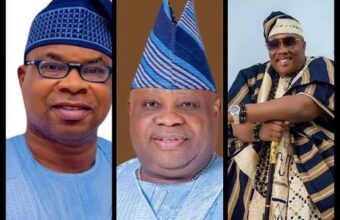
They include: Accord Party – Opeyemi Falegan and Omoyemi Olaleye; African Action Congress (AAC) – Akande Oluwasegun and Oluwasanmi Fajuyigbe; Action Democratic Party (ADP) – Ayodeji Ojo and Itunu Ibitoye; African Democratic Congress (ADC) – Oluwadare Bejide and Paul Olowoyeye; All Progressives Congress (APC) – Biodun Oyebanji and Monisade Afuye; Action People’s Party (APP) – Bidemi Awogbemi and Akinyemi Adewumi; Allied People’s Movement (APM) – Joseph Anifowose and Margaret Ilesanmi; Labour Party (LP) – Oyebanji Olajuyin and Ayokunle Okumade; New Nigeria People’s Party (NNPP) – Blessing Abegunde and Francis Ajayi; People’s Redemption Party (PRP) – Olaniyi Ayodele and Modupe Adebiyi; Young Progressive Party (YPP) – Osinkolu Olusegun Ayodele and Arowolo David Olusesan; and Zenith Labour Party (ZLP) – Victor Adetunji, Dr Oluwole Oluyede of the PDP, and Otunba Peter Obafemi, of the SDP.
There is a sense of unease over what may happen when voters go to the polls on Saturday, June 20. Lobbying, political bargaining and behind-the-scenes withdrawals are shaping the race. Rather than ideology, manifestos, programmes or policies, longstanding myths and beliefs appear to be influencing voter opinion. Some people within and outside the state are of the opinion that this Saturday’s governorship election in Ekiti State is a done deal. But in politics, it is not over until it is over.
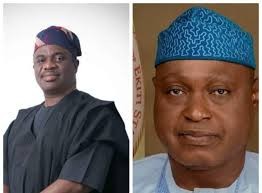
Since the Fourth Republic began in 1999, no Ekiti governor has won two consecutive terms. If Governor Oyebanji wins, he would break that pattern and set a new precedent for the state. What was a 13-candidate contest about a week ago has now narrowed to a two-horse race between the incumbent, Governor Oyebanji of the APC, and Dr Wole Oluyede of the PDP. Most of the other candidates have stepped down and aligned behind these two candidates.
The Upsides for the Two Leading Candidates
Both candidates bring distinct strengths to the race. For the incumbent, these include the advantage of incumbency and the backing of the party that controls the federal government. He is widely seen as humble and modest, enjoys the goodwill of former elected governors of the state, from Niyi Adebayo and Ayo Fayose to Segun Oni and Kayode Fayemi, and has strong grassroots ties, having lived in Ekiti all his life.
The incumbent has been praised for fiscal discipline in delivering some key legacy projects. He completed the airport project, which is now in use. More recently, Vice President Kashim Shettima commissioned three major landmarks: the 100,000-job Ekiti Knowledge Zone, the new EFCC Zonal Office, and the 1.2-kilometre Asiwaju Bola Ahmed Tinubu Flyover. These projects give Governor Oyebanji several achievements to point to during his tenure.
His main challenger, Dr Oluwole Oluyede, is an urbane medical doctor who lived and practised in Australia for decades. A major investor in Ekiti State, he established a hotel worth more than a billion naira and is also involved in agriculture, collectively employing more than 300 workers in the state. He was the African Democratic Congress (ADC) governorship candidate in 2022 and contested the APC governorship primary in 2028. Although he has not held public office, he has consistently shown a desire to serve his people, bringing on board his entrepreneurial ideas and spirit. He brings credible ideas and international exposure, which he hopes to apply to the state’s development.
Additionally, Dr Oluyede, the challenger, comes from Ikere-Ekiti, which is regarded as the second largest voting population in the state after Ado-Ekiti. The town has never produced a governor of the state but has produced several deputies, including the incumbent in office. The governorship seat has been oscillating between the Central and North senatorial districts since 1999. There is a feeling of community solidarity from the town to vote massively for one of their own.
The Challenges
Both sides face challenges, but the election is largely a referendum on the incumbent, leaving him with more political baggage to address. The weak economy has deepened hardship across Nigeria, and Ekiti has not been spared. The opposition argues that Oyebanji’s administration has received higher federal allocations than any of its predecessors yet has little to show for it.
The governor’s camp counters that this view presents only one side of the story. It points to gains in sectors such as health and education, while noting that rising infrastructure costs and broader inflation have affected project delivery. Even so, it insists that Governor Oyebanji’s first term has produced visible achievements.
This writer spoke with some transporters in Ado-Ekiti who said Governor Oyebanji’s palliative vehicles for workers, introduced to ease the impact of fuel subsidy removal, have reduced their patronage and hurt their earnings. By contrast, workers and several unions in the state have declared support for Oyebanji’s bid for a second term.
Dr Wole Oluyede also faces significant challenges, chief among them his lack of government experience. He has promised free healthcare, free education and tax relief for residents, but he has yet to show how these pledges would be implemented. This remains a major hurdle, as many Ekiti voters are asking whether he can be trusted with public office.
The Risks
Governor Oyebanji and the APC still face discontent from those dissatisfied with the primary election outcome. The party enters the race with internal divisions, and unseen forces may work against the governor’s ambition. Also, those whose economies have been seriously affected under the APC government may not end up casting their votes for the APC.
For Dr Oluwole Oluyede, some analysts argue that he should not have entered the race, given the number of prominent positions already held by Ikere-Ekiti indigenes under the APC. These include the Chief of Defence Staff, who is his blood brother, and the EFCC Chairman, another native of Ikere-Ekiti.
Vote trading poses the greatest threat to a credible election in Ekiti State. Reports indicate that materials and foodstuffs are already being distributed, while politicians across parties have allegedly collected some voters’ PVC details and, in some cases, photographed them. There is also speculation that votes could sell for between N10,000 and N20,000, depending on each party’s perceived strength in a particular area.
Opposition parties have alleged intimidation of politicians and voters, noting that only billboards for the governor and the APC dominate the state. The PDP also claimed it was denied access to public facilities for its mega rally, which was eventually held last Saturday at an event centre. The ruling APC dismissed the allegation as unsubstantiated, arguing instead that most candidates lack the financial capacity to pay for billboards and other campaign expenses. The main exception, according to this view, is the PDP candidate, Dr Wole Oluyede, who is widely known as an entrepreneur and accomplished medical doctor.
Although the state appears calm, the two leading parties are still confident of victory. But appearances can be deceptive, and all eyes will be on Ekiti as voters make their decision on Saturday.