
APC, PDP Conventions Expose Gender Gap in Nigeria’s Politics
Nigeria’s two dominant political parties, the All Progressives Congress (APC) and the Peoples Democratic Party (PDP), have both concluded major national conventions in March 2026. The events also...

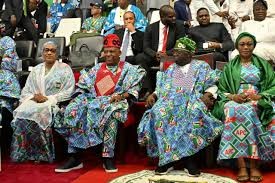
Nigeria’s two dominant political parties, the All Progressives Congress (APC) and the Peoples Democratic Party (PDP), have both concluded major national conventions in March 2026. The events also reignited debate about women’s inclusion in party leadership.
The parties’ conventions, held in Abuja, were designed to reorganise party structures and prepare both parties for the 2027 general elections. However, beyond the formal outcomes, they also highlighted longstanding structural barriers to women’s full participation in Nigerian politics.
The APC held its 4th National Elective Convention between March 27 and 28, 2026, while the PDP held its convention on March 29-30 in Abuja.
The APC event brought together over 8,400 delegates, 30+ governors, and top party leaders, including President Bola Tinubu, underscoring its political significance. The faction headed by Nyesom Wike, the Minister of the Federal Capital Territory (FCT), held sway over the PDP convention.
The purpose of the convention was to elect a new NWC to manage party affairs and oversee preparations for the 2027 elections, including primaries and internal coordination.
At the APC convention, the party maintained a PWD (Persons with Disabilities) leadership position within its structure, signalling an effort toward inclusive representation beyond traditional political blocs.
However, despite the size and diversity of the convention, women remained marginal in visible procedural roles.
For instance, the wife of the president and the first lady of Nigeria, Oluremi Tinubu, criticised the absence of women in key moments, particularly the failure to have any woman move a motion during proceedings.
At the convention, the Nigerian president and the APC’s presumed presidential flagbearer, President Bola Ahmed Tinubu, assured party members that this would be looked into.
The president said, “Just a few minutes ago, my wife asked me one strange question: whether there are no women to move motions. Why is it that there are only men moving motions? What about a special place for women? I assured her we would move decisively on that,” Tinubu said.
The PDP Symbolic Gender Response
Meanwhile, unlike the APC, the PDP convention reflected a blend of competition and negotiation, with internal tensions around zoning, leadership control, and party direction shaping pre-convention dynamics. Some offices required competition, while others were settled at the last minute by party members who wanted to maintain unity.
Although tensions ran high during the convention, proceedings remained organised, leading to the establishment or confirmation of leadership roles aimed at strengthening the PDP’s position as a competitive contender in future elections.
Significantly, the PDP appeared to respond to the gender criticism surrounding the APC convention. Natasha Akpoti-Uduaghan received significant attention when she introduced the initial motion during the proceedings, an action that many viewed as both symbolic and purposeful.
A closer look at the PDP’s structure suggests that, like the APC, women remain under-represented in core NWC positions, particularly those tied to decision-making, finance, and electoral strategy.
Gender Imbalance: Persistent Under-representation of Women in Nigerian Politics
Although each convention differed, the results show that women participated but were not equally represented in leadership roles. Key NWC roles remain male-dominated, and female-focused roles often sit outside the centre of power.
The happenings at both conventions highlight a persistent trend in Nigerian politics: although women are actively involved at the grassroots level and in mobilisation efforts, they remain significantly under-represented in leadership roles.
According to the Inter-Parliamentary Union and local studies, women occupy only about 7% of elective offices in Nigeria, and the leadership of political parties remains heavily male-dominated.
However, efforts to address the gap legislatively have stalled. The Nigerian government’s Women’s Seat Bill aims to require greater representation of women in political parties and elected positions. However, since it has not been approved yet, structural reforms currently depend on voluntary actions by political parties rather than binding regulations.