



Jabi Lake Redevelopment Sparks Outrage, Unending Controversies
Controversy has continued to trail the redevelopment of Jabi Lake in Abuja following moves by the Federal Capital Territory Administration (FCTA) to hand over parts of the popular recreational area...

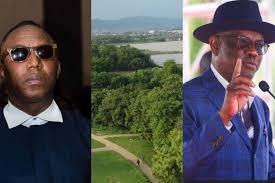
Controversy has continued to trail the redevelopment of Jabi Lake in Abuja following moves by the Federal Capital Territory Administration (FCTA) to hand over parts of the popular recreational area to private firms.
The dispute intensified after the FCTA, under the leadership of FCT Minister Nyesom Wike, commenced demolition and cleanup operations around the lake, insisting the exercise was part of efforts to restore the area in line with the Abuja Master Plan and transform it into a world-class tourism and recreation hub.
Jabi Lake, one of Abuja’s most visited relaxation centres since its commissioning in 2007, has long served as a gathering point for residents, families, worshippers, vendors, fitness enthusiasts, and tourists. Over the years, the area evolved into a thriving economic hub supporting numerous small businesses and recreational activities.
However, the FCTA in February signed development agreements with private firms, including Suburban Broadband Limited and Akida Hills Limited, to redesign the waterfront into what officials described as a modern entertainment destination comparable to Dubai’s Palm Jumeirah and New York’s Times Square.
Government officials argue that several plots around the lake had remained undeveloped for over 15 years, while shanties and makeshift structures gradually overtook the environment.
According to the FCT minister, Wike, the administration could no longer tolerate land speculation and abandonment in strategic parts of the capital city.
According to the FCT minister, during a media briefing, he mentioned that the developer promised a befitting initiative.
“They told us they would build something like what you see in Dubai — a city walk, a proper entertainment centre. But what do you find there today? Shanties. Who will come and stay in such a place?” Barr Wike queried
The development, however, has generated widespread backlash from residents, business owners, and religious leaders who fear that the lake could become inaccessible to ordinary Nigerians if fully commercialised.
Vendors around the lake said they were not properly informed or consulted before the demolition began. Some business owners also said their structures were demolished amid uncertainty about the area’s future and the fate of long-standing occupants.
The controversy gained national attention after Sarah Omakwu, senior pastor of the Family Worship Centre, shared an emotional video urging the FCT minister not to privatise the lake or restrict public access to the facility.
In the widely circulated video, the cleric appealed passionately for the preservation of the park, describing it as a common heritage and one of the few open recreational spaces available to Abuja residents.
However, the FCT minister dismissed the emotional appeals, insisting that governance decisions could not be based on sentiments. The minister maintained that the government was acting within the law and according to the Abuja Master Plan.
The minister’s response further polarised public opinion, with critics accusing the administration of prioritising elite commercial interests over public welfare and environmental preservation.
Sowore Joins the Fray
Human rights activist and former presidential candidate Omoyele Sowore has launched a high-profile “Save Jabi Lake Park” campaign to resist an alleged land takeover of the popular public recreational space in Abuja.
Sowore heavily criticised the minister of the Federal Capital Territory (FCT), Nyesom Wike, accusing him of “land grabbing” and trying to convert a common public heritage into a private estate.
During an open tour and protest at the park, Sowore and other Abuja residents gave the FCT minister a 7-day ultimatum to cease construction and demolish the perimeter fence erected around the area. Sowore warned that citizens would take matters into their own hands and bring down the walls if the government failed to comply.
During his visit to Omakwu’s church in Abuja, the activist condemned what he described as attempts to seize public spaces meant for citizens.
Sowore accused authorities of encouraging land grabbing and undermining public infrastructure in the nation’s capital.
He urged residents to speak out, arguing that public parks and recreational centres should not be handed over entirely to private developers.
“The reason I came here today was the message I saw from Pastor Sarah about Jabi Lake,” Sowore said during the church visit while calling for collective resistance against policies perceived as harmful to public interest.
Beyond political and religious reactions, housing and environmental advocacy groups have also raised concerns over the implications of the redevelopment project.
The Housing Development Advocacy Network urged financial institutions not to fund major projects around Jabi Lake until concerns about environmental sustainability, urban planning, and public consultation are properly addressed.
It also advised banks, mortgage lenders, private equity investors, and other financial institutions not to fund major projects around Jabi Lake, Abuja, until concerns about public interest, the environment, and urban planning are fully addressed.
The group said Jabi Lake is a vital environmental and recreational asset in Abuja’s master plan and should not be overly commercialised.
Adekola Adeniran, a development expert, explained that while governments have the legal authority to partner with private firms for infrastructure development, transparency and public consultation are critical to avoid distrust and social backlash.
“Cities need investment and modernisation, but redevelopment must not become a justification for excluding ordinary citizens from public spaces.
“Jabi Lake was designed as a public recreational asset under the Abuja Master Plan. Once such places are handed almost entirely to private investors, access often becomes commercialised, and the original social purpose is gradually lost.”
“When people suddenly wake up to demolitions and redevelopment plans without proper engagement, the process begins to look like land capture rather than urban renewal. Development should carry the people along, especially traders, residents, and small businesses whose livelihoods depend on the environment. “He said.