

Court Orders INEC to Deregister ADC, Accord, Others for Failing Constitutional Requirements
A Federal High Court sitting in Abuja on Monday ordered the Independent National Electoral Commission (INEC) to deregister the African Democratic Congress and four other political parties for...

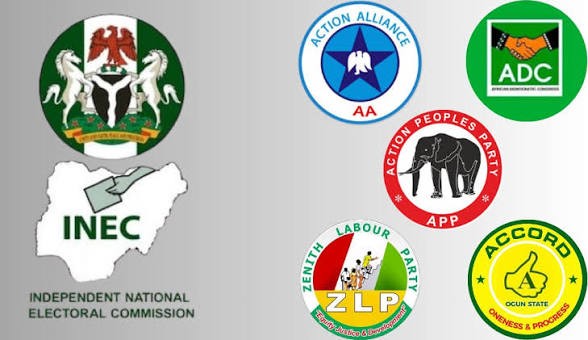
A Federal High Court sitting in Abuja on Monday ordered the Independent National Electoral Commission (INEC) to deregister the African Democratic Congress and four other political parties for allegedly failing to meet the constitutional requirements for continued registration.
Justice Peter Lifu of the Federal High Court gave the order in a case filed to call for the deregistration of some political parties instituted by the Forum of Former Legislators. Apart from the ADC, the court also directed the electoral body to deregister the Action Peoples Party (APP), Action Alliance (AA), Accord Party (AP), and Zenith Labour Party (ZLP).
In the suit marked FHC/ABJ/CS/2637/2026 filed by the National Forum of Former Legislators, the plaintiff asked the court to determine the constitutional obligation to remove political parties that fail to meet the electoral performance thresholds set out in Section 225A of the 1999 Constitution (as amended), as reinforced by the Electoral Act 2022 and INEC’s regulations.
In their argument, the forum of legislators argued that the five affected political parties had consistently failed to secure 25 percent votes in a state during a presidential election or win elective positions at the national, state, and local government levels. The plaintiff also argued that the parties failed to achieve the required electoral performance in the 2023 general election and the subsequent bye-elections conducted by INEC.
Meanwhile, Section 225A of the Nigerian Constitution empowers the Independent National Electoral Commission (INEC) to de-register political parties that perform poorly in elections. The law, which was enacted through the Fourth Alteration Act, establishes strict minimum thresholds that a party must meet during an election cycle to maintain its legal registration status.
The law also mandates that to avoid de-registration, a political party must achieve at least one specific milestone across federal, state, or local levels. This includes securing at least 25% of the votes in one state during a presidential election or in one local government area during a governorship election. Alternatively, the party must win at least one seat in the National Assembly, a State House of Assembly, or a local government council.
As a result, the plaintiff urged the court to enforce the law, calling on INEC to deregister the five political parties before preparations for the 2027 elections advance further.
Beyond declaratory reliefs, the plaintiff prayed the court to restrain the five affected parties from participating in general elections or engaging in political activities such as campaigns, rallies, and primaries.
It also sought a court injunction restraining INEC from recognising or dealing with the parties in any official capacity unless and until they comply with constitutional provisions.
The lawsuit was also supported by the Attorney General of the Federation, Mr Lateef Fagbemi, who threw his weight behind the legal position, stating in April that the matter in the notice filed pursuant to Order 15 Rule 1 of the Federal High Court (Civil Procedure) Rules, 2019, was the plaintiff’s suit “to the extent of its constitutional responsibility”.
Additionally, the AGF argued that it was “the custodian and protector of the Federal Republic of Nigeria’s Constitution” and that it had an obligation to support initiatives aimed at upholding its provisions. The document stated, “It is the Attorney General of the Federation’s constitutional responsibility to bring, defend, or support any action for the observance of the provisions of the Federal Republic of Nigeria’s Constitution.”
Ruling on the matter, Justice Lifu agreed with the plaintiff and granted the injunction, holding that the parties are qualified for deregistration under the constitution.
The court ruling will have a significant implication for the general elections, which are fast approaching in about seven to eight months, and the off-cycle governorship elections in Ekiti and Osun states.
The judgement, if implemented with immediate effect, could see some prominent candidates disqualified. Prominent candidates in the firing line of the judgement are the presidential candidate of the ADC, Atiku Abubakar, and Osun State Governor, Ademola Adeleke, who is seeking a second term in office on the platform of the Accord in the governorship election slated for August.
If the judgement is immediately enforced, it means an automatic disqualification for the candidates of the affected political parties and will dramatically reshape the political landscape ahead of the elections in which the candidates of the parties are major contenders.