



Fake Alert: How Algorithms Spread False Claims of Candidate Withdrawals and Endorsements Before the Ekiti Governorship Election
Algorithms play a major role in determining the information people encounter on social media platforms. During elections, these systems can unintentionally amplify rumours, misinformation, and false...


Algorithms play a major role in determining the information people encounter on social media platforms. During elections, these systems can unintentionally amplify rumours, misinformation, and false claims, allowing them to spread faster than verified information.
While algorithms do not create election rumours, they can significantly increase their reach. By rewarding engagement, recommending popular content, and accelerating information sharing, social media algorithms can transform a local rumour into a widely accepted narrative within hours, especially when effective verification mechanisms are absent.
Algorithmic amplification refers to the process through which automated systems on digital platforms boost the visibility of certain content. Rather than displaying posts in a neutral or chronological order, these systems prioritise content based on engagement metrics such as likes, shares, comments, and user behaviour patterns. As a result, sensational or emotionally charged posts often receive greater visibility than carefully verified information.
One recurring form of election misinformation is the false claim that a candidate has withdrawn from a race or endorsed a rival candidate. Such rumours can influence voter perception, discourage supporters, and create confusion among the electorate.
Signs of this trend have already emerged ahead of the 2026 Ekiti State governorship election. On June 18, 2026, barely two days before the election, a social media post alleged that Dr Wole Oluyede, the governorship candidate of the Peoples Democratic Party (PDP), had endorsed the Accord Party candidate. Within a few hours, the post gained significant traction, attracting more than 272 likes and generating widespread discussion. However, an investigation by NDR Fact Check found the claim to be false.
Another claim involved the alleged withdrawal of SDP candidate Peter Obafemi, which was announced by the party structure in Ekiti State under its State Chairman. Both Obafemi and the SDP national leadership disputed the statement.
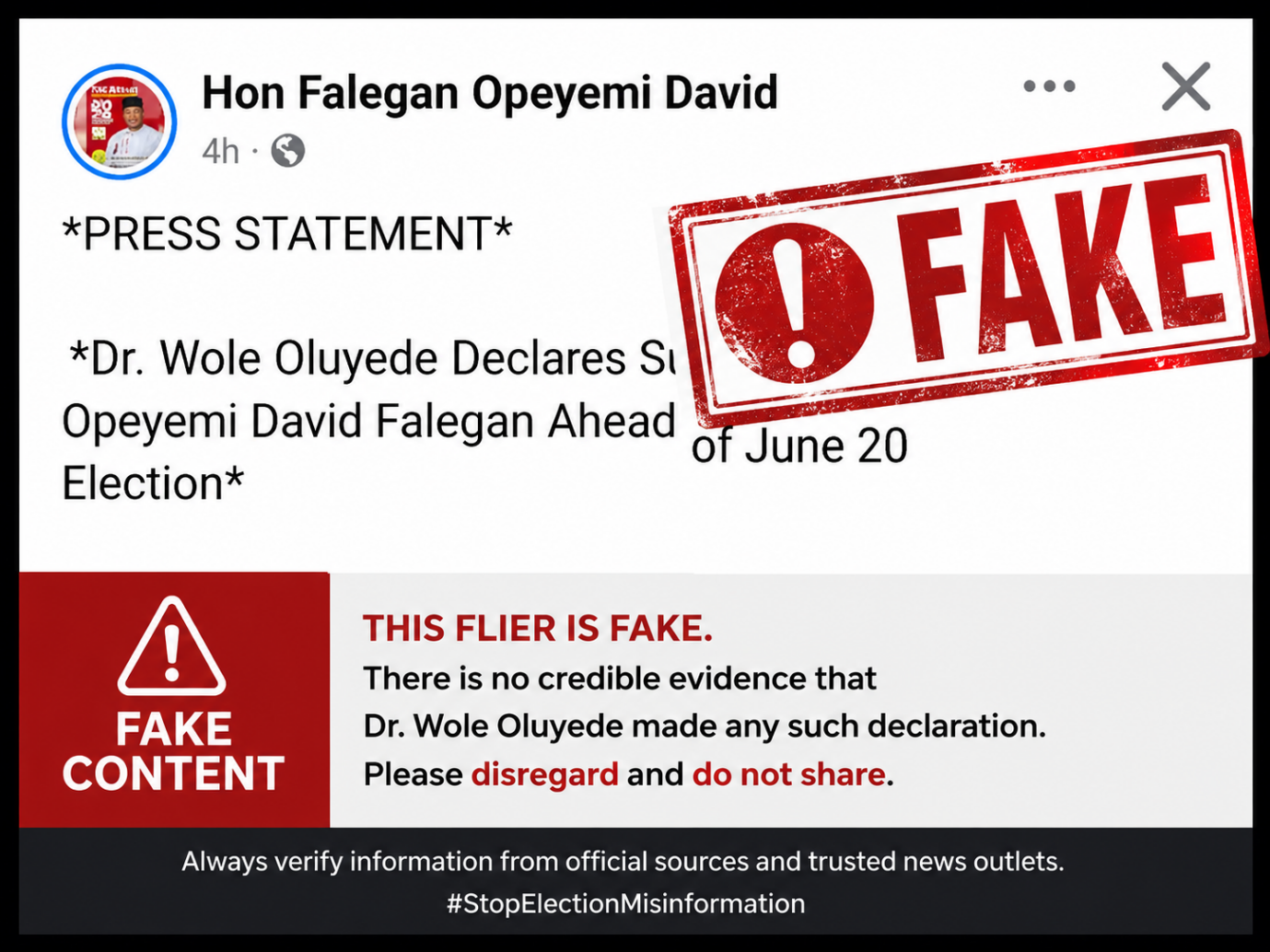
Similar withdrawal and endorsement claims have also circulated by word of mouth across the state, misleading voters and creating confusion.
A similar incident occurred during the 2022 Ekiti governorship election. Just days before the poll, an X (formerly Twitter) user, @OtuBamArujeje, circulated a two-page document claiming that Segun Oni, the candidate of the Social Democratic Party (SDP), had withdrawn from the race. The claim was later fact-checked and debunked by Cable Fact Check. Nevertheless, the post attracted substantial engagement, including 63 reposts and 78 likes.
More importantly, the reactions in the comment section revealed the influence of algorithmically amplified misinformation. Many supporters appeared to believe the claim, expressing disappointment and even threatening to withdraw their support. One commenter wrote, “Can you imagine?! Segun Oni is a very unserious fellow.”
These examples illustrate how false election claims can gain momentum through algorithmic amplification. When highly engaging but inaccurate content is repeatedly promoted by social media systems, it can shape public perception before fact-checkers and official sources have the opportunity to correct the record. This makes timely verification and information sanitation critical components of elections.
Hence, the recurrence of false withdrawal and endorsement claims during elections highlights the need for proactive measures by election managers, media organisations, fact-checkers, and social media platforms