
How Fact-Checking Has Contributed to Sanitising Nigeria’s Political Environment
Nigeria’s political environment has long been shaped by intense contestation, strong party loyalties, and increasingly, the rapid spread of misinformation. Election cycles, campaign seasons, and...

Nigeria’s political environment has long been shaped by intense contestation, strong party loyalties, and increasingly, the rapid spread of misinformation. Election cycles, campaign seasons, and moments of political tension often bring a flood of manipulated videos, false claims, doctored documents, and misleading narratives capable of influencing public perception before facts catch up.
According to figures cited by election observers, active social media users in Nigeria increased from 27 million in 2019 to approximately 36 million in 2023, increasing both political participation and exposure to misinformation.
Over the last decade, however, one response mechanism has steadily gained prominence: fact-checking.
Once viewed as a niche journalistic practice, fact-checking has evolved into an important part of Nigeria’s democratic infrastructure. Through claim verification, public accountability, media literacy initiatives, and election monitoring, fact-checking has increasingly influenced how political information is produced, consumed, and ultimately challenged.
While it has not eliminated political misinformation, its contribution to sanitising public discourse has become difficult to ignore.
The Growing Information Challenge in Nigerian Politics
Political misinformation in Nigeria predates social media, but digital platforms have transformed both its speed and reach.
Election periods have become especially vulnerable to false narratives. Claims designed to undermine opponents, inflame ethnic and religious divisions, discourage voter participation, or question electoral credibility often circulate widely online.
Ahead of Nigeria’s 2023 general elections, analysts observed a more coordinated and sophisticated use of political disinformation online, with narratives aimed at glorifying candidates, delegitimising opponents, and weakening confidence in electoral institutions.
The scale of exposure is significant. Reuters reported that more than half of Nigeria’s population is online, with tens of millions active across platforms such as Facebook, YouTube, TikTok, WhatsApp, and X. This has expanded both political participation and vulnerability to false information. Within this environment, fact-checking emerged as more than a correction tool; it became a mechanism for preserving the quality of public debate.
Creating a Culture of Political Accountability
One of the most visible contributions of fact-checking has been its ability to hold political actors accountable for public claims.
Historically, campaign promises, political speeches, and televised appearances were rarely subjected to systematic verification. Political communication often relied on repetition and emotional appeal rather than evidence. Fact-checking introduced a different expectation: claims could be tested.
This shift matters because political messaging influences public decisions. When public figures know that statistics, historical references, economic projections, and policy claims may be scrutinised, the political cost of spreading inaccurate information increases.
Fact-checking has therefore contributed to building a culture where evidence increasingly matters in political conversations.
Rather than allowing statements to exist unchallenged, verification practices have encouraged a more evidence-based political environment.
Protecting Electoral Integrity
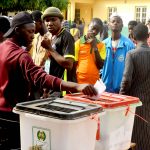
Fact-checking has also played important roles during elections.
Political misinformation during elections can discourage voter turnout, create confusion around voting procedures, and weaken trust in institutions and electoral outcomes. In response, verification initiatives increasingly focus on election periods.
Research analysing political fact-checks published during Nigeria’s 2023 general elections reviewed 101 political claims and found that approximately 75 percent were rated false, while only about 15 percent were verified as true. Text-based misinformation represented the majority of the claims reviewed.
These findings suggest that misinformation during elections is not incidental—it is widespread.
By identifying false narratives before they become accepted as truth, fact-checking contributes to protecting electoral participation and reducing opportunities for manipulation.
Election-related verification has also expanded beyond debunking. Real-time monitoring, rapid responses to viral claims, and coordinated information tracking have become increasingly common approaches.
Countering Political Polarisation
Nigeria’s politics is deeply influenced by identity, including ethnicity, religion, and regional affiliations. False political narratives often exploit these divisions.
Disinformation campaigns rarely focus only on policy; they frequently seek to provoke emotional reactions and deepen mistrust.
Fact-checking contributes to sanitising the political environment by interrupting this cycle.
Verification helps shift discussions from identity and personality-driven assumptions toward evidence-based evaluation. Instead of accepting claims because they align with existing beliefs and sentiments, audiences are encouraged to examine sources, context, and available data.
This process may not eliminate political loyalty, but it can reduce the influence of deliberately misleading narratives.
By slowing the spread of emotionally charged falsehoods, fact-checking creates more space for informed political engagement.
Strengthening Public Trust in Information
Another major contribution of fact-checking has been rebuilding trust in information systems.
Political misinformation does not only damage reputations; it can weaken confidence in journalism, democratic institutions, and elections themselves.
Repeated exposure to falsehoods often creates confusion where citizens begin to distrust all information, including accurate reporting.
Fact-checking addresses this challenge by providing transparent methods of verification. Rather than asking audiences to accept conclusions blindly, verification processes generally explain sources, evidence, and reasoning.
This transparency encourages citizens to engage more critically with political information.
Over time, repeated exposure to verification practices contributes to healthier information habits and stronger democratic participation.
A fact-checker, Nurudeen Akewushola, said that fact-checking has made politicians conscious when they speak; unlike before, “they just dish out inaccurate data and false information and people will be clapping.
“That’s why some of them say ‘fact-check me’ when they speak during debates. It’s because they know fact-checkers are out there monitoring them. People have also started doing the same. Even before fact-checkers verify a claim, you already see people doing basic things like reverse image search and checking data sources to debunk what the politicians say.”
Beyond Debunking: Building Media Literacy
Fact-checking’s contribution extends beyond correcting individual claims.
Increasingly, verification initiatives focus on teaching citizens how misinformation works. Media literacy campaigns encourage people to question viral content, verify sources, examine dates, and recognise manipulated images or misleading headlines.
This preventive approach matters because fact-checking often faces a structural disadvantage: false information spreads quickly.
Research examining political fact-checking internationally found that fact-checks frequently struggle with limitations in coverage, speed, and reach compared to the spread of misinformation itself.
As a result, building citizens’ verification skills has become just as important as publishing corrections. A politically informed public remains one of the strongest defences against manipulation.
The Limits of Fact-Checking
Despite its contributions, fact-checking is not a complete solution.
Political audiences sometimes reject verified information when it conflicts with existing beliefs. Social media algorithms can also reward sensational content over corrections.
False claims often circulate across multiple platforms simultaneously, making coordinated responses difficult.
There are also concerns about sustainability, funding, and ensuring public trust in verification processes themselves.
These realities mean that sanitising Nigeria’s political environment cannot depend on fact-checkers alone.
Political parties, media organisations, technology companies, regulators, civil society groups, and citizens all share responsibility for improving information integrity.
Fact-Checking and the Future of Political Accountability
Fact-checking has not transformed Nigerian politics overnight, nor has it ended misinformation. But it has introduced something increasingly valuable into public life: accountability.
By verifying political claims, exposing misleading narratives, strengthening media literacy, and supporting electoral integrity, fact-checking has helped create a political environment where evidence has greater visibility.
Its impact is not measured only by the number of false claims corrected but by the gradual shift in expectations—that public claims should be questioned, political messaging should be examined, and citizens deserve accurate information before making democratic choices.
In an era where information can shape elections as much as campaigns themselves, that contribution remains essential to the future of Nigeria’s democracy.