



2027: IPC Tasks Journalists on Accountability, Credible Reporting Ahead of Elections
As the 2027 general elections draw closer, the International Press Centre (IPC) has convened an interface with journalists in Oyo State, urging them to shift from event-driven electoral coverage to...

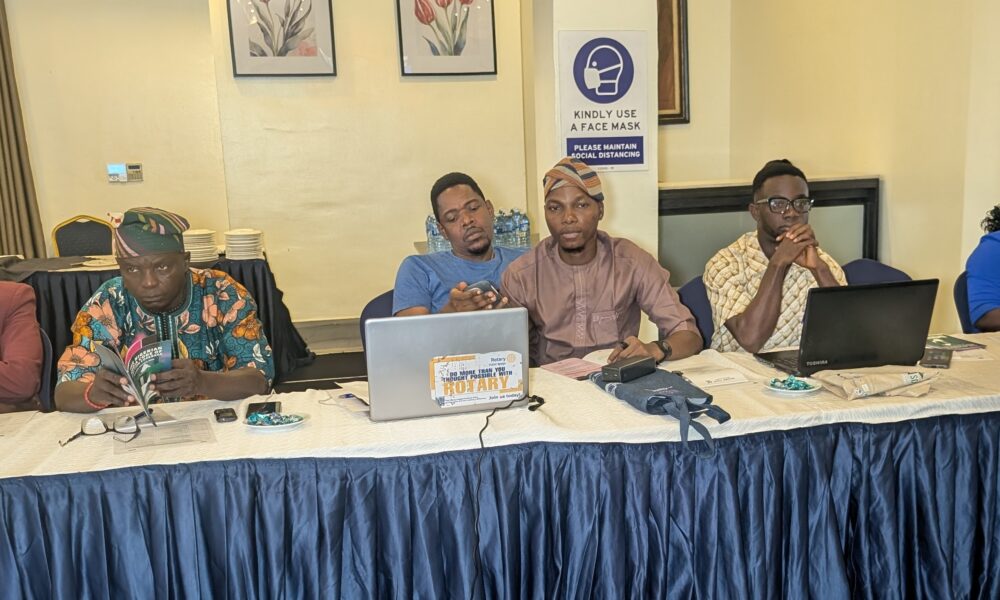
As the 2027 general elections draw closer, the International Press Centre (IPC) has convened an interface with journalists in Oyo State, urging them to shift from event-driven electoral coverage to issue-based reporting that promotes accountability and transparency in the democratic process. The initiative is aimed at encouraging journalists to play a more strategic role in the electoral process by focusing on citizens’ priority concerns, scrutinising political promises, and holding public officials accountable for their actions and performance.
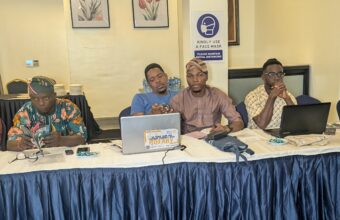
The two-day event, themed “Interface with Nigeria Union of Journalists (NUJ) and Editors/Publishers on Democratic Scorecard (Oyo State Edition),” was organised as part of the activities under Component 4 (Support to Media) of the European Union Support to Democratic Governance in Nigeria (EU – SDGN III) project, of which IPC is the lead partner.
It brought together the print and broadcast journalists on the first day and online media practitioners on the second day and was aimed at identifying, consolidating, and amplifying citizens’ priority issues, while deploying accountability scorecards as an engagement tool in promoting democratic accountability and electoral reporting and fact-checking of political claims, conflict-sensitive reporting, and countering electoral misinformation and disinformation.
In his opening remarks, Mr Lanre Arogundade, the Executive Director of the International Press Centre, noted that the interface came at a significant moment in the country’s democratic journey, as the general election cycle is approaching, stressing that there is a compelling need for the media to reflect on its responsibilities, reassess its approaches to electoral reporting, and strengthen its capacity to provide citizens with credible, balanced, inclusive, and public-interest information.
Mr Arogundade, who was represented by Ms. Melody Akinjiyan, further dwelled on the significance of the responsibility the media is saddled with as elections are not merely about political campaigns, rallies, candidates, and the eventual announcement of results. He added that elections are also about citizens, their aspirations, their concerns, their expectations of leadership, and their right to make informed decisions about the future of their country.
Acknowledging the role of the media and the strategic position it occupies in any democratic society, the IPC Director urged the participants to see their duties beyond reporting political activities and electoral events. He maintained that the media has a responsibility to facilitate informed public discourse, scrutinise political promises, hold public officials accountable, and ensure that citizens’ voices are heard in the democratic process.
He further stated that the effectiveness of this responsibility depends significantly on the quality of electoral reporting. An election period characterised by sensationalism, unverified claims, inflammatory rhetoric, and the unchecked spread of misinformation and disinformation can undermine public confidence, deepen social divisions, and weaken democratic institutions.
“Conversely, a media environment that prioritises accuracy, fairness, verification, conflict-sensitive reporting, and accountability can strengthen public trust and contribute to peaceful, credible, and inclusive elections. This is why we must begin to look beyond event-driven electoral coverage towards more substantive, issue-based, and citizen-centered reporting.
“The question before us is not simply how well the media can cover the activities of political parties and candidates. It is also how effectively the media can interrogate campaign promises, document citizens’ priority concerns, verify political claims, monitor the performance of elected officials, and provide the public with the information necessary to assess governance.
He therefore urged the media to “strengthen its verification skills, exercise caution before publishing politically sensitive information, and resist the pressure to prioritise speed over accuracy. In this regard, fact-checking and verification should not be treated as optional additions to journalism. They must be integral to responsible electoral reporting.
“We must also pay closer attention to the safety and professional independence of journalists, who should be able to carry out their legitimate duties without intimidation, harassment, or unlawful interference,” he concluded.
In his address, the Chairman of the Nigerian Union of Journalists, Oyo State Council, Mr Akeem Abas, charged journalists not to follow political rallies, defections, and campaign promises merely, but to interrogate candidates’ manifestos, test political claims against facts, and track campaign promises against measurable government action.
The chairman said citizens deserve reliable information on issues that affect their daily lives, including security, education, healthcare, unemployment and the economy, and that journalism must prioritise these concerns. He added that credible reporting depends on rigorous verification, urging journalists to strengthen fact-checking to counter misinformation, disinformation, and fake news.
“As we approach the 2027 general elections, we must move decisively beyond event-driven reporting to issue-based, citizen-centered journalism,” he said. “Speed must never defeat accuracy; sensationalism must never replace substance; and political interests must never compromise professional judgement,” he warned.
“Our coverage must hold every political actor accountable—without fear or favour. Our credibility is our greatest asset. Once lost, it is difficult to recover; therefore, we must defend it through unwavering adherence to professional ethics,” Abas stated.
“We continue to support professional development, constructive engagement with media channels, and stronger institutional unity. Our conviction is clear: a well-trained, ethical, and adequately supported journalist is better equipped to serve the public interest.
“The call to action is simple: report the truth, serve the public, and hold power accountable. If we do this with discipline and courage, we will not only cover the 2027 elections, but we will strengthen Nigeria’s democracy through credible journalism,” Abas added.
In his presentation, facilitator Dr Taiwo Adisa, General Editor of the Nigerian Tribune, said journalists should champion democratic accountability by setting standards that enable the media, as the fourth estate, to hold the government accountable.
Having noted this, Dr. Adisa explained that the media cannot negotiate with factuality because that is the beginning of professional accountability before becoming “concerned about how much the journalist-citizen discharges his democratic rights and civic responsibilities. ” However, the core of our activity here would focus on professional accountability and democratic accountability as journalists.
“In breaking the concepts down further, I will say that professional accountability in journalism allows journalists to hold themselves to the ethics of the profession while scrutinising government officials, agencies, and institutions. Here, the role of the Fourth Estate is clearly alive; how do the gatekeepers keep the gates, and who holds the key to what rooms? “The core aim of professionalism is public interest. Sometimes, organisations may make it difficult to clarify what public interest stands for and how or where they collide with narrow private interests, but professionalism should determine what’s good in the interest of the public. Here you emphasise ethics, codes, and rely on something as unconventional as experience,” he said.
Dr. Adisa further gave insights on areas the media must pay attention to to achieve accountability in the democratic system, particularly as politicians are only fond of making promises before the elections and fail to fulfil them, urging the journalists to always be sure to question the authorities, as that is the core of the profession.
Highlighting some of the citizens’ priority concerns, Dr Adisa mentioned agriculture, security, infrastructure, and health, among others. “In recent years, insecurity has become a national challenge, and Oyo State has had its fair share of the malady. The farmer-herder crisis was the starting point, but kidnapping and banditry have also joined. Recently, bandits from Kwara State infiltrated the Old Oyo National Park and kidnapped some teachers and their schoolchildren. They stayed for 56 days before being returned to their families, with deaths recorded along the way. That has heightened the level of danger the people are exposed to, and a political office holder who can make firm promises on this front will surely receive the support of the people.
“Provision of healthcare facilities across the 351 wards in the state and the 33 local governments is also an issue that easily excites the voters in this climate. That is aside from promises of economic transformation and the provision of government support to cooperative societies, as well as the provision of potable water and improved electricity.
“There is a missing link, though. When politicians visit communities, the monetisation craze appears to affect the demands they make of the office seeker. Instead of asking a prospective legislator the type of legislation he would focus on to help the community, they demand brick-and-mortar dividends; some demand personal gifts and ephemeral things like payment of school fees and hospital bills. With misplaced priorities by the people at the grassroots, democracy starts developing K-leg right from its very foundation.”
He also did the scanning of the political landscape in Oyo State and performed the democratic scorecard of the state. In his analysis, he explained that despite the peculiarities of the state, the media must play its part to ensure that the government is giving the citizens the dividend of democracy.
In his training on integrating fact-checking into democratic and accountability reports, Olusola Oludiran, a journalist and fact-checker with Nigerian Democratic Reports, said the role of the media as the fourth estate plays a vital role in monitoring the exercise of power and informing citizens about matters of public interest. The media also performs the function of a watchdog, at its core, through independence, fairness and accuracy to achieve democratic accountability, as it cannot be said to be performing its role without serving as a sanitiser to the much-tainted information space.
While training the participants on how to fact-check false information, which is prevalent during elections, especially in the fast-paced information ecosystem eroded by false information, journalists use fact-checking to curb disinformation and misinformation. He noted that fact-checking often required more rigorous investigation and technical expertise than routine news reporting, particularly when verifying images, videos and other digital content circulating online.
Oludiran further.
He urged newsrooms to integrate verification into their editorial processes, particularly as journalists increasingly work with digital images, videos and other online content. He also called for more dedicated internal fact-checking desks ahead of the 2027 polls and trained participants on digital verification tools, including Google Fact Check Explorer for verifying public claims and statements. InVID & TinEye for reverse image and video verification.
In the end, the training led to the establishment of the IPC NUJ Oyo State Fact-Checking Cohort, a team of journalists who volunteered to work together to combat disinformation and misinformation during the electioneering period and to help the public consume the right information.






No Comment! Be the first one.