


INEC, NGE Strengthen Collaboration Ahead of 2027 Elections as Voter Registration Reaches 103 Million
The Independent National Electoral Commission (INEC) and the Nigerian Guild of Editors (NGE) have strengthened their collaboration ahead of the 2027 general elections. INEC also announced that...

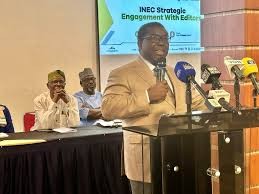
The Independent National Electoral Commission (INEC) and the Nigerian Guild of Editors (NGE) have strengthened their collaboration ahead of the 2027 general elections. INEC also announced that Nigeria’s voter register now contains 103 million voters, with Permanent Voter Card (PVC) collection beginning on Friday.
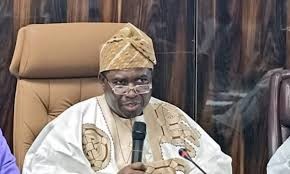
INEC Chairman Professor Joash Amupitan announced this on Monday in a keynote address at an Abuja workshop organised by the Nigerian Guild of Editors (NGE) in collaboration with INEC. He said the figure followed a three-phase Continuous Voter Registration (CVR) exercise that recorded 10,772,421 new registrations, subject to final biometric verification.
Speaking at the workshop, themed “Strengthening Democracy Through Partnership Among Editors, Civil Society and Electoral Institutions,” the INEC chairman said the commission had completed 14 major statutory activities outlined in its timetable for the 2027 elections and was progressing with the remaining tasks.
Professor Amupitan highlighted key activities completed by the electoral body in recent months. He said the first CVR phase, held from August 25 to December 10, 2025, registered 2,611,266 voters; the second, from January 5 to April 17, 2026, recorded 4,121,835; and the third, from May 11 to July 26, 2026, added 3,867,997. This brought new registrations to 10,772,421, subject to final verification through the Automated Biometric Identification System (ABIS).
He said the online registration portal introduced during the third phase reduced distance and time barriers. He added that printable PVC technology, introduced under Section 18(1) of the Electoral Act 2026, was intended to end lengthy waits for the production and collection of physical voter cards.
Highlighting INEC’s preparations for the 2027 general elections, Professor Amupitan said the commission had processed and distributed Phase One PVCs to all local government centres. He urged the media to inform registered voters where and how to collect their cards.
“As you are aware, and in line with Section 10 of the Electoral Act 2026, the first Phase of the Continuous Voter Registration (CVR) commenced on 25th August 2025 and ended on 10th December 2025, registering a total of 2,611,266 voters; Phase II commenced on 5th January 2026 and ended on 17th April 2026, registering 4,121,835 voters; and Phase Ill commenced on 11th May 2026 and ended on 26th July 2026, registering 3,867,997 voters.
“The total new registration stands at 10,772,421, subject to the Automated Biometric Identification System (ABIS) verification currently being concluded.
“In the third phase, we introduced the Online Registration Portal technology to eliminate barriers of distance and time. Furthermore, we introduced Printable PVC technology in line with Section 18(1) of the Electoral Act 2026 to ensure that waiting months for a card becomes a relic of the past.
“Following the conclusion of our three-phase Continuous Voter Registration (CVR) exercise, which captured over 10.6 million new applicants and the completion of the public display of the Preliminary Register for claims and objections, our Voter Register Department has completed the final Automated Biometric Identification System (ABIS) cleanup. Nigeria’s National Register of Voters is now over 103 million.”
“We appeal to the Nigerian Guild of Editors, and all media executives present to leverage your platforms to inform citizens, explain collection locations, and encourage registered voters to collect their cards promptly,” he said.
Addressing information integrity ahead of the election, Professor Amupitan warned that deepfakes, manipulated audio-visual content, coordinated disinformation campaigns and premature announcements of unverified results could incite public unrest, endanger election officials and undermine legitimate elections.
He added that misinformation harms more than INEC; it also threatens national unity and public trust in electoral and democratic processes. He therefore urged editors to remain vigilant by rigorously fact-checking, rejecting sensational clickbait and verifying field reports through INEC’s official channels before publication.
Professor Amupitan also maintained that the electoral body is already warning the politicians to avoid the use of incendiary speeches that can fuel violence during the elections.
He also called for operational synergy with editors and urged them to “Prioritise Fact-Checking and Verification: We encourage your newsrooms to prioritise Digital Media Fact-Verification Desks to combat misinformation and disinformation. The Commission will provide editors with direct, immediate access to verify field incidents, logistical updates, or security reports in real time.
“The Commission will work closely with the Inter-Agency Consultative Committee on Election Security (ICCES) to ensure that accredited journalists and media workers are granted unhindered access and full security protection at polling units and collation centres nationwide. Sustained Editorial Feedback Framework: We propose that the leadership of the NGE and INEC’s Communication team establish a periodic feedback mechanism through 2027 to review operational progress, resolve emerging newsroom friction, and maintain seamless communication.
In his opening statement, President of the Nigerian Guild of Editors, Mr. Eze Anaba, expressed appreciation to INEC for agreeing to facilitate the engagement. “We consider it timely, especially as the country is on the cusp of another round of elections. Today’s engagement is necessary to deepen and strengthen the relationship between the electoral management body and the leadership of the media at a time when the credibility of our democratic process remains a matter of profound national importance.
“Elections are not merely about casting ballots. They are about trust. They are about citizens believing that their votes will count, that the process will be transparent and that the institutions responsible for conducting elections will act fairly and professionally.
“The media has a critical role in building and sustaining that trust. As editors, we determine, to a significant extent, what information reaches the public, how it is presented and the context in which it is understood. With that responsibility comes an obligation to uphold accuracy, fairness, balance and the public interest.
“At the same time, we recognise that the media cannot perform this responsibility effectively without credible, timely and accessible information from the electoral management body. In an environment increasingly polluted by misinformation, disinformation, manipulated content, deepfakes and partisan narratives, the relationship between INEC and the media must therefore be one founded on openness, mutual respect, and regular engagement.
” This workshop provides an opportunity for us to look beyond the traditional relationship between the electoral commission and the media. We must ask ourselves difficult but necessary questions: How can INEC communicate more effectively with the public? How can editors and journalists report electoral processes more accurately? How do we collectively confront disinformation without undermining legitimate criticism? And how can we use the enormous reach and influence of the media to strengthen citizens’ confidence in our elections?
“The Guild believes strongly that a credible election is a shared responsibility. INEC has its constitutional mandate; political parties and candidates have their responsibilities; the media has its own obligations; and citizens must be adequately informed and empowered to participate in the democratic process.
“The credibility of the media is itself an essential component of the credibility of the electoral process.
“I therefore urge participants to approach this workshop with candour, open-mindedness and a willingness to listen. Let us identify the gaps in our existing relationship, confront the challenges honestly and develop practical strategies that will improve electoral communication and reporting.
“The Nigerian Guild of Editors is committed to working with INEC and other stakeholders to promote elections that Nigerians can trust and a media that citizens can rely upon for credible information”.
In his goodwill message, the Executive Director of the International Press Centre, Mr Lanre Arogundade, emphasised the rapid spread of false information around elections and electioneering periods, stating that the existence of a digital environment and artificial intelligence has enhanced the challenge, thereby making fabricated content increasingly convincing and more difficult to identify.
According to him, this development is putting the media executives on their toes, and it is important for editorial leadership of media houses to “establish the conditions under which accuracy takes precedence over virality, evidence over assumption, and public interest over the pursuit of clicks.” ” These are not merely professional preferences. They are essential safeguards for democratic participation, as articulated in the Nigerian Media Code of Election Coverage, of which the Guild of Editors is a major signatory.
“At the International Press Centre, our response has also combined the strengthening of professional standards, the provision of practical resources and the intensification of stakeholder engagement, entailing the development of the Media Election App, interface with media leaders and collaboration with INEC on fact-checking and digital literacy. We have facilitated the emergence of over 100 fact-checking fellows and introduced the WAFLO app to document incidents affecting journalists and press freedom, all in a bid to ensure the credible and safe reporting of elections.
“These efforts reflect a conviction that should guide all of us: the integrity of an election depends not only on the process that produces the result but also on the information through which citizens understand that result,” he said.
Mr Arogundade further called on the INEC to take the responsibility of making accurate information accessible, explain electoral procedures clearly and respond promptly to legitimate public concerns, as Information gaps create opportunities for speculation, as silence can leave a vacuum that falsehood readily occupies.
He also warned against hiding under the guise of countering misinformation to restrict legitimate criticism, insisting that the electoral commission must be able to communicate its position, and the media must remain free to scrutinise it.
“A healthy relationship between INEC and the media should be built on access, transparency and mutual responsibility, without compromising editorial independence or the media’s watchdog role.
“We must equally recognise that information integrity cannot be separated from the safety of those who gather and report the news. Journalists who face intimidation, harassment or violence cannot perform their public duty freely. Protecting journalists is therefore not a peripheral concern; it is part of protecting citizens’ access to information and their right to participate meaningfully in democracy,” he concluded.