
Atiku, Obi, Others Reject Tinubu’s Claims of Economic Progress
President Bola Tinubu’s October 1, 2026, address marking Nigeria’s 66th independence anniversary drew mixed reactions, as prominent Nigerians and opposition parties disputed his administration’s...


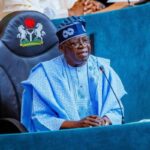
President Bola Tinubu’s October 1, 2026, address marking Nigeria’s 66th independence anniversary drew mixed reactions, as prominent Nigerians and opposition parties disputed his administration’s claimed achievements, while others maintained that the country was moving in the right direction.
In his address on Thursday, President Tinubu said Nigeria had moved beyond a difficult period of economic reforms under his administration and was entering what he called an “age of prosperity,” with a focus on job creation, industrial growth, and lowering the cost of living.
He further insisted that the economic reforms introduced by his administration after assuming office in 2023 were necessary to correct longstanding distortions in the economy, despite the hardship experienced by Nigerians during the adjustment period, insisting that the previous governments had avoided difficult economic decisions, leaving the country with structural weaknesses that eventually required painful corrective measures.
This has drawn reactions from the majority of Nigerians who insist that the improvement claim made by the president does not resonate with average Nigerians who are experiencing high costs of living and economic hardship as a result of inflation and increased prices of fuel.
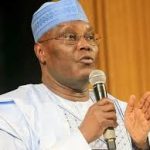
In his state of the nation address, the presidential candidate of the African Democratic Congress (ADC), Atiku Abubakar, criticised the president and the APC administration for leaving Nigerians poorer and questioned Tinubu’s assertion that the country had entered an era of prosperity.
Atiku said rising insecurity and the cost of living contradicted the president’s description of a stable and improving economy. He challenged the administration to provide evidence of some of the social interventions highlighted in the speech, including records relating to the reported ₦750 billion conditional cash transfers.
Atiku also challenged the administration over its claim that transportation costs were falling, asking the government to demonstrate where Nigerians were experiencing the promised reduction in fares.
He criticised the removal of the petrol subsidy, arguing that the policy had contributed to increases in petrol, transportation, and food costs without sufficient protection for households affected by the shock.
Atiku also challenged the president’s use of falling inflation as evidence of improved living conditions, arguing that a slower increase in prices does not reverse the losses already suffered by households.
“A slower rise in prices does not restore what families have lost,” he said.
He contrasted the ₦30,000 minimum wage in April 2023 with the ₦70,000 minimum wage today, arguing that the purchasing power of workers remained under severe pressure.
Atiku further proposed a capped and budgeted production subsidy tied to petrol refined in Nigeria, including fuel from modular refineries. He said imported petrol should not qualify for the subsidy and proposed that the cost and payments under the programme be independently audited.
“If Bola disagrees, he should answer the proposal on its merits. Calling relief an addiction will not lower the price of petrol,” he said.
As an alternative, Atiku outlined a policy to “make life affordable again” through a capped, budgeted production subsidy for fuel refined in Nigeria, including from modular refineries, while excluding imported petrol. He promised transparent costing, independent audits, and cuts in government waste to fund the scheme, framing it as “produce here, refine here, create jobs here, and pay less here.” He also blasted Tinubu’s promise of lower transport fares from October 1, asking, “Did your promise miss the bus?” and calling for publication of routes, old and new fares, and beneficiary numbers.
The former vice president also called for respect for civil liberties, due process in high-profile detentions, and the release of five youths arrested in Borno over “Tinubu Must Go” T-shirts, insisting political slogans must not justify imprisonment. He pledged to end election rigging, respect INEC’s independence, ensure prompt polling-unit results, and prosecute vote-buying and result-tampering even within his own party. Ending with a repeated refrain, he told Nigerians, “We have looked back… Tinubu must go,” urging citizens to question every candidate and protect their votes.
“Sixty-six years after independence, millions of Nigerians are fighting for things a free country should never put beyond their reach: food on the table, a wage that lasts the month, and a safe journey home. The past three years under Bola Tinubu have plunged Nigeria into the most severe cost of living crisis in our history. Families are not merely tightening their belts. They are skipping meals, delaying treatment and borrowing to survive until payday.
“And what has this government asked of them? More patience. More sacrifice. More faith in figures they cannot eat. While Nigerians are lectured about hardship, those in power preside over brazen waste, corruption, and a budget process that makes a mockery of fiscal discipline. The people are told there is no money to ease their pain, yet the government always seems to find money for its own appetites.
Tinubu removed the fuel subsidy with one announcement and no credible protection in place for the families who would bear the shock. Petrol, transport, and the cost of moving food rose. He promised that the savings would benefit Nigerians. Three years later, the pain has an address in every home. Bola, where is the benefit?
“The coming election offers us a peaceful way to choose our course. To the young person who wonders whether one vote matters, to the parent who has lost faith in promises, and to the worker who has grown tired of waiting: this country is yours. Listen closely. Question every candidate, including me. Demand plans that can be examined and promises that can be measured. Protect your vote and refuse intimidation.
Bola Tinubu says Nigeria has crossed the Red Sea and that there must be “no looking back.” Let him come down from Aso Rock and meet the Nigerians still struggling to get to the other side. Looking back at a government’s record is a citizen’s right. It is how we decide whether those who hold power deserve more time.
We have looked back. We have counted what fuel costs, what food costs, and what a wage can still buy. We have seen families waiting for relief while the government asks for more patience. We have heard promises of prosperity from a president who cannot show millions of Nigerians where to find it,” he said.
Obi focuses on insecurity and leadership by example.
In his reaction, the presidential candidate of the Nigeria Democratic Congress, Mr. Peter Obi, also offered a contrasting message, focusing on insecurity, poverty, leadership, and the need for political leaders to demonstrate accountability.
The former governor of the Anambra State government lamented the current situation of the country, stating that despite how rich Nigeria is, the Independence Day celebration was supposed to be a day of appreciation and patriotism, a day to remember our founding fathers and all those who made selfless, and in many cases supreme, sacrifices for the birth, survival, and growth of our dear nation; however, the country’s situation calls for attention.
As a result, he posed some challenges and questions to the Nigerians: “We must look back, examine where we stand today, and ask ourselves whether we are moving in the direction our founding fathers envisioned. In national planning and strategy, every serious nation must continually ask three fundamental questions: Where are we today? Where do we want to be? How do we get from where we are to where we want to be?”
He further criticised the APC-led government for making Nigeria “face deepening challenges across virtually every critical sector of national life. Today we stand before the world as a nation: with an extraordinarily large population living in poverty and severe hardship (over 140M); with one of the largest populations of out-of-school children in the world (over 18M); where insecurity, terrorism, banditry, and kidnapping continue to threaten lives and livelihoods; just recently 37 young Nigerians in their productive age lost their lives; where millions of Nigerians struggle with hunger and food insecurity; and over 40M Nigerians will be in extreme hunger by the end of 2026.”
He explained that “with unacceptably high rates of infant and maternal mortality, Nigeria today is the worst place to be born. Where youth unemployment and underemployment remain alarmingly high: over 35M. Drug abuse and substance misuse increasingly threaten our young population; today, 14%, as against the global average of 6%. Where life expectancy remains among the lowest globally, today it is 54 years against the global average of 74 years. And the list goes on.
“This reality demands serious, sober, and honest reflection. Socrates taught that “the unexamined life is not worth living.” By the same principle, an unexamined nation cannot successfully chart its future. We must therefore ask ourselves: Are we cursed, or have we become the curse through the choices we have made and the failures we have tolerated? The answer cannot be that Nigeria is cursed. We are a nation immensely endowed and blessed. Our greatest problem is not a lack of resources; it is the failure to convert our enormous resources into human development.”
Sowore: Independence means little amid poverty and insecurity.
In the same vein, the African Action Congress presidential candidate, Omoyele Sowore, said Nigerians could not genuinely celebrate independence while millions remained trapped in poverty, hunger, unemployment, and insecurity.
Sowore argued that the benefits of independence should include freedom, dignity, justice, and equality, and criticised the condition of education, healthcare, and electricity. He also called for what he described as genuine independence from corruption, oppression, poverty, and injustice.
“We cannot celebrate independence while our people are trapped in poverty, hunger, unemployment, insecurity, darkness, and hopelessness.
“We cannot call ourselves truly independent when our children are denied quality education, workers earn wages that cannot sustain their families, hospitals are collapsing, the paltry electricity that exists remains a luxury, and those entrusted with public resources loot with impunity,” he said.
Labour questions the cost of reforms
The Nigeria Labour Congress has also challenged aspects of the government’s economic narrative, particularly over the impact of petrol prices on workers and households. NLC President Joe Ajaero said workers were facing a survival crisis, arguing that inflation had eroded the purchasing power of wages.
The union called for a reduction in petrol prices, a nationwide wage award, implementation of agreed tax relief measures and negotiations towards a new minimum wage. The NLC also questioned the destination of savings from the removal of the petrol subsidy, asking the government to provide greater accountability on how the funds had been used.
In his reaction, the Minister of Youth and Sports, Solomon Dalung, has faulted President Bola Tinubu’s Independence Day speech, describing it as “empty”, “rhetorical” and “disappointing”.
Dalung spoke on Channels Television’s The Morning Brief, just after President Tinubu addressed the nation as part of activities to mark Nigeria’s 66th Independence celebration.
“Well, the president’s speech, let me begin by saying that it was rhetorical, wishful, ambitious, but very, very disappointing and empty,” the former minister and a chieftain of the African Democratic Congress (ADC) said on Thursday’s edition of the breakfast show.
According to Dalung, the speech should have done more in the presentation of “successes” recorded by the Tinubu administration since taking office in 2023.
“Because I think a speech by the president at our 66th anniversary, and he said three and a half years in office—should have concentrated more on giving Nigerians accountability; concrete successes recorded so far by the reforms in the last three and a half years,” the former minister said.