



Fact-Check: Oyo School Abduction Triggers Fresh Wave of Misinformation in Nigeria
The abduction of pupils and teachers in Oriire Local Government Area, in the Ogbomosho axis of Oyo State, has raised not only security concerns but also a new wave of misinformation spreading quickly...


The abduction of pupils and teachers in Oriire Local Government Area, in the Ogbomosho axis of Oyo State, has raised not only security concerns but also a new wave of misinformation spreading quickly across Nigeria’s digital space.
Table Of Content
On May 15, armed men raided three schools in the Ahoro-Esinle and Yawota communities of Oriire Local Government Area, abducting 39 pupils and seven teachers and leaving families in anguish for weeks.
The abduction has sparked nationwide outrage, drawing condemnation from institutions and individuals and prompting protests by teachers, students, and civil society groups across the country, alongside renewed calls from lawmakers for broad security reforms.
The protests took place in the Federal Capital Territory, Edo, Rivers, Cross River, Benue, Adamawa, Taraba, Anambra, A’Ibom, Abia, Osun, Lagos, Niger and several other states.
In the days after the incident, misinformation flooded the media space through recycled videos, false kidnapping alerts, and fabricated security narratives. The crisis has shown how major security incidents create fertile ground for information disorder, especially on social media, where fear often spreads faster than verified facts.
This trend reflects a recurring pattern in Nigeria’s information ecosystem: major security crises are often followed by a surge of misinformation. Past mass abductions—including the Chibok schoolgirls’ kidnapping in 2014, the Dapchi abduction in 2018, and the Zamfara school kidnappings in 2021—also sparked waves of misleading online content. Researchers and fact-checkers have consistently found that periods of heightened insecurity often coincide with spikes in misinformation as people search for updates while official information remains scarce due to security concerns and the safety of the victims in captivity.
A Familiar Pattern of Information Disorder
During periods of uncertainty, people seek updates on unfolding events. Within days of the Oyo abduction, social media users began sharing old images, unrelated videos, and fabricated reports falsely claiming to show the abducted children, their captors, or rescue efforts. These claims spread widely—especially on X (formerly Twitter), WhatsApp, Facebook, and TikTok—before being debunked by fact-checkers and security agencies. When reliable information is delayed or scarce, rumours often fill the gap.
The rapid spread of these claims shows how quickly misinformation moves during crises. Fear and anxiety often drive people to share content before checking whether it is authentic.
Old Images and Videos Reappear
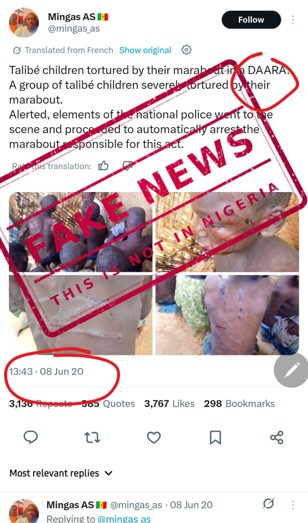
A key pattern was the recycling of old images. Fact-checkers found that photos shared as images of the abducted Oyo pupils were taken in Mali years earlier. Paired with emotional captions, they were used to stir outrage and panic. Investigations confirmed that the photos had no connection to the Oyo incident. Other unrelated images also circulated online, falsely claiming to show the abducted schoolchildren.
Another recurring pattern was the reuse of old or unrelated videos. One viral clip, falsely presented as footage of bandits torturing the abducted Oyo pupils, spread widely on social media. Verification showed that it had been online more than two weeks before the abduction and was linked to a different incident in Burkina Faso.
Another widely shared clip purportedly showed Nigerian soldiers suffering casualties during a rescue operation. Verification found that the footage originated from a staged skit and had no connection to any real military operation.
These examples show a common tactic during security crises: old content is repackaged with new captions to make it seem current and credible.

Rise in False Kidnapping Alerts
Beyond recycled content, Nigeria has also seen a rise in false kidnapping and banditry alerts.
Across several states, social media users have shared warnings about alleged kidnapping attempts, suspicious vehicles, and planned attacks. Most of these claims come with urgent appeals for recipients to forward them to friends and family. On WhatsApp, many carried the “forwarded many times” label, showing how widely they had spread on the messaging platform.
These false alarms often follow a familiar pattern: a dramatic story appears, paired with blurry images or videos and urgent calls to “share widely”.
The Ogun State Police Command announced the arrest of suspects, including Mr. Johnson Elleh, for producing and circulating a misleading video that falsely claimed a kidnapping incident had occurred in the state.

Many of these alerts lack verifiable evidence, identifiable sources, or official confirmation. Even so, they often spread quickly through WhatsApp groups, Facebook communities, and neighbourhood forums.
Because kidnapping is a deeply personal and emotional security concern for many Nigerians, people often forward such messages without verifying them. This can trigger widespread panic, harm the reputations of innocent people, and place unnecessary pressure on security agencies.

Why Security-Related Misinformation Thrives
The current trend in security misinformation is more prominent in southwestern states, and this could be because it’s the geopolitical zone where Oyo State is situated.


Ogun and Ekiti State Police commands debunk security misinformation in their states
Several factors explain why misinformation flourishes after incidents such as the Oyo abduction, and they include:
Fear and Anxiety
Kidnapping remains one of Nigeria’s most serious security challenges. Incidents involving schoolchildren trigger strong emotional reactions, especially among parents and young people. In such moments of fear, people are more likely to believe and share alarming claims without verifying them.
Lack of Official Information
Official communication during security emergencies is often limited or delayed, allowing rumours to fill the information gap. In the absence of timely updates, social media users often step in to share unverified details. Authorities therefore need a communication strategy that provides regular public updates without compromising efforts to secure the abductees’ release.
Search for Visibility and Engagement
Some people deliberately share sensational claims to attract attention. Security-related stories often generate high engagement, encouraging content creators to favour virality over accuracy. On X, monetisation can further drive this behaviour, as users need strong engagement to qualify for monthly payouts.
Access to Technology and AI Tools
The availability of video editing software, artificial intelligence tools, and image manipulation applications has made it easier to create convincing but misleading content. Repackaging old material now requires little technical expertise.
Platforms Driving the Spread
Although misinformation appears across multiple platforms, some channels have become particularly influential.
X and TikTok
X and TikTok have also emerged as important channels for spreading crisis-related misinformation. Videos accompanied by emotional narratives frequently attract significant engagement before fact-checkers intervene.
WhatsApp remains a leading platform for the spread of security-related rumours in Nigeria. Its encrypted structure makes monitoring difficult, while trust among friends, relatives, and community members encourages rapid forwarding of messages.
Facebook continues to serve as a major distribution hub for misleading videos, photographs, and community alerts. Local groups often amplify unverified security claims before journalists or authorities can verify them.
Verification Efforts Help Counter False Narratives
As misleading claims spread after the Oyo abduction, verification efforts exposed numerous falsehoods online. Several viral videos, images, and reports presented as evidence of the incident were found to be old, taken out of context, or entirely unrelated to events in Oyo State.
Investigations into widely shared claims showed a pattern of recycled content being repurposed to fit the evolving story. Other claims about rescue operations, attacks, and abuse of victims were also found to lack credible evidence.
Although these verification efforts help limit the spread of false information, they also reveal a persistent challenge. False claims often move faster and reach wider audiences than corrections. By the time a claim is debunked, it may already have shaped public perception, fuelled panic, or influenced discussions both online and offline.
Mitigating Misinformation
Combating misinformation during security crises requires a coordinated response. Government agencies should provide regular, transparent updates during emergencies to reduce the information vacuum in which rumours thrive.
Media organisations should strengthen verification processes and avoid amplifying unverified claims on social media. Technology platforms should improve how they detect and moderate misleading security-related content, especially posts likely to incite panic.
Citizens also have an important role to play. Before forwarding a message, image, or video, users should verify the source, check whether credible news organisations have reported the claim, and consult fact-checking platforms when in doubt.