

Court Bars INEC from Recognising ADC Congresses, Blocks David Mark-Faction Involvement
The internal disputes among the blocs of the African Democratic Congress have continued to deepen as the Federal High Court in Abuja on Wednesday gave an order that restrains the Independent National...

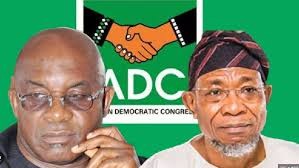
The internal disputes among the blocs of the African Democratic Congress have continued to deepen as the Federal High Court in Abuja on Wednesday gave an order that restrains the Independent National Electoral Commission (INEC) from recognising or participating in any congress organised by a disputed caretaker leadership of the party.
The presiding judge, Joyce Abdulmalik, held that the four-year tenure of the ADC’s state working committees and state executive committees remains valid, barring the former Senate President, David Mark, and other prominent figures in the party from interfering with the functions and tenure of elected state executives.
The ruling, which is a development of the ongoing leadership crisis in the ADC, arose from an originating summons in the suit marked ‘FHC/ABJ/CS/581/2026’, filed by some aggrieved members of the party, including Don Norman Obinna, Johnny Tovie Derek, Obah Ehigiator, Olona Yinka, Charles Omideji, Samuel Pam Gyang, and Obianyo Patrick as plaintiffs, suing for themselves and on behalf of all state chairmen and state executive committees of the ADC.
The plaintiffs named the ADC, David Mark, Patricia Akwashiki, Malam Bolaji Abdullahi, Ogbeni Rauf Aregbesola, Oserheimen Osunbor, and INEC as the defendants, as he challenged the legality of caretaker or interim national working committees and urged the court to restrain INEC from recognising or participating in any congress organised by the caretaker committee.
The suit argued that the ADC’s constitution and the 1999 Constitution (as amended) require state executive committees to hold valid congresses and that bypassing them undermines internal party democracy.
Giving her judgment, Justice Abdulmalik noted that she found “the issue in the originating summons meritorious” and within the jurisdiction of the court because it was to determine whether or not the second- to sixth defendants, including Mr Mark, had constitutional or statutory authority to assume the powers of an elected state organ of the ADC, whose tenure is constitutionally guaranteed.
According to her, section 223 of the 1999 Constitution provides that political parties shall conduct periodic elections on a democratic basis, while article 23 of the party’s constitution provides that national and state officers shall hold office for a maximum of two terms of eight years.
Justice Abdulmalik said, therefore, that “the question is whether there is any infraction committed by Mr Mark and co-defendants when they convened meetings and appointed a body known as a congress committee to organise state congresses.”
Addressing whether or not the court should meddle with the issue of internal affairs of political parties raised by the defendants, the Judge noted that even though the law has noted that the court should not interfere, she maintained that political parties must comply strictly with their constitutions and that courts can intervene where there is a breach of constitutional or statutory provisions.
It is established that courts generally refrain from intervening. However, where there is an allegation of breach of constitutional or statutory provisions, the court has a duty to intervene. Where a party alleges that its constitution has been violated, the court is bound to adjudicate. Any argument that this court lacks jurisdiction on that basis fails,” she ruled.
She determined that the defendants’ method, such as setting up a “congress committee”, was not supported by the party’s constitution.
Justice Malik further ruled that the tenure of state executive committees remains valid and must be allowed to run its course, stating that only the elected structures have the authority to organise state congresses.
On jurisdiction, Ms Abdulmalik determined that “the subject matter of the plaintiff’s action pertains to the affairs of INEC” and thus falls within the jurisdiction of the Federal High Court under Section 251 of the Constitution.
Regarding jurisdiction, Ms Abdulmalik concluded that “the plaintiff’s case involves matters related to INEC”, which places it within the Federal High Court’s authority according to Section 251 of the Constitution.
As a result, the court set aside the appointment of the committee and restrained INEC from recognising any congress organised by it and restrained Senator David Mark and other defendants from organising congresses or conventions outside the provisions of the party’s constitution.
Recall that INEC had announced the discontinuation of the recognition of the ADC to comply with the ruling of the Court of Appeal that directed the parties to the suit at the Federal High Court, including INEC, to maintain the status quo ante bellum pending the determination of the leadership crisis in the opposition party.
The lawsuit emanated from Mr Nafiu Bala, who challenged David Mark’s emergence as the party’s national chairman following the resignation of Ralph Nwosu from the position. Mr Bala insisted that he was supposed to assume leadership of the party after Mr Nwosu’s resignation, in line with the party’s constitution.
Before the Federal High Court made its decision, Senator David Mark’s team filed an interlocutory appeal while the case was still ongoing; however, the Court of Appeal rejected this request. The dismissal also ordered all parties to maintain the status quo pending the lower court’s ruling on the substantive suit. To comply with the order, INEC said it would not deal with both factions of the party until the Federal Court rules on the matter.
Despite the INEC announcement, the David Mark-led faction had led a protest against the decision and also went ahead to hold the national convention without the presence of INEC officials to monitor the process.
Although divisions persist between the relevant groups, the Supreme Court is now reviewing the issue to address the continuing split within the party’s factions. However, the expected decision on the internal crisis did not come as expected on 22 April, as the apex court reserved judgment on an appeal.
As a result, the Supreme Court will eventually resolve the ADC’s crisis, as aggrieved parties are likely to move up the judicial ladder to the highest court to challenge unfavourable lower court decisions.