
ADC Convention: INEC’s Absence, Venue Disputes, and Positive Perception
The African Democratic Congress (ADC) hosted its National Convention in Abuja, despite ongoing legal challenges, opposition from institutions, and growing political unrest. The event concluded with...

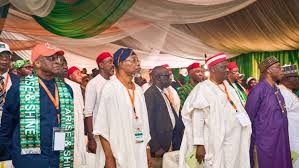
The African Democratic Congress (ADC) hosted its National Convention in Abuja, despite ongoing legal challenges, opposition from institutions, and growing political unrest. The event concluded with generally favourable outcomes, but how enduring would this be?
The convention aimed to strengthen the party’s strategy and position it for participation in governance ahead of the 2027 general elections. But there were many landmines to cross.
On March 12, 2026, the Independent National Electoral Commission (INEC) cited a Court of Appeal ruling delivered the same day as the basis for suspending recognition of the faction led by David Mark.
The commission also stated that it would not engage with another faction led by Nafiu Bala, a former national vice chairman of the party. This effectively distanced INEC from two of the main factions laying claim to the party’s leadership.
The situation highlights the deepening internal crisis within the ADC, which is now divided into three factions competing for control ahead of 2027. Beyond the Mark-led faction, widely seen as the most prominent, there is a group led by Nafiu Bala and another emerging bloc under Dumebi Kachikwu.
Each faction claims legitimacy, prolonging a leadership tussle that has spilt into the courts and complicated the party’s relationship with electoral authorities.
Despite these challenges, the ADC went ahead with the convention. Party leaders insisted they had met all legal requirements, including notifying INEC. According to them, the law requires only a notification, not an approval, and once notified, INEC is obliged to observe the convention proceedings.
ADC Convention 2026
The ADC updated the list of its convention committee and subcommittees ahead of the April 14 national convention. The 126-member committee was chaired by former Cross River State governor Liyel Imoke, with Sokoto South senator Aminu Tambuwal serving as deputy chair.
The party’s National Publicity Secretary, Bolaji Abdullahi, said the updated committee list was designed to strengthen coordination and ensure a smooth and credible convention.
The convention, conducted by the David Mark-led faction, drew a large turnout, with thousands of delegates and party members gathering in Abuja.
Among those in attendance were former Vice President Atiku Abubakar; Labour Party’s 2023 presidential candidate Peter Obi; and former Kano State governor Rabiu Kwankwaso. Their presence underscored ongoing efforts to build a united opposition capable of challenging the ruling All Progressives Congress (APC) in the next election cycle.
However, in the days leading up to the convention, controversies emerged, including delays in securing a venue and allegations that the event was being sabotaged.
Venue Obstacles
The ADC said it applied to use government facilities such as Eagle Square and the MKO Abiola Stadium in Abuja, but was denied. The ADC accused the current government of denying it access to such public venues and privately owned event centres in Abuja.
In a post on X (formerly Twitter), Kola Ologbondiyan, chairman of the convention’s media and publicity subcommittee, said the party struggled to secure a venue less than 24 hours before the event, despite submitting formal requests.
He stated that the party had written to the office of Nyesom Wike seeking approval to use Eagle Square. The letter was noted, but there was no formal reply.
He added that a request to the Federal Ministry of Sports Development to use the velodrome at the Moshood Abiola National Stadium was also declined without explanation.
The Convention Day
The ADC eventually secured a venue a day before the convention and proceeded with the event.
The National Chairman, Senator David Mark, formally declared the convention open in a packed auditorium in Abuja. Addressing delegates, he spoke of coordinated efforts to undermine the party and warned of the implications for Nigeria’s democracy.
He described the gathering as more than a routine party event, framing it as a struggle for democratic survival and institutional independence.
Despite the tensions, the convention continued with key activities, including the affirmation of leadership structures aligned with the Mark faction and the ratification of decisions taken by the party’s National Executive Committee.
Even though the convention was a success, the party continues to deal with internal disagreements, ongoing legal issues, and the challenge of maintaining alliances. These factors will affect how relevant the party remains as 2027 approaches.
In his address, Mark said, “This is not really a convention. It is a convergence of purpose, a meeting of minds that sets the tone for a high-stakes assembly that has drawn key opposition figures and political actors from across Nigeria.”
He added that the gathering was a response to growing concerns about the country’s direction.
“We have witnessed increased austerity in our country’s lives and livelihoods. We have observed the growing erosion of the rule of law. We have seen the shrinking democratic space,” he said, warning that the realities facing Nigerians are “difficult” and “terrifying”.
Mark also alleged deliberate attempts to frustrate the convention.
“There were attempts to prevent us from accessing venues; even as we sat here last night, there were efforts to pressure the owner of this venue to cancel our reservations,” he said.
He maintained that the party had emerged stronger from the challenges. “You have not weakened us; you have welded us together,” he declared.
Party Members’ Perception of the Current Administration
Peter Obi criticised the administration of President Bola Tinubu over Nigeria’s rising debt profile, warning that the country is heading to disaster.
He said the removal of petrol subsidies by the previous administration was intended to reduce borrowing and redirect funds to development. However, he argued that the current government has continued to increase borrowing.
Former Rivers State governor and ex-minister of transportation, Rotimi Amaechi, also raised concerns about insecurity, describing conditions in parts of the country as resembling a civil war.
“I watched yesterday in Nasarawa, where people were running away from their community like a civil war. The civil war image came back to my head,” he said.
Expulsion of Factional Chairman
At the convention, the party announced the expulsion of factional chairman Nafiu Bala and Leke Abejide, who represents Yagba Federal Constituency of Kogi State in the House of Representatives.
Other expelled members include Kingsley Temitope, Noman Obinna, Kennedy Odion, Stella Chukwuma, and four others.
The party said the individuals were removed over alleged anti-party activities and attempts to create instability within its ranks.
The motion for their expulsion was moved by Senator Binos Yaroe of Adamawa South and seconded by Hon. Abdussamad Dasuki, representing the Kebbi/Tambuwal Federal Constituency.
ADC Party Resolution
The ADC concluded its convention with delegates approving amendments to the party’s constitution and ratifying a new National Working Committee (NWC) led by David Mark.
Emeka Ihedioha, former governor of Imo State and chairman of the electoral subcommittee, announced the results. He said 1,576 delegates were accredited, with 11 votes declared void.
According to him, 1,471 delegates voted in favour of the constitutional amendment, representing 94 percent support.
“Distinguished delegates, by virtue of this result announced, it means that the constitution of the African Democratic Congress has today been duly amended by this convention,” he said.
Earlier, Olumide Akpata, chairman of the legal and convention processes committee, supervised the ratification of resolutions from the party’s 97th, 98th, and 99th National Executive Committee meetings.
Enyinnaya Abaribe, senator representing Abia South, moved the motion for adopting the resolutions, while Ireti Kingibe, senator representing the Federal Capital Territory, moved the motion for adopting the outcomes of the 100th NEC meeting held on March 25, 2026.
Although the party faced numerous challenges, its determination to overcome these obstacles and hold its meeting despite various inconveniences suggests that a robust opposition against the ruling APC government is likely in the 2027 general election. This development contributes positively to the perception of Nigeria’s democratic process.