Although youth constitute Nigeria’s largest population group, their involvement in political leadership and elective positions has decreased significantly, resulting in limited participation in inclusive governance. The National Bureau of Statistics defines Nigerian youth as those aged 15 to 35, making up over 60% of the population. Despite this potential advantage, youths have not taken leading
Although youth constitute Nigeria’s largest population group, their involvement in political leadership and elective positions has decreased significantly, resulting in limited participation in inclusive governance.
The National Bureau of Statistics defines Nigerian youth as those aged 15 to 35, making up over 60% of the population. Despite this potential advantage, youths have not taken leading roles in decision-making or key elective positions.
A 2024 report from the National Institute for Legislative and Democratic Studies (NILDS), presented by its Director General, Professor Abubakar Sulaiman, states that youth occupy less than 1% of all elective positions, despite representing approximately half of the population and constituting a significant proportion of registered voters. “Any nation with less than one percent of its youths in elected office is not practicing true democracy.”
The report further contextualises Nigeria’s situation within the global landscape, noting, “This figure is significantly lower than the global average. According to the United Nations Development Programme and the Inter-Parliamentary Union, approximately 1.65% of parliamentarians worldwide are in their 20s, while 11.87% are in their 30s.”
In 2018, Nigeria enacted the Not Too Young to Run law to help young people participate in politics. Despite this, Nigerian youth have yet to gain significant electoral positions as expected.
The Not Too Young to Run Act reduced the minimum age for State Houses of Assembly and Federal House of Representatives candidates from 30 to 25, and for presidential candidates from 40 to 35.
Lowering the age restriction briefly increased youth candidatures and a few wins in 2019, spurring more young people to run in 2023. However, without institutional incentives like party quotas or public funding conditions, youth representation declined in the later election. While more young people ran, their actual representation stayed low.
For instance, available data from YIAGA Africa indicates that
Yiaga Africa’s analysis shows that in the 2019 general elections, 1,515 youth candidates—23% of all candidates—contested National Assembly seats. Youth candidacy for the House of Representatives increased from 18% in 2015 to 27.4% in 2019.
A follow-up report notes a decline in youth participation in 2023, with the share of youth candidates falling from 34% in 2019 to 28.6%. Specifically, only 21.6% of candidates for the House of Representatives and 3.7% for the Senate were youth.
The decrease is an indication that although young people maintained dominance as the largest demography (37.7%) on the national voter register, they were a minority on the list of candidates on the ballot. Despite the decline in youth candidacy in the 2023 election, youth representation in the legislature improved slightly compared to the 2015 and 2019 elections.
As of 2023, only 30% of the House of Representatives are aged 45 or younger. An estimated 20–21% of members fall within the official youth range, although this estimate is not based on official data.
Why Youth Participation Continues to Decline
Despite their large population and willingness to lead, Nigerian youth participate minimally in politics and elections due to common barriers that limit their opportunities in leadership roles.
Economic Factor:
Unemployment poses a substantial challenge for Nigerian youth, as most lack the economic means to engage in Nigeria’s costly political processes. According to a report by the Nigeria Bureau of Public Service Reform, the youth unemployment rate stands at approximately 14.2 per cent, representing over 13.1 million individuals. Given this unemployment statistic, it is increasingly difficult for an average young Nigerian to participate actively and compete successfully in elections within the country.
Political Monetisation
The financial aspects of participating in politics in Nigeria present barriers for youth seeking elective positions. Nomination forms and campaign expenses are often substantial. For example, in 2023, the APC’s House of Representatives nomination form was priced at several million naira, which is inaccessible to most young candidates. Although some political parties may waive fees for youth, additional costs, such as campaigning, publicity, and mobilisation, continue to be significant.
Godfatherism and Social Restriction of Youth
Nigerian social and cultural norms often associate leadership ability with age and seniority. The abilities of young people are frequently questioned. In the same vein, the presence of political godfathers who function as gatekeepers in the political ecosystem makes it difficult for youth to excel because the godfathers do not believe youth can pay their dues and political returns.
Political Violence and Electoral Malpractices
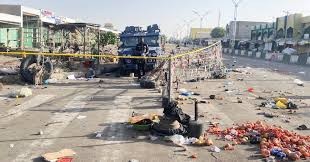
Nigerian elections have experienced incidents of violence, and younger candidates, who often have less access to security, may face intimidation and attacks. Practices like vote buying, where financial incentives are used during primaries and elections, can affect the ability of younger candidates to participate competitively in these environments.
Electoral Reform and Level Playing Ground as a Way Forward.
Kabir Adeniyi Adejumo, a senior researcher at Good Governance Africa-Nigeria, called for electoral reform in response to the challenges of declining youth participation in elective positions in the country, stating that such reform will break the barrier of inclusivity in Nigeria.
He asked the government to be deliberate about the inclusion of the minority groups in the country’s leadership structure, stating that without such a level playing ground for all, there cannot be democratic development in the country, and the country will continue to lag in good governance.
“It is not rocket science. The government, as a policy maker, has a deliberative action it must take to ensure that there is collective participation in the country. Nigeria cannot claim to be a true democratic country if the youth are not fully involved in its political system. Beyond using youth for violence, they must be engaged in leadership roles.
“The National Assembly must go beyond the current law and formulate laws that will deter politicians and political parties from over-monetising the country’s electioneering process. Since unemployment is a major problem, we know that the government must provide good employment for the youth.