
Women’s Day: IPC, MRA, CEMESO Advocate Investment in Women, Inclusive Democracy, information access.
International Women’s Day has been marked by Nigerian media groups such as the International Press Centre (IPC), Media Rights Agenda (MRA), and Centre for Media and Society (CEMESO) with a call for...

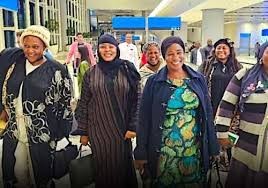
International Women’s Day has been marked by Nigerian media groups such as the International Press Centre (IPC), Media Rights Agenda (MRA), and Centre for Media and Society (CEMESO) with a call for greater investment in women to enhance democratic participation, improve access to press freedom, and increase inclusion in governance and media.
These media development organisations, in their separate statements with respect to the general theme for 2026 International Women’s Day, which is “Give to Gain”, acknowledged the key roles of women in society as drivers of democratic development and the information landscape. However, they observed a trend of under-representation and lack of access to information, which limits the media from portraying them and subsequently leads to low participation of women in key positions in the Nigerian governing system.
In their positions, the three organisations called on the stakeholders, such as the government, political parties, civil society groups and the media, to invest more resources and support systems that will serve as a critical tool for their empowerment and equality for women to make informed decisions, exercise and claim their rights, and participate fully in social, economic, and political life.
International Press Centre (IPC), in a statement signed by Melody Akinjiyan, the Programme Officer, emphasised the persistent barriers women bear, which are limiting their participation in decision-making spaces, media leadership, and democratic processes, stating these barriers range from gender inequality in political representation to limited access to platforms where women’s voices can shape national and global discourse.
As a result, Ms Akinjiyan maintained that the organisation is consistently demanding the policies and progressive system that will support women to create a safe environment that will enhance their capacity to reach their potential. IPC also demanded the adoption of 35% affirmative action that will promote women and gender equality as the electoral cycle is approaching in the country.
Supporting women through affirmative action policies, expanding opportunities for women in leadership and decision-making, and ensuring press freedom and media spaces that are safe and inclusive for female journalists are critical steps toward achieving gender equity. On this International Women’s Day, IPC therefore demands the passage of a bill for special seats for women and calls on all political parties to adopt the 35% affirmative action. Urgent reforms to promote empowerment for women and gender equality are also important at this time.
“IPC is also demanding an improved working environment and conditions for female journalists and more opportunities for women in leadership positions in the media. We also demand an enabling environment for the media to give adequate and insightful coverage to issues of women and the girl child.
“We urge investments in women’s leadership and economic independence, recognising that when women thrive, society prospers. When we give women the space, support, and opportunity to lead, societies gain stronger democracies, more vibrant media ecosystems, and more inclusive development outcomes.
IPC remains committed to advancing initiatives that promote gender equity in the media and democratic governance, while continuing to support platforms that empower women journalists and leaders,” the statement partly reads.
Lack of Access to Information Impedes Women’s Access to Socio-Political Viability
For the Media Rights Agenda (MRA), in a statement released by Idowu Adewale, the Communications Officer, the organisation called on the government to address challenges in the information that are obstructing women’s access to information, which is serving as a barrier to the path to social and political empowerment.
In the statement, which further quotes Ms Ayomide Eweje, a programme officer at the organisation, MRA stressed that lack of access to press freedom and information for women has created a gap in their economic viability and has extended to their political and social life, as it is causing women to be excluded from economic opportunities due to a lack of infrastructure, access to knowledge and other challenges.”
“Access to information is not just a legal right but serves as a critical tool for survival, empowerment and equality for women as it enables them to make informed decisions, exercise and claim their rights, and participate fully in social, economic, and political life.”
According to MRA, “Digital access and information also allow women to leverage tools for entrepreneurship, financial growth, and networking. Information is necessary for women to secure credit for small businesses and manage economic resources, while information networks can bridge the gap for rural women who are often excluded from economic opportunities due to a lack of infrastructure, access to knowledge and other challenges.”
Without access to information, women cannot participate fully in the democratic processes of the country, as access to information allows women to contribute to debates on socio-economic developments and matters; demand accountability for the provision of public services, such as healthcare; make informed choices during elections; and participate in all other aspects of governance.
As a result, MRA called on the federal government, including the National Assembly, as well as state governments, to “adopt measures to address challenges and barriers to the full realisation of the information rights of women. urged them to ensure the collection and availability of gender-disaggregated data such that public institutions are proactively disclosing data that reflects the specific experiences of women and responds to their needs, particularly in sectors like agriculture, health, and education, among others.
Women’s Inclusion Is Central to Nigeria’s Democratic Future
Similarly, the Centre for Media and Society (CEMESO), in a statement signed by Timothy Bamidele, the programme manager of the organisation, stressed the essence of women to Nigeria’s democracy and how their exclusion from participation can affect the country’s democratic stability and long-term prosperity.
CEMESO argued that the inclusivity of women in the democratic practice and distribution of power, visibility, and protection within Nigeria’s governance and information systems would enhance the democratic credibility and expand productivity for public trust.
As a result, the organisation’s Executive Director, Dr Akin Akingbulu, urged political parties, media owners, and institutional gatekeepers to abandon exclusionary patronage networks, biased editorial gatekeeping, and tolerance for digital violence, which systematically exclude women from public discourse, particularly as the Global economic projections indicate that full integration of women into economic life could raise national GDP by nearly nine percent.
Speaking to the current participation of the women in the country’s leadership, CEMESO noted that “women currently occupy only 3.7 percent of Senate seats and 4.4 percent of seats in the House of Representatives, significantly below the 35 percent benchmark articulated in national gender policy. Wage disparities ranging from 20 to 30 percent persist across sectors, while millions of women remain constrained by structural barriers to safety, health, and bodily autonomy.”
CEMESO further noted that the women are also marginalised in the media sector, as female experts are not frequently consulted to speak to policy discourse and election reporting, as development that has a direct effect on female politicians who are also relegated to soft feature reporting or gendered framing, describing the trend as a “chilling effect”, discouraging women journalists, analysts, and candidates from sustained civic engagement.”
To address the observed marginalisation of women, CEMESO urged the media to uptake its resources on Gender Sensitive Guidelines for Media Coverage of the Electoral Process in Nigeria, urging the National Assembly to pass the Special Seats Bill to ensure that women’s representation moves beyond the current stagnation, which is below five percent.