The Anambra off-cycle governorship election, conducted on November 8th, 2025, once again highlighted persistent issues of voter apathy and low turnout within Nigeria’s electoral system. Although this poll was among the most anticipated of the year and intended as an indicator of the political climate in the Southeast, the results reflected a continuing pattern of
The Anambra off-cycle governorship election, conducted on November 8th, 2025, once again highlighted persistent issues of voter apathy and low turnout within Nigeria’s electoral system. Although this poll was among the most anticipated of the year and intended as an indicator of the political climate in the Southeast, the results reflected a continuing pattern of limited engagement with the electoral process.
Professor Soludo, the governor of Anambra State and candidate of the All Progressives Grand Alliance (APGA), was reelected after the Independent National Electoral Commission (INEC) declared him the winner on Sunday. He achieved a decisive victory, receiving 422,664 out of 598,229 accredited votes. His nearest rival, Nicholas Ukachukwu from the All Progressives Congress (APC), secured 99,445 votes, while Paul Chukwuma of the Young Progressives Party (YPP) earned 37,753 votes, and George Moghalu of the Labour Party (LP) received 10,576 votes.
Ultimately, Professor Soludo secured victory in all 21 local government areas of the state, becoming only the second person in Anambra’s history to accomplish this feat, following former Governor Willie Obiano in 2017. Professor Soludo improved on his performance in the previous elections on all indices.
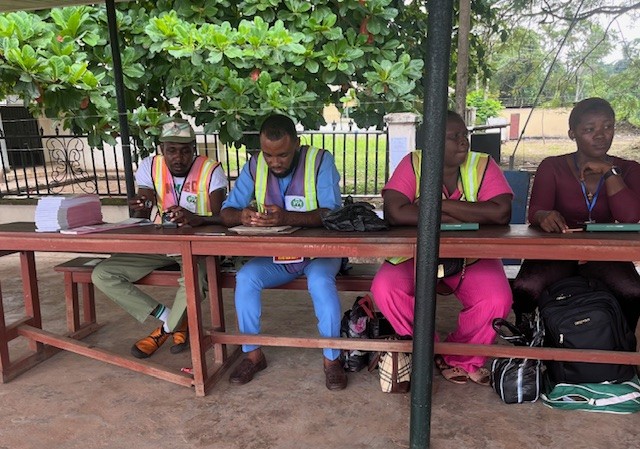
The Independent National Electoral Commission, ahead of the governorship election, had disclosed that 2,769,137 out of 2,802,790 registered Anambra voters, which is about 98%, collected their permanent voter cards (PVCs). However, only 598,229 were accredited, representing 21.4 per cent participation. A total of 584,054 valid votes were recorded, with 11,244 votes rejected.
| APGA | APC | YPP | LP | Other Parties | Total |
| 422,664 | 99,445 | 37,753 | 10,576 | 13, 616 | 584,054 |
While the 2025 turnout of 21.4 per cent is an improvement from the 10.3 per cent recorded in 2021, when out of 2,466,638 registered voters, only 253,388 were accredited, and 8,108 votes were rejected, the turnout was still unimpressive.
| Year | Total Registered Voters
|
Total Votes Cast | Percentage of Turnout(%) |
| 2013 | 1,780,000 | 465,891 | 26% |
| 2017 | 2,060,000 | 448,771 | 22% |
| 2021 | 2,470,000 | 253,388 | 10.3% |
| 2025 | 2,788,864 | 598,229 | 21.4% |
Voter apathy has been a consistent issue in Anambra state since democracy was restored, with statistics showing that less than half of eligible citizens typically participate in state elections. Anambra’s voter turnout was 26% in 2013, 22% in 2017, and fell sharply to 10.3% in 2021 amid rising insecurity.
Electoral stakeholders have been worried because, although there has been previous advocacy and civic awareness, as well as what appeared to be less insecurity and reduced activity from the secessionist group IPOB in the state, the expected shift in the situation by 2025 has not occurred. Voter apathy remains a consistent trend in the state.
For instance, the Chairman of the Independent National Electoral Commission (INEC), Prof. Joash Amupitan, before the election, addressed the long-standing pattern of voter apathy in the state with the indication that it would pose a grave threat to the state’s democratic progress and the credibility of Saturday’s governorship election.
Despite efforts to boost voter turnout, persistent low participation in the State’s elections highlights the need to investigate the underlying challenges facing its electoral and democratic development.
Trust Deficit: A Key Factor to Voter Apathy
The outcome of the electoral process and the low voter turnout serve as indicators of trust deficits within Nigeria’s democratic system. This lack of trust highlights challenges in governance and reflects patterns observed in recent Nigerian elections. Consequently, the overall credibility of the country’s elections has come under scrutiny.
Distrust in Nigeria’s electoral system stems from the 2023 presidential election, where perceived incompetence by the electoral body contributed to voter apathy.
Also, repeated vote buying in Nigerian elections has eroded public trust, as many believe politicians secure positions through purchased votes rather than merit.
This practice has strengthened the belief that Nigerian elections favour those with money rather than capable leaders, making many citizens feel powerless and distrustful of the electoral process.
A Results Verification Statement report by Yiaga Africa, published after the November 9th, 2025 election, noted that widespread vote-buying threatened the credibility, fairness, and legitimacy of the electoral process.
Insecurity’s Impact on Apathy
Insecurity was a key reason for low voter turnout in the Anambra election. Even with less IPOB activity, their past enforcement of “sit-at-home” orders discouraged many voters from going to polling centres.
Widespread insecurity during the 2021 election was associated with IPOB activities. Although voter registration increased, actual turnout declined, highlighting growing voter apathy and reduced trust in the electoral process.
Impact of Mis/Disinformation on Voter Apathy
While the rate of false information was said to be reduced in the Anambra election, several mis- and disinformation played a role in lowering voter turnout in previous elections.
While there were no direct connections between information disorder and voter apathy in the state in the last election, there were some public narratives about electoral violence and insecurity, which could have made some voters to stay in their houses. For instance, a fact-check report published by NDRFactCheck showed a misleading image of a man with a head Injury Linked to the Anambra 2025 election, which is false and misleading.
Another report that claimed that an observer of the YIAGA Africa was teargassed by the police officers could have generated tension in voters’ minds and could subsequently lead to fear and intimidation for the voters, resulting in their withdrawal.