The United States and French governments have pledged stronger security support for Nigeria as the country faces violent extremism and renewed attacks across the country. The National Security Adviser (NSA), Mallam Nuhu Ribadu, hosted a U.S. Congressional delegation in Abuja over the weekend as part of a follow-up to high-level security discussions previously held in
The United States and French governments have pledged stronger security support for Nigeria as the country faces violent extremism and renewed attacks across the country.
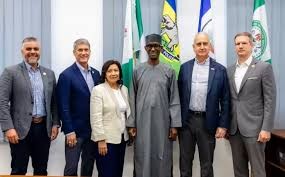
The National Security Adviser (NSA), Mallam Nuhu Ribadu, hosted a U.S. Congressional delegation in Abuja over the weekend as part of a follow-up to high-level security discussions previously held in Washington.
According to Ribadu, the discussions were a critical step in Nigeria’s strategic efforts to forge a stronger, more coordinated counter-terrorism partnership with its Western allies, signalling the country’s determination to collaborate closely on intelligence sharing, operational support, and regional security initiatives.
The visiting lawmakers, Rep. Mario Diaz-Balart, Rep. Norman Torres, Rep. Scott Franklin, and Rep. Juan Ciscomani, were accompanied by U.S. Ambassador Richard Mills. The meeting was part of the fact-finding efforts by the U.S. lawmakers to determine the veracity of their claim that there is genocide against Christians in the country.
Also, the visit formed a key part of a fact-finding mission into allegations of a “genocide against Christians”, a claim the Nigerian government has consistently rejected, stressing that the ongoing violence in the country impacts communities of all faiths and is driven by complex local conflicts rather than religious targeting alone.
Meanwhile, the U.S. Congressman Riley, who has been at the forefront of anti-Nigeria agitation over an alleged genocide against Christians in the country, has visited Benue state and consulted with clerics as part of his inquiry into recent attacks.
Recently, President Bola Ahmed Tinubu visited Benue State, which has recorded multiple deadly incidents, including the attack in Yelwata, in response to the scale of killings. The Tiv paramount ruler, Prof. James Ayatse, had attributed the violence to land-grabbing motives.
Riley, through his X page (formerly known as Twitter), wrote that “I came to Nigeria in the name of the Lord and on behalf of the American people.
“Just ending a very productive Congressional visit to Nigeria! We had rounds of meetings with the Nigerian government and people on the ground, including stops in Benue State. More details to come. Happy Sunday. God is Great!”
French President Emmanuel Macron also announced that France would increase support for Nigeria’s fight against terrorism, urging international partners to deepen their engagement.
He said on his X handle (formerly known as Twitter) that he had spoken with President Tinubu to convey France’s solidarity “in the face of the various security challenges, particularly the terrorist threat in the North.
“At his request, we will strengthen our partnership with the authorities and our support for the affected populations. We call on all our partners to step up their engagement. No one can remain a spectator.”
However, his remarks come in the wake of recent statements by former U.S. President Donald Trump, who raised the prospect of possible military intervention over the alleged genocide claims—a narrative the Nigerian government firmly rejects, insisting it misrepresents a complex security crisis fuelled by armed groups, cross-border criminal networks, and localised conflicts affecting communities across the country.