The Supreme Court on Monday affirmed that the President of Nigeria has the constitutional authority to declare a state of emergency and suspend elected officials in any state to prevent disorder and maintain public peace. In a six-to-one split decision, the Supreme Court ruled on whether the President can declare a state of emergency and
The Supreme Court on Monday affirmed that the President of Nigeria has the constitutional authority to declare a state of emergency and suspend elected officials in any state to prevent disorder and maintain public peace.
In a six-to-one split decision, the Supreme Court ruled on whether the President can declare a state of emergency and suspend state officials during such a period, eight months after the case began.
Reading the lead majority judgement, Justice Mohammed Idris of the apex court maintained that Section 305 of the 1999 Constitution (as amended) gives the power to the President to deploy extraordinary measures to restore normalcy where emergency rule is declared, and that there is no limitation to the power vested in the President during such a period, as he may suspend elected officials, provided any such suspension is for a limited duration.
He noted that the provision does not specify the exact nature of those extraordinary measures, thereby vesting the President with discretion on how to act in such circumstances.
The Supreme Court further decided that even though the clause does not specifically list acceptable actions, it is permissible to temporarily suspend elected officials as long as those actions are time-limited and intended to restore normalcy.
“The President is vested with the responsibility to protect the federation, and this includes deploying necessary tools during crises where governance has collapsed,” the judge stated.
However, Justice Obande Ogbuinya, who took a split position, maintained that the President’s emergency powers, while valid for declaration, do not include the suspension of democratically elected leaders such as governors, deputies, or lawmakers. He contended that such actions undermine federalism and constitutional processes for removing elected officials.
This development stemmed from the actions of the Governors of the Peoples Democratic Party (PDP) who approached the Supreme Court in April 2025 to challenge the legality of President Tinubu’s action in March by declaring a state of emergency in a national broadcast, suspending Governor Sim Fubara and his deputy, Mrs Ngozi Odu, as well as the House of Assembly, initially for six months. He also nominated Vice Admiral Ibokette Ibas (Rtd) as Administrator to take charge of the affairs of the state in the interest of the good people of Rivers State.
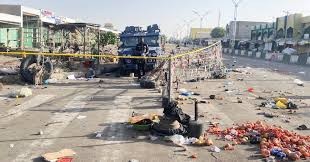
His action was taken as a response to the prolonged political crisis in the state between the camp of Siminalayi Fubara and his predecessor, Nyesom Wike, leading to different legal tussles and reported cases of vandalism in the state. However, the president’s action did not receive acceptance from Nigerians, who criticised him for sidelining the law and constitution in his declaration.
As a result of the President’s action, governors of Adamawa, Enugu, Osun, Oyo, Bauchi, Akwa Ibom, Plateau, Delta, Taraba, Zamfara, and Bayelsa states, through their Attorney General, filed a suit (SC/CV/329/2025) to obtain the Supreme Court’s interpretation and verdict on the President’s suspension of a sitting governor in Rivers State.
Leading the case for the Plaintiffs, Eyitayo Jegede (SAN), asked the seven-man panel of the Justices of the apex court, led by Justice Inyang Okoro, to determine whether the President has the power to suspend or interfere with the offices of the elected governors and their deputies in the process of declaring a state of emergency in a state.
In the suit instituted by the opposition states, the asked the Supreme Court to determine “Whether upon a proper construction and interpretation of the provisions of Sections 1(2), 5(2), 176, 180, 188 and 305 of the Constitution of the Federal Republic of Nigeria 1999, the President of the Federal Republic of Nigeria can lawfully suspend or in any manner whatsoever interfere with the offices of a Governor and the Deputy Governor of any of the component 36 States of the Federation of Nigeria and replace same with his unelected nominee as a Sole Administrator, under the guise of, or under, a Proclamation of a State of Emergency in any of the State of the Federation, particularly in any of the Plaintiffs States?
“Whether upon a proper construction and interpretation of the provisions of Sections 1(2), 4(6), 11(4) & (5), 90, 105 and 305 of the Constitution of the Federal Republic of Nigeria 1999, the President of the Federal Republic of Nigeria can lawfully suspend the House of Assembly of any of the component 36 States of the Federation of Nigeria under the guise of, or under, a Proclamation of a State of Emergency in any of such States, particularly in any of the Plaintiffs States”.
In his response, the legal representative for the Federal Government and Attorney General of the Federation, Lateef Fagbemi, stated that Rivers state was engulfed in crisis, involving the governor and the executives, prompting the President’s action in March.
The Attorney General also raised the issue of competence, requesting that the case be dismissed by the Supreme Court, which the court agreed to.
Although the case was still pending in court, President Bola Tinubu reinstated Governor Fubara and other elected officials in September 2025, stating that normalcy had been restored to the state, as the stakeholders had shown readiness and enthusiasm to return to democratic governance.