The Nigerian Press Organisation (NPO) has urged the Federal Government and the National Assembly to take urgent steps to protect Nigeria’s information sovereignty, warning that the unchecked dominance of global digital platforms poses a growing threat to national security, democratic governance, and social cohesion. In a statement signed by NPAN President, Lady Maiden Alex-Ibru; NGE
The Nigerian Press Organisation (NPO) has urged the Federal Government and the National Assembly to take urgent steps to protect Nigeria’s information sovereignty, warning that the unchecked dominance of global digital platforms poses a growing threat to national security, democratic governance, and social cohesion.
In a statement signed by NPAN President, Lady Maiden Alex-Ibru; NGE President, Mr Eze Anaba; BON Chairman, Comrade Salihu Abdulhamid Dembos; GOCOP President, Mr Danlami Nmodu; and NUJ President, Comrade Alhassan Yahaya, titled “Preserving Nigeria’s Information Sovereignty: Why the Federal Government Must Act to Secure the Nigerian Press in the Digital Age”, the NPO said Nigeria is approaching “a critical inflection point” in its democratic and digital evolution.
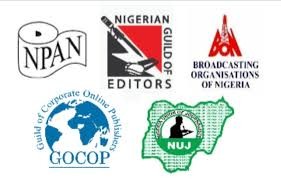
The NPO, an umbrella body comprising the Newspaper Proprietors’ Association of Nigeria (NPAN), the Nigerian Guild of Editors (NGE), the Broadcasting Organisations of Nigeria (BON), the Guild of Corporate Online Publishers (GOCOP), and the Nigerian Union of Journalists (NUJ), said its intervention was made strictly in the public interest, as while the rise of global digital platforms has expanded access and innovation, they have also created a structural imbalance of power that now threatens the sustainability of professional journalism, which should be the backbone of informed citizenship and accountable governance.
The development, according to the body, is undermining the information ecosystem in the country, with the position that such practices are already in check in the developed countries, while Nigeria is still taking a backseat in responding to its calls, while other countries are taking action to secure their media space.
“The European Union and the United Kingdom have adopted proactive competition and digital market rules to curb gatekeeper dominance. Australia introduced a structured bargaining framework that restored balance without stifling innovation. Canada enacted legislation mandating compensation for news content, securing long-term funding for domestic journalism. South Africa, following a rigorous competition inquiry, has moved decisively from diagnosis to enforceable remedies. These actions demonstrate a clear global consensus: sovereign states must protect the integrity of their information systems.
Stating why its concerns matter to the sustainability of the media, NPO maintained that “in a multi-ethnic, multi-religious federation, credible journalism plays a stabilising role. When trusted news institutions weaken, misinformation, disinformation, and digitally manipulated narratives expand unchecked, fuelling polarisation, grievance mobilisation, and insecurity. No counterterrorism, policing, or intelligence framework can fully compensate for a collapsed information order.”
The body further stated that the media is known for upholding information integrity for democratic governance and electoral integrity, noting that in the absence of protection for it in this era of digitalisation, in which journalism is fast becoming displaced by algorithms, “democratic processes become vulnerable to distortion, foreign influence, and coordinated falsehoods.”
“Press freedom is not sustained solely by constitutional guarantees. It requires economic independence. A press that struggles to pay salaries and fund investigations and continues to face the headwinds of rising production costs and the challenge of retaining talent is, in effect, unfree, regardless of legal protections.
“The erosion of journalism revenue is already translating into newsroom contraction, job losses, and declining professional standards. This represents a loss of skilled labour, institutional memory, and national capacity that cannot be easily rebuilt.
The NPO further argued that “professional journalism is not merely a commercial activity. It is strategic civic infrastructure, comparable in importance to education, public health, and the judiciary. Its outputs – verified facts, investigative scrutiny, and balanced reporting – are public goods. Yet the current digital market structure allows global platforms to extract disproportionate value from this public good while weakening its producers.”
“This appeal is not a request for protectionism. It is a call for strategic leadership to ensure that Nigeria’s democratic conversation is not quietly outsourced to opaque commercial algorithms beyond national control.
“The cost of inaction will not be borne solely by publishers, broadcasters or journalists. It will be paid in weakened institutions, diminished public trust, rising misinformation, and a more fragile national cohesion. History will judge this generation of leaders by whether it recognised the importance of information sovereignty early enough to act.
“Protecting the Nigerian press is not an industry rescue – it is an investment in national stability, democratic durability, and Nigeria’s standing as a serious constitutional democracy.”
The body also expressed a willingness to work with the Federal Government, the National Assembly, regulators, broadcasters, editors, civil society, and technology companies to develop a fair, forward-thinking, Nigerian solution.