

Nigeria’s democratic journey has been turbulent, marked by repeated political patterns that echo the failed transition to the Third Republic. Many of the same problems still affect the Fourth Republic, even as the country commemorates Democracy Day. Despite more than two decades of uninterrupted civilian rule since May 29, 1999, Nigeria has shown little clear democratic progress beyond the events surrounding the June 12, 1993, election, which was annulled by the military regime.
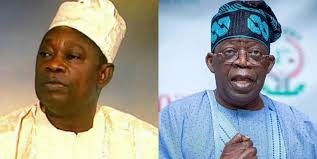
Nigeria’s observance of Democracy Day is closely tied to the June 12, 1993 presidential election, widely regarded as the freest and fairest in the country’s history. Won by Chief Moshood Kashimawo Olawale Abiola, the election is also seen as Nigeria’s most credible. However, its annulment by Ibrahim Babangida’s military regime deepened political distrust and left a lasting scar on the nation’s democratic history.
The annulment of the 1993 election plunged Nigeria into a prolonged political crisis and intensified demands for a return to democracy. As a result, June 12 became a powerful symbol of the country’s struggle for genuine democratic rule. In recognition of its significance, former President Muhammadu Buhari declared June 12 as Nigeria’s Democracy Day, replacing May 29. He also officially recognised MKO Abiola as the winner of the election and posthumously awarded him the Grand Commander of the Federal Republic (GCFR), Nigeria’s highest national honour.
Although Nigeria returned to civilian rule in 1999, six years after the annulment of the 1993 general election, the country still struggles to conduct elections effectively, showing that many of the problems that led to that failure persist.
The 2023 general elections reflected Nigeria’s current democratic and electoral performance. Although held 30 years after the 1993 elections—under civilian rather than military rule—their outcomes and impact on ordinary Nigerians showed striking similarities.
The 2023 general elections drew strong public interest and raised expectations among many Nigerians, especially young voters, who hoped that new technology would help deliver the credible, free, and fair polls promised by the electoral body and other stakeholders. However, the elections were marred by controversy over transparency, technical failures, voter intimidation, and doubts about institutional credibility.
The 1993 elections used an open ballot system yet were widely seen as credible. By contrast, the 2023 elections used technology for voter accreditation and result collation but still left many Nigerians disappointed. The comparison suggests that although Nigeria has shifted from military to civilian rule, recurring electoral problems continue to undermine democratic progress.
Trust Deficit in the Outcome of the Two Elections
Although the 1993 and 2023 general elections took place in different political contexts—the 1993 polls under military rule and the 2023 polls under a constitutional democracy marked by a peaceful transfer of power—both were clouded by some form of distrust and a loss of confidence. Distrust in the 1993 election came mainly from the military government, which ultimately annulled the result. In 2023, the distrust came from the public, which was disillusioned by the “glitches” that blocked the promised online transmission of results to the INEC Result Viewing Portal (IReV).
The National Electoral Commission (NEC), just like the Independent National Electoral Commission, made strong promises to Nigerians to conduct the most credible elections in the history of the country. However, the outcomes were reversed. In 1993, the military government annulled the election despite Nigerians’ massive turnout, denying them their chosen president. In 2023, many voters likewise felt denied their choice because the process was not as transparent as promised and riddled with glitches.
Before the 2023 election, INEC repeatedly assured Nigerians that results would be uploaded to the INEC Result Viewing Portal (IReV) in real time. The promise raised expectations, especially among young and newly registered voters who hoped for greater transparency. However, although National Assembly results were uploaded on election day, the portal suffered major disruptions during the presidential upload. INEC later blamed the failure on an “HTTP error” caused by a configuration bug, but many Nigerians found the explanation unconvincing.
Before the 2023 general election, the electoral body also promised to use the newly introduced Bimodal Voter Accreditation System (BVAS) to curb identity fraud, verify voters, and prevent multiple voting. However, observers reported that the technology faced network failures, power issues, and inadequate operator training at many polling stations. The 1993 general elections engaged manual or physical counting of voters in the queues.
While the 2023 issues differed from outright annulment, they raised concerns about the ability of institutions to meet public expectations, leaving loopholes in how the members of the public perceive electoral integrity in the country and its essence in the democracy the country claims it practises. Nigerians were disappointed and could not understand why the 1993 elections were annulled.
Electoral Violence and Vote Buying
Electoral violence and voter suppression remain persistent features of Nigeria’s election process. Although democracy is founded on the right to vote and be voted for, voter suppression continues to prevent many citizens from freely exercising that right.
Although there was little voter suppression or electoral violence before the June 12, 1993, election, its annulment denied voters the chance to see their choice respected. The military government’s heavy-handed response triggered mass protests and the arrest of pro-democracy activists, including the election’s winner.
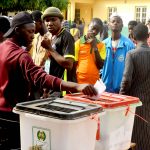
In 2023, the pattern was different but carried a similar undertone, with reports of voter intimidation, ballot snatching, and violence at some polling units raising concerns about the freedom of the electoral process. The violence claimed lives, while many voters were intimidated and unable to cast their ballots freely.
Another harmful practice common to both the 1993 and 2023 elections was vote buying. A long-standing feature of Nigeria’s electoral system, it involves offering voters money, goods, or services in exchange for support, a particular vote, or abstention. By turning political choice into a transaction, vote buying undermines the integrity of democratic elections.
Vote buying has long been part of Nigeria’s electoral system, even though it is illegal. Although the 1993 election is widely regarded as the freest and fairest, there were still reports of pockets of vote buying or voter inducements during the poll.
A report by the Centre for Democracy and Development (CDD) once established this fact after the 2019 general election, where it insisted that “Vote buying has existed since 1960 in Nigeria. The only difference is that the mode has changed. Between 1960 and 1963, vote buying was deployed. (It’s) just that they gave out food and other things that were not so expensive.”
“When we talk about the 1993 elections, we tend to talk about it as being the freest and fairest. But evidence showed that between N120 million and N1 billion was spent during the primaries in those 1993 elections, raising issues on how we should define vote-buying,” the report says.
Similarly, vote buying was evident in the 2023 general election, with reports of voters being offered cash and other incentives in several states. This points to the growing monetisation of Nigeria’s electoral process and raises concerns that elections are becoming contests of financial power rather than of ideas, competence, and public service. The growing influence of money in politics remains a long-standing threat to Nigeria’s democracy.
Lack of Accountability
A major link between the 1993 and 2023 elections is accountability. The annulment of the 1993 election showed how political actors could act without answering to citizens. Today, concerns about electoral conduct, governance, and institutional performance continue to fuel demands for greater transparency and accountability from public officials.
Lack of accountability seriously weakened the 2023 general elections by creating a culture of impunity in which institutional failures, technological lapses, and electoral offences went largely unpunished. This eroded public trust, contributed to record-low voter turnout, and produced sharply contested outcomes.
A comparison of the June 12, 1993 and 2023 general elections reveals both progress and continuity. Although Nigeria has moved beyond military rule and sustained more than two decades of uninterrupted civilian government, many of the deeper challenges that threatened democracy in 1993 remain visible today.