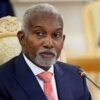
Nigeria has entered into a landmark trade agreement with the United Arab Emirates (UAE) that will grant duty-free entry to thousands of Nigerian goods, President Bola Tinubu has announced. In an official statement issued on Tuesday, January 13, 2026, President Tinubu announced the conclusion of the Nigeria-UAE Comprehensive Economic Partnership Agreement (CEPA), which was finalised
Nigeria has entered into a landmark trade agreement with the United Arab Emirates (UAE) that will grant duty-free entry to thousands of Nigerian goods, President Bola Tinubu has announced.
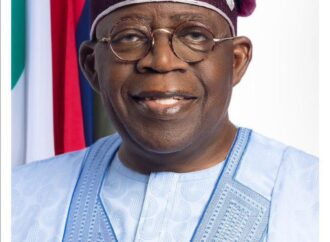
In an official statement issued on Tuesday, January 13, 2026, President Tinubu announced the conclusion of the Nigeria-UAE Comprehensive Economic Partnership Agreement (CEPA), which was finalised during the Abu Dhabi Sustainability Week. The agreement was signed in conjunction with UAE President Mohamed bin Zayed Al Nahyan.
He stated that the agreement provides tangible advantages for both citizens and businesses, with particular benefits for exporters and manufacturers.
“For Nigerians, this agreement is not abstract. It opens duty-free access for thousands of Nigerian products into the UAE, expands opportunities for our exporters, manufacturers, and service providers, and gives UAE investors clearer confidence to back Nigeria’s productive economy,” Tinubu said.
 He explained that CEPA aligns with the administration’s economic reform agenda and will help accelerate industrialisation, diversification, and foreign investment inflows.
“This comprehensive agreement also supports our industrialisation and diversification goals and strengthens Nigeria’s position as a gateway for trade and investment into Africa.
“This is the work of economic reform, purposeful engagement, and measured partnerships. The outcomes will serve Nigeria’s long-term national interest.”
President Tinubu attributed the breakthrough to months of structured negotiations led by Minister of Industry, Trade, and Investment Jumoke Oduwole and her UAE counterpart, Thani bin Ahmed Al Zeyoudi.
“I commend both ministers and their teams for the seriousness and clarity that brought these negotiations to a conclusion,” he said, expressing optimism that bilateral relations between both countries will yield enduring gains.
Tariff Removal and Market Access
Providing further details, the Minister of Industry, Trade and Investment, Jumoke Oduwole, said the UAE will scrap tariffs on more than 7,000 Nigerian products, giving unprecedented market access to agricultural and manufactured goods such as fish, seafood, cereals, oil seeds, cotton, pharmaceuticals, and chemicals.
“Over the next three to five years, the UAE will eliminate tariffs on Nigerian machinery, vehicles, electrical equipment, apparel, and furniture,” she added.
She noted that Nigerian companies will also be able to operate in the UAE under new corporate entities, branches or subsidiaries, while business visitors will enjoy extended entry periods.
“Nigerian industrial exports now have a clear and competitive pathway into one of the world’s most dynamic trading hubs. In addition, Nigerian businesses can establish operations in the UAE through new corporate entities, branches, and subsidiaries.
“Nigerian business visitors can enter the UAE for up to 90 days in 12 months to explore trade and investment opportunities, while intra-corporate transferees, our managers, executives, and specialists can relocate with their corporate entities for renewable three-year periods.”
Oduwole said the agreement also clears barriers that have discouraged foreign direct investment into Nigeria.
“UAE investors now have clarity and confidence to invest in Nigeria’s productive sectors. This will support Nigeria’s industrialisation agenda, enhance transport and logistics connectivity, and contribute to the creation of quality jobs for our youthful population,” she said.
Nigeria, she added, will reciprocally phase out tariffs on around 6,000 imported items, especially industrial inputs and capital goods that reinforce domestic production capacity, while the nation’s Import Prohibition List remains unchanged.
Also, the minister explained that Nigeria’s commitments on services cover 99 subsectors spanning business, communications, finance, health, transportation, tourism and other key service industries.
To accelerate implementation, she said her ministry will coordinate with relevant agencies, including the Nigeria Customs Service, NEPC, NIPC and the Standards Organisation of Nigeria to ensure businesses can fully leverage the deal in line with the president’s “Nigeria First” directive.
The minister emphasised that the negotiations placed Nigeria’s private sector at the centre.
“I urge you to identify your opportunities with enhanced market access and move with confidence into the UAE market with the protections we have secured for you,” she said.
ReplyForward