
More Defections Hit ADC as 17 House of Reps Members Move to NDC
On Tuesday, the African Democratic Congress (ADC) faced a significant blow in the House of Representatives as 18 of its members switched allegiance. Seventeen of them joined the National Democratic...

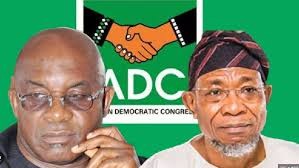
On Tuesday, the African Democratic Congress (ADC) faced a significant blow in the House of Representatives as 18 of its members switched allegiance. Seventeen of them joined the National Democratic Congress (NDC) while one moved to the All Progressives Congress (APC),
All members referenced sustained internal challenges and leadership instability within the ADC as the major reason for their defection. They also cited the pending court cases, which put the future of the party in jeopardy. As a result of the mass defection, the ADC’s representation in the Green Chamber has decreased to only six members following previous departures.
The lawmakers, in separate letters read during plenary by Deputy Speaker Benjamin Kalu, attributed their decision to the prolonged internal crisis within the party, saying the situation had affected their ability to function effectively as legislators and adequately represent their constituents.
Hon Leke Abejide, who chairs the House Committee on Customs and Excise, was the only member to switch to the APC, while the other 17 lawmakers moved to the NDC.
Those who defected to the NDC are Yusuf Umar Datti (Kano), Uchenna Harrison Okonkwo (Anambra), Sani Adamu Wakil (Kano), Thaddius Attah Achef (Lagos), George Ozodinobi (Anambra), Obiageli Lilian Orogbu (Anambra), and Oluwaseun Sowumi (Lagos).
Others are Peter Aniekwe (Anambra), Mukthar Umar Zakari (Kano), George Oluwande (Lagos), Murphy Omoruyi (Edo), Munachin Alozie (Abia), Emeka Idu (Anambra), Jessy-Okey Onuakalusi (Lagos), Peter Uzokwe (Anambra), Victor Afam Ogene (Anambra), and Abdulhakeem Kamilu Ado (Kano).
ADC’s Decline and NDC’s Rise
The African Democratic Congress (ADC) is facing a growing internal crisis, which has worsened due to the departure of key politicians and fresh claims of outside involvement in opposition politics before the 2027 general elections.
On Monday, May 4, 2026, the party suffered a significant political setback as two high-profile opposition figures, former Labour Party presidential candidate Peter Obi and former Kano State Governor Rabiu Kwankwaso, formally announced their departure from the ADC to the Nigeria Democratic Congress (NDC).
Peter Obi and Rabiu Musa Kwankwaso’s departure has significantly weakened efforts to form a coalition against President Tinubu and the APC.
In a personal statement released via his official X (formerly Twitter) account, Peter Obi explained that his decision to leave the ADC was not based on any personal grievance against the party leadership.
He made it clear that his decision to leave was not aimed at prominent individuals like the party chairman, Senator David Mark, or former Vice President Atiku Abubakar, all of whom he referred to as esteemed leaders on a national level.
Instead, Obi pointed to what he described as a sustained pattern of destabilisation within opposition politics, alleging that state-linked actors have been actively interfering in opposition party structures.
“The same Nigerian state and its agents that created unnecessary crises and hostility within the Labour Party that forced me to leave now appear to be finding their way into the ADC,” Obi stated.
He further alleged that similar patterns of internal disruption witnessed in his former party were beginning to manifest within the ADC, warning that ongoing legal disputes, factional divisions, and what he described as politics of control and exclusion were weakening opposition unity.
Rabiu Kwankwaso, in his own remarks, described the ADC as more than just a political platform, characterising it as a vehicle for social development and inclusion. However, he also confirmed his decision to exit the party, aligning with broader concerns about the political environment.
Kwankwaso urged Nigerians, particularly aspiring politicians, to take advantage of what he described as a limited opportunity to register and participate in political processes ahead of upcoming elections, signalling continued engagement in national politics despite his departure from the ADC.