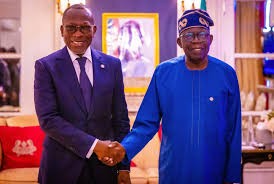
An attempted coup against President Patrice Talon in Benin on December 7, 2025, was thwarted through prompt intervention by Nigeria’s military. Had the attempt succeeded, it would likely have increased instability and posed a significant threat to democratic governance within the West African sub-region. A group of soldiers known as the Committee for Refoundation (CMR)
An attempted coup against President Patrice Talon in Benin on December 7, 2025, was thwarted through prompt intervention by Nigeria’s military. Had the attempt succeeded, it would likely have increased instability and posed a significant threat to democratic governance within the West African sub-region.
A group of soldiers known as the Committee for Refoundation (CMR) led the coup, making their announcement on national television on Sunday. The group stated that President Talon had been removed from office and subsequently declared the suspension of the constitution, the dissolution of the government and state institutions, and the closure of all land, sea, and air borders.
However, tensions rose across West Africa after the sudden and coordinated coup attempt collapsed within hours. This swift reversal followed prompt military support from Nigeria, which acted after the Beninese government formally requested assistance.
The event has heightened apprehensions regarding increasing political vulnerability throughout the region, momentarily disrupting the stability of one of West Africa’s longstanding democracies.
Speaking on Benin Television (ORTB), President Talon reassured citizens that calm had been restored and that security forces had regained full control of the country.
“I would like to assure you that the situation is completely under control and therefore invite you to calmly go about your activities starting this very evening,” he said.
Nigeria’s Coup Rescue Response
On Sunday, the Republic of Benin requested urgent help from Nigeria to address an attempted coup. President Bola Ahmed Tinubu ordered the Nigerian Air Force to deploy fighter jets into Beninese airspace under ECOWAS protocols to uphold constitutional order in West Africa.
According to the President’s media aide, Mr Bayo Onanuga, in a statement posted on X, the presidency commended Nigeria’s Armed Forces for restoring peace and protecting democracy in Benin. He wrote that President Tinubu praised the military for responding swiftly to Benin’s request to save its 35-year-old democracy from coup plotters who struck at dawn.
He said, “Today, the Nigerian armed forces stood gallantly as a defender and protector of constitutional order in the Republic of Benin, on the invitation of the government. Our armed forces acted within the ambit of the ECOWAS Protocol on Democracy and Good Governance.
“They have helped stabilise a neighbouring country and have made us proud of their commitment to sustaining our democratic values and ideals since 1999. Nigeria stands firmly with the government and people of the Republic of Benin,” the presidency said.
According to him, “Acting on two separate requests from the Government of Benin, President Tinubu first ordered Nigerian Air Force fighter jets to enter the country and take over the airspace to help dislodge the coup plotters from the national TV station and a military camp where they had regrouped.
“The Republic of Benin, through its Ministry of Foreign Affairs, in a Note Verbale, requested immediate Nigerian air support in view of the urgency and seriousness of the situation.”
A second request sought the deployment of Nigerian Air Force assets within Beninese airspace for surveillance and rapid-intervention operations under Benin-led coordination.
Benin also asked for Nigerian ground forces to help protect important government institutions and control armed groups, but only for missions that Benin’s command approved.
Within hours, loyal government forces, assisted by Nigeria, successfully regained control and flushed out the coup plotters from national television.
Significance of Nigeria’s Intervention as an ECOWAS Member
Nigeria, as a prominent member of ECOWAS, strengthened its position as a regional stabiliser through its interventions during a period marked by several military coups in West Africa, including in Burkina Faso, Mali, Guinea, and Niger.
In diplomatic terms, the Benin Republic, being the closest neighbour to Nigeria, holds a position of strategic importance for Nigeria’s security and economic well-being. Nigeria’s involvement in Benin’s attempted coup stems from regional legal frameworks, including the ECOWAS Protocol on the Mechanism for Conflict Prevention, which permits the deployment of civilian and military forces when constitutional order is threatened.
Additionally, the ECOWAS’s 1999 Protocol on the Mechanism for Conflict Prevention gives the region the authority to intervene when peace or constitutional order is threatened. It states clearly that ECOWAS may “constitute and deploy a civilian and military force to maintain or restore peace within the sub-region, whenever the need arises.”
Adding to the importance of Nigeria’s intervention, the Special Adviser to President Bola Tinubu on social media, Olusegun Dada, further emphasised the significance of Nigeria’s military intervention, describing it as important to preserving regional stability and defending democracy in West Africa.
He disclosed this through his X (formerly Twitter) account on Tuesday, December 9, 2025, where he highlighted Nigeria’s response to the attempted coup. According to him, the Nigerian government intervened after receiving formal requests from the Beninese government.
He said, “As the coup unfolded in Cotonou, the Nigerian government first received a Note Verbale from the Benin Republic Foreign Ministry requesting urgent assistance from Nigeria to confront the coupists.”
“Acting on these urgent legitimate requests, President Bola Tinubu ordered the immediate deployment of fighter jets from Nigeria and ground troops into the Benin Republic to flush out the coupists and restore order,” he stated.
Beyond defending democracy, the incident carries major implications for Nigeria. The two countries share deep economic, security, and social ties. Benin serves as a major transit route for goods entering Nigeria, and instability along its borders could disrupt commerce, affect border communities, complicate border management, and elevate national security risks.