


INEC Shortlists 14 Groups for Political Party Registration
The Independent National Electoral Commission (INEC) has shortlisted 14 associations for consideration as political parties from a total of 171 applications received nationwide. INEC announced the...


The Independent National Electoral Commission (INEC) has shortlisted 14 associations for consideration as political parties from a total of 171 applications received nationwide.
INEC announced the decision after its meeting on September 11, 2025, where it also reviewed preparations for upcoming off-cycle governorship and FCT Area Council elections.
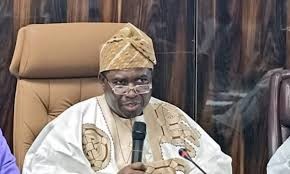
Mr. Sam Olumekun, National Commissioner and Chairman of Information & Voter Education, stated that each application was evaluated for compliance with constitutional and statutory requirements.
“Each request was assessed on the basis of its prima facie compliance with the provisions of Section 222 of the Constitution of the Federal Republic of Nigeria, 1999 (as amended), Section 79 (1, 2 and 4) of the Electoral Act 2022 and Clause 2 (i and ii) of the Commission’s Regulations and Guidelines for Political Parties 2022,” INEC explained.
“Out of the 171 applications, 14 met the preliminary requirements and have been invited to proceed to the next stage of verification, while 157 did not scale through. The names of the successful associations have been published on INEC’s website and other official platforms”, the statement stated.
The successful associations are: African Transformation Party (ATP); All Democratic Alliance (ADA), Advance Nigeria Congress (ANC), Abundance Social Party (ASP), African Alliance Party (AAP), Citizens Democratic Alliance (CDA), Democratic Leadership Alliance (DLA), Grassroots Initiative Party (GRIP), Green Future Party (GFP), Liberation People’s Party (LPP), National Democratic Party (NDP), National Reform Party (NRP), Patriotic Peoples Alliance (PPA) and Peoples Freedom Party (PFP).
The Commission has also invited the interim chairmen and secretaries of the 14 shortlisted groups to a mandatory briefing scheduled for Wednesday, September 17, 2025, at its headquarters in Abuja.
The interim chairmen and secretaries of the newly registered associations are:
African Transformation Party (ATP) —Ikhane Stanley & Emmanuel Shaibu
All Democratic Alliance (ADA)—Chief Akin A. Ricketts & Abdullahi Musa Elayo
Advance Nigeria Congress (ANC)—Mohammed Kabir&Chibuike Godwin
Abundance Social Party (ASP)—Comr. Frank Oruwa& Mr.Sikiru Oripelaye
African Alliance Party (AAP)–Olusegun Iyaobaje Peter & Haruna Abubakar
Citizens Democratic Alliance (CDA)—Engr.Muazu Magaji & Hon Tamunatonyr Samuel
Democratic Leadership Alliance (DLA)—Barr.Fortune Oghenegare & Barr.Munirat Adams
Grassroots Initiative Party (GRIP)—Nzekanayo Chukwemezie & Muhammed Abass Kuti.
Green Future Party (GFP) —Dr. Adebayo Adefolaseye & Mrs Peace Daful
Liberation People’s Party (LPP) —Hon Alani Akinde & Dauglas Aji
National Democratic Party (NDP) —Hon Ada Fredrick Okwori & Edet Alexander Asuquo
National Reform Party (NRP)—Abdul Kadir Mohammed & Destiny Omonigho Odugo
Patriotic Peoples Alliance (PPA)—Hon John Ugulu & Mrs Jackie Wayas
Peoples Freedom Party (PFP)—Agbanifo Akhigbe & Akintola Michael Alao.
INEC also indicated that the subsequent phase of the procedure will entail a thorough physical verification of the associations’ stated information—such as their headquarters, membership distribution, and organisational frameworks—before reaching a final determination regarding their registration.
“The final determination of the registrability of the associations as political parties will be made after the physical verification of all their claims to determine compliance with the legal framework,” the Commission emphasised.
Background to Party Registration
Nigeria’s multiparty system has struggled with too many parties and limited institutional strength. In 2019, Nigeria’s 91 registered political parties made ballots complex and elections costly, yet most parties failed to secure any seats in national or state assemblies.
In 2020, INEC cut the number of registered parties from 91 to 18 by deregistering 74 that failed to meet constitutional requirements or win offices. The Supreme Court confirmed INEC’s authority to deregister parties, reinforcing its regulatory powers.
The Electoral Act 2022 introduced additional procedures, specifying that associations must meet certain criteria to be recognised as parties. These criteria include establishing a national headquarters in Abuja, maintaining offices in at least two-thirds of the states, and demonstrating broad-based membership rather than being limited to specific ethnic or sectional groups.
INEC’s decision to approve just 14 of 171 applications reflects stricter law enforcement. If registered, these 14 groups will add to Nigeria’s 18 current political parties for the 2027 elections; those failing verification will be removed.
If registered, the 14 associations could broaden Nigeria’s political landscape before the next general elections by competing with major parties or providing opportunities for new leaders.