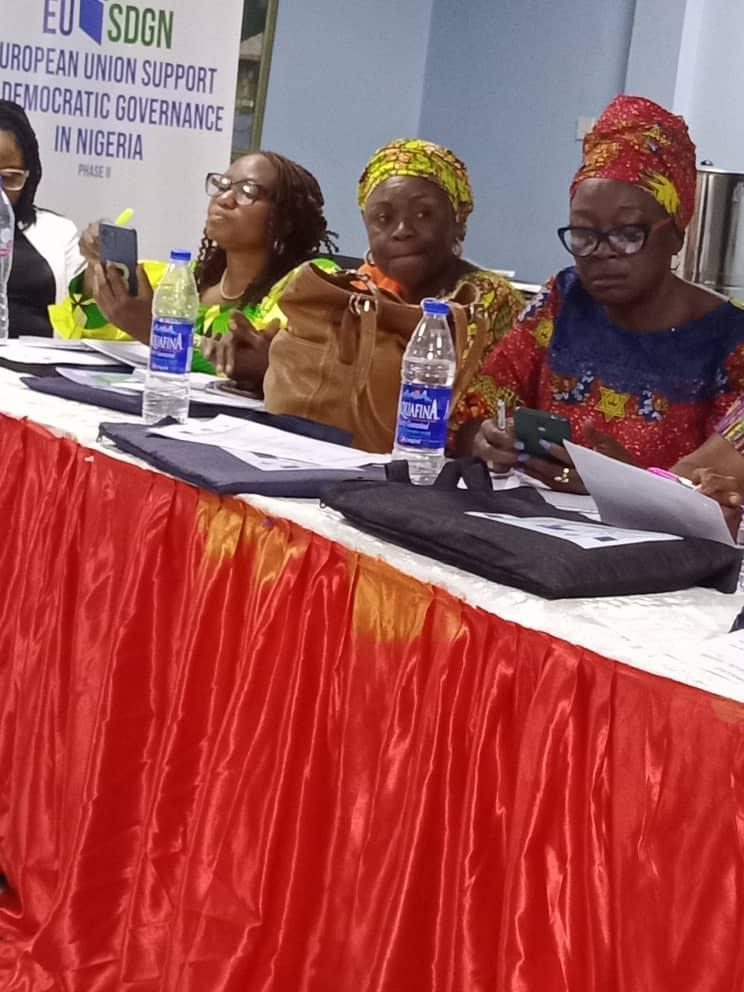
To mark the 2025 International Day to End Impunity for Crimes Against Journalists (IDEI), as designated by the United Nations Educational, Scientific and Cultural Organisation (UNESCO), the International Press Centre (IPC) on Monday organised a symposium dedicated to addressing the increasing threats faced by women journalists who have encountered attacks in the course of their
To mark the 2025 International Day to End Impunity for Crimes Against Journalists (IDEI), as designated by the United Nations Educational, Scientific and Cultural Organisation (UNESCO), the International Press Centre (IPC) on Monday organised a symposium dedicated to addressing the increasing threats faced by women journalists who have encountered attacks in the course of their professional duties.
The webinar discussed recent cases of harassment against female journalists, both offline and online, and explored actions stakeholders can take to end impunity against women nationwide.
The webinar, themed “Addressing Threats to Women Journalists in Digital and Physical Spaces,” brought together veteran journalists who discussed new media strategies to support women and defend press freedom.
In her opening speech, Melody Akinjiyan, IPC’s Press Freedom Officer, emphasised that marking the International Day to End Impunity for Crimes Against Journalists is a crucial call for safety and justice for journalists facing threats and intimidation in their work.
She elaborated that recent research indicates female journalists are disproportionately vulnerable to cyberbullying and online personal attacks. She noted that these trends have contributed to further suppressing their voices.
Ms Akinjiyan stated that UNESCO and the International Federation of Journalists’ research shows that over 70% of women journalists have faced online harassment or abuse, with many receiving gender-specific threats. These dangers silence women and undermine democracy by limiting essential viewpoints.
During the webinar, Ms. Anikeade Funke-Treasure, Executive Director of Illuminate Nigeria, addressed the prevalent challenges confronting women journalists and effective strategies to address them. She highlighted ongoing issues such as misprofiling and cultural constraints, noting that these factors continue to hinder women journalists from operating with the same level of freedom as their male colleagues.
She urged partnerships with Civil Society Organisations to showcase the achievements of women journalists and counter intimidation. She also advocated for unified action against attacks on women journalists in Nigeria.
“Continually, journalism is becoming a treacherous place for women. Women journalists are not exempt from different attacks while doing their jobs, and this has reduced the quality of work they churn out in their respective fields. For instance, when did you last see a woman who is an investigative journalist? Women cannot do this because of the cultural barrier; they are also being trolled by their men counterparts. Even when a woman does an excellent job, the men in the profession have ways of undermining her job. Also, on the internet, you see women being called names like ‘prostitute’ or ‘slut’ because she is doing their job so well.
It is important to consistently address these issues while also recognising the valuable contributions of women journalists. Women should actively acknowledge and support the achievements of their peers within the profession.
In her contribution, Ms. Ladi Bala, former Chairperson of the Nigeria Association of Women Journalists (NAWOJ), described an incident during which she reported being verbally confronted by the managing director of the Nigerian Railway Corporation while covering the train derailment along the Abuja-Kaduna rail line.
She acknowledged that the verbal assault had a significant impact on her mental health; however, with the support of various organisations, including the IPC, she was able to recover. She subsequently emphasised the need for increased development and urged organisations to consistently advocate on behalf of women journalists who work in the field and may be vulnerable to such attacks.
In her remarks, Jadesola Ajibola, Executive Director of the Gender Alive Foundation, offered recommendations for advancing the discussion and expressed her appreciation to IPC and other organisations actively supporting the representation of women in the media profession.
She also encouraged organisations to invest in the education of women journalists, emphasising the importance of amplifying female voices in the media. “IPC, alongside other organisations, should support educational initiatives for women journalists. It is essential to empower women journalists so that their perspectives are represented. By fostering dialogue with women in the field, we can inspire future generations to pursue careers in journalism, ensuring that they find a supportive and fulfilling professional environment.”
I also feel that part of this, whatever we as women also find ourselves, women need to be changed, that whenever we find ourselves, we need to be supported by another woman.