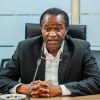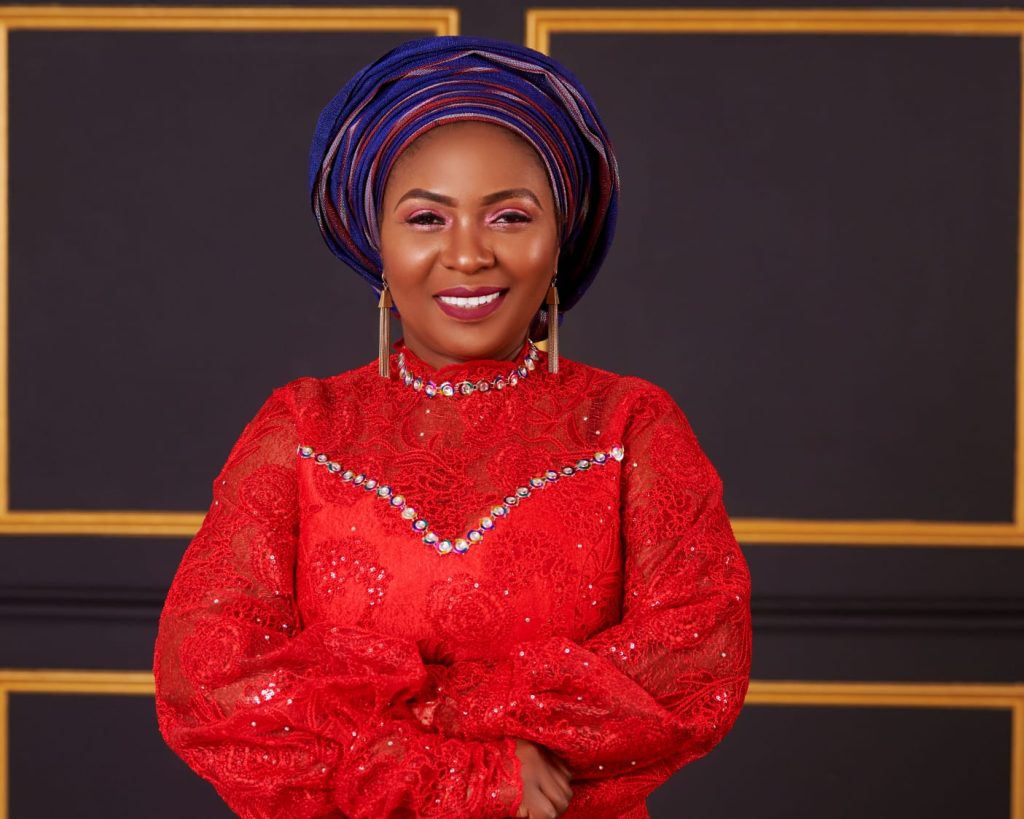
Patience Ndidi Key is the only female out of the 17 candidates in the coming Edo State gubernatorial election and the flagbearer of the Peoples Redemption Party. Before the 2023 general election, she was an aspirant for a presidential seat in the same party but could not make it to become the flagbearer. She is
Patience Ndidi Key is the only female out of the 17 candidates in the coming Edo State gubernatorial election and the flagbearer of the Peoples Redemption Party. Before the 2023 general election, she was an aspirant for a presidential seat in the same party but could not make it to become the flagbearer. She is not a rookie in the male-dominated terrain, having been in a leadership position since her undergraduate days at Ambrose Alli University, Ekpoma; she’s the first female Chairman of, the Board of Directors of Nigerians in Diaspora Organisation Americas (NIDOA).
She wants to use her leadership competence and experience to establish people-centric governance in Edo state as the next governor.
In this interview with NDR, Ms Key talks about her focus on Edo State, her vision for the people, her experience as a woman who has faced domestic violence, her ideology for inclusive governance, and her chance to become victorious in the poll.
NDR: How did Patience Key get to this stage from Ambrose Alli to that person in the NIDO? Even to become an awardee by Joe Biden himself. So, how did you rise to this?
Patience Key: I’ll say everything hinges on the grace of God. I think it’s just the mercy of God—the grace of God, you know. Helping to push that ability, that capacity that’s been embedded in me. At Ambrose Alli University, I was picked to become the vice president. And, I thought, what do you do as a vice president? So, I was asking the guys, “I don’t know, what am I going to do there?” You know, and they were like, “No, you can do it.” I don’t know, the only time you see me talk a lot is when I’m preaching. I’m a Christian. By God’s grace, he called me to himself at such a young age. So, I preach in my hostels, I preach to my classmates, and all of that. That’s when you see me with energy. So, that’s where I have a lot of energy. When it comes to every other thing, I believe I’m just a novice. I’m just looking, and people don’t believe I’m shy.
Leadership is meant for visionary people. Leadership is meant for people who have competence. Leadership is meant for people who have compassion. Who understands that leadership is a task. It’s a responsibility. It’s not about aggrandisements. It’s not just about interests. And even if I didn’t understand that much back then, it wasn’t a selfish thing.
Fortunately, my side won and I became the only female among nine guys. And I started to ask questions. What do we do? Because, like I said, I didn’t know what to do there. And they would say, oh, you know, we’ll give students orientation. I had to read and ask questions about what had happened before. Because now I find myself in there, I know I have to perform. And I was asking, how long have they done that? You know, they said, oh, they don’t even know. It’s been a while, blah, blah, blah.
And I said, “Okay, we have to do orientation for students. We have to put desks in geography and unit planning.” A lot of dilapidation. We have to repair them. And now we’re talking about taking money from students, paying their dues, and all that. I also found out that money was used in previous administrations. People lived in their pockets. And, you know, a lot of things were happening, I said, no. How many are we going to plan in the department that you want to put money in? They said we’re going to do this.
Then let’s do it. You know. And, of course, a lot of faces frowned. But I was just like, Let’s just do the right thing. I’m not comfortable with this and all that. And by the grace of God, we provided a lot of desks and chairs for the students with the resources we gathered. Orientation, we begged some of our high-level students, you know, this will mean this student needs this subject. You know, they want to know more and all that. So we’re doing free classes for them. And in our geography lab, the glasses were all broken. We had to fix them and all.
NDR: What was the motivation that pushed you to leadership positions in the diaspora?
Patience Key: I went to the United States due to my marriage. My husband lived in the United States. He came to Nigeria. We got married, and I joined him a few months later. My husband was an American. So, he has no bloodline in Nigeria and all that. And he tried to make Nigerian friends for me. That year, 2006, he finally told me that there was this NIDO organisation. This organisation’s doing something in Virginia, and Goodluck was coming. And it feels like it is something that I would like to do. And I’m like, how do you know I like it? What have I done with you before? And I said, okay, I will go. And then I told my then-husband, “Should I go?” and he said, “If you want to go, that’s fine”. I told my other, and, you know, one of my pregnant friends agreed to go with me. And some others—you know, two or three others. And we went to Virginia, and I saw Goodluck Jonathan.
He came out, spoke with us, and all that. My interest there was seeing Nigerians from Canada, and all around the United States come together, saying they are doing this for national development. That was a big one. That was the trigger for me. I’m like, oh, my God, this is nice. Coming together to see how we can better our community. Now I live in the United States. I said I have been there since 2006, and that was 2014. In my little way, I began to see how nations are built. How things can be done differently. And now I’m seeing Nigerians coming together. I wanted to know more about this organisation. And what Nigerians were agitating about during that period was to bring back our girls (The Abducted Chibok Girls).
I learned that NIDO was a very big part of it, Goodluck, speaking up. You know, these girls have to do whatever. And they invited NIDO to share views and all that. So, I was like, Oh, yes, this kind of organisation, I will join it. So, in September, of that same year, they were doing their annual AGM. And that was the year I finished my nursing school and it was a lot for me. With little children, my daughter was like three, and my son was like five. And I told my husband, I would like to go to this. He said, okay. Off I went to Ohio because I wanted to know more about this organisation I wanted to put my time and resources in and all that. The diplomatic mission. What was a part of it and all that? I got interested. And I said, okay. Do they have a chapter in Maryland? They said some people were trying to build something, but they couldn’t. That same month, October 10th, we started our first meeting. There were like nine or ten that attended, you know and we never stopped. Until next year, we have gathered. Because you need to have certain numbers to become a chapter. And we gathered those numbers. We made sure they paid their dues.
I didn’t want to run for president of Maryland, but I saw so many people who I thought, even if I started, even if I brought them together. But I thought, yeah, people have people who can, why not? But I saw that so many of them were afraid of one man, one person. Somebody who will come to the meeting and tell us, You have to respect professors, and those kinds of things, you know, make me feel crazy. So, I ran for president in my local chapter. And I won that election by 88% of the vote. So, it’s either he voted for himself or someone supported him. You know. So, he was 12%. I was 88%. And I became the first president of the Maryland chapter. And as a local chapter president, you automatically become a member of the national board. That same year. So, when we got to Atlanta, where that election was, where they’re meeting that year. Because it’s an AGM, an annual general meeting. So, the next year was Atlanta. And I became the National Public Relations Officer.
So, in the space of being a Public Relations Officer on the national board and also serving as the president of my local chapter, I got to understand more about NIDO, read the constitution, you know, saw a lot of things, and viewed the mindset of the people that were important to me, psychologically and all that. And I thought that NIDO made me better. And I said I would run for chairman. No woman has ever run for chairman. Remember, NIDO is an organisation that was started during Obasanjo. And this girl just joined NIDO in 2014 and came to the national board, you know, and they agreed. So, in three years, you went to run for president, for chairman of the whole United States. I became the first, chairman of Nigerians in the Diaspora organisation. When I ran, we were on the board. Four women and men. NIDO is an organisation that works closely with the government in power.
That’s how I got involved, more involved, with the Nigerian government. We come home, proffer solutions put a blueprint together, have an event with them, see how we can help, and all that. But I just got tired of doing the same thing and getting no results. For me, it’s about results. For me, it’s about implementation. And I tell people; that the primary purpose of NIDO is national development. National development for me is not shaking hands with Buhari, shaking hands with Tinubu, or shaking hands with the government. It’s doing work. Making sure that lives are touched, making sure that the citizens feel the impact of leadership, you know. So that’s why I’m there.
Before you know it, they started reminding me that I must run for president. I said you people are crazy. Run for what? As who? What do you mean, I should run for president? The people said, you know, when you say something, you must do it. I began with feasibility studies. You know, so I travelled around the country. Of course, I travel all the time. But this time, it’s on another issue. Just to be sure, asked some questions. You know, of course, that a layman knows what Nigeria needs. We need everything. Nothing is happening here. So, I had to ask questions, meet people, you know. That was when I had the opportunity of meeting former president Obasanjo for the first time.
And the next thing, of course, is to look for a party. But I know that I won’t be in the PDP. I know that APC was not my choice.
I went to read about PRP. Everything about PRP resonated with me. Then I read about Aminu Kano and all that. So that for me is a soft spot. For me, it’s a trigger. It’s just an open door for greatness. For me, it’s not about, oh, which party is popular. Who are the anchors? Who are the founders? What is their ideology? What do they do? What do they believe in? You know, of course, a lot of people write a lot of nice manifestos and all that. But during this time, I made up my mind to join PRP.
NDR: Now I know about the presidency, the aspiration, and all that. But why did you come to Edo? Why Edo? You know you’ve been a diaspora person, a national person. Did you follow the trend of letting her go and starting from the grassroots and Why not Deputy Governor as it is common
Patience Key: I didn’t follow that trend of you must start from the grassroots and all that. Being the chairman of Nigeria’s diaspora for the whole of the United States equates to Buhari as the president of Nigeria. So my position equates to Buhari as the president of Nigeria. My position was pro bono, and we gave what we could, with or without money, to move forward. Buhari’s position: he was paid, but nothing was done.
I decided to run for governor in my state, not because I wanted to follow the trend. As I said, in Nigeria, everything is needed. Nothing is working here. Everything, you know, all our nooks, all our states, local government, everything is needed. There’s so much poverty amidst plenty. Everything is needed. I’m running because I know if a good person doing leadership comes into leadership, then we can begin to enjoy good governance.
And I come from a space where I see things working. I’m not saying America is perfect. Americans believe that they need better and that their government is not working. And I’m sure that until they come to Nigeria, they will know that there’s no room for comparison.
I am running because I know that my state can be transformed. I am running because I see people are not treated right and for me, human capital development is a big deal because human beings are the greatest asset we have anywhere in the world. And the large population of Edo people and the youths. I run because, as an oil-producing state, we are over-reliant on oil, even if it doesn’t do much for us.
NDR: What will be your priorities when you become governor?
Patience Key: Well, like I said, everything that hinges on human beings. Everything that has to do with them, we deal with their businesses, we deal with the environment itself, which is healthcare. We deal with skills, which is education, whether it is entrepreneurial skills, vocational skills, or technological skills. Of course, digitalize the environment so that these things can be powered.
Power is key, but there are just some things a state cannot generate for itself. So, look for investors that will come in with solar, you know. One of the first things that I would do is cut taxes on small businesses. Another thing I would do is give grants. I know people will say, where did this money come from? Some certain amount of money comes into this government every month. So, we start from what we have. We will give grants, and that will help to cushion and give balance to small businesses. We also do that in schools. There are so many of our parents sold their wrappers to send their children to school. These days, how many wrappers can you sell now to send a child to school? School fees are expensive.
NDR: As someone who is in the healthcare sector, how do you want to address the poor healthcare system in the state? What are the things you have identified to be addressed?
Patience Key: Primary healthcare is in shambles in Nigeria and talking about healthcare, can not be complete without taking care of our environment. Before, we used to do sanitation, because whatever happens in the environment, you know, is seen in the health of the people. Things like malaria, we’re talking about cholera right now, are out of the environment. We drink bad water, people eat, you know, a lot of nonsense happening. So, one thing we have to go back to, that’s environmental sanitation. When we clean our environment consistently and all that, gradually we’ll begin to eradicate mosquitoes. And then, every other machinery, but at least that’s first-hand information to be able to do that. Then, we have to modernise our hospitals. These are things that are necessary, that the government will provide for the people, and provide for public hospitals so that lives can be treated.
Also, we have to make sure we train our nurses and make sure our doctors also have this kind of training periodically. Periodically, whether it’s every six months or every two years. In America, we do a series of exams every two years. We renew our licences every two years. So, there are some questions you have to answer. There’s some kind of test sometimes you have to do to make, you still have that ability.
I’m in healthcare, and I have my own business. I train my staff. There are a lot of things that are new in mental health, some things that are new in geriatrics, and, you know, some things that are new in child care for those who take care of children. We have to give them those incentives, six-month, one-year periods so that you have to educate them. So, those kinds of things need to come to our people. Education for me is not just having a bachelor’s degree or master’s or PhD. Vocational studies are key. Entrepreneurship is key. The technology, because these days, like I tell people, the world has gone digital. Edo state cannot be left behind.
With technological skills, Edo can become a tech hub. Why? Because we have the talent that when we open that space for them, we equip that environment for them, they can make good use of their lives. Because education and job creation, anyhow, it marries itself. Because it is what you get in your education.
NDR: As a female candidate, what is your idea about women’s empowerment? It has become one of the points candidates usually make, and it is always in women’s context
Patience Key: I think women’s empowerment is a word. Making it real, as in putting those opportunities in the hands of women, is another thing. I don’t know how I’m going to buy such a thing when all we do is talk about it and gather these people. I was in a programme in Abuja during the presidency period when some women were gathered at the Senate and I was called to speak, I was excited because I thought, only for me to realise that some of the women were lured with money, just to come and start and shout.
NDR: How do you intend to solve the problem of revenue generation, and agricultural promotion to solve food insecurity, given that Edo State is arable land? What are the other alternatives you plan to consider since you don’t want to focus too much on oil?
Patience Key: We are over-reliant on oil. Our oil is still good, but we are not going to rely, we going to diversify the economy. That’s what I mean. One of the big ones is agriculture, and Edo has arable lands. We produce rice, we have cocoa, we have cash crops like rubber, and we have timber. Through my research I learned that Edo has the best, we have the best, we have what they call softwood and hardwood. Edo can become a furniture hub, a global furniture hub. Because we have the timber, we have the wood, in our state. So, there are value chains that can be created through these products. Some by-products come from these cash crops. Rubber can be used for a lot of things, including the automobile industry and the health industry.
So what I’m talking about is not just going to be a national thing, it’s going to be an international thing. Like I tell people, by the grace of God, the opportunity God has given me, not only in the United States but in other countries too, we have been able to develop relationships.
NDR: You’re talking about tourism, right?
Patience Key: Yes, tourism. Yes, revenue for the state, People travel all over the world just to come and look at the White House. You can imagine bringing people, and we are widely traveled, the Edos. Through history, I came to understand that we started immigration and businesses with Portuguese Yeah, and you know, look at that back in history. Benins, Edos. We have been doing business and travelling with Portuguese. So, you can imagine bringing our friends, our investors, just to come and look at Oba Palace. That is real, it’s nature.
We have culture, we have everything. You see, Britain and the rest, Germany just brought back our artifacts. So, people are already stealing from you. So, they already know the value that you have. Is it just inviting them every year? We have the Igbo Festival, Edo has its own, Esan has it, Esako can have it. So, these are ways to create revenue. Then, digital skills. You can fall back on that. So, there’s been a lot of things used to make wealth in the state.
NDR: What is your opinion on local government autonomy? Where do you stand? Do you think local governments should have their autonomy, or should it be shared, such that the state can control some of the things? Or, where do you lean? Where are you leaning?
Patience Key: Anywhere you look, there’s going to be collaboration. But I believe autonomy should be given to, whoever autonomy should be given to. In the local government, local governments are closer to the people. They are on the ground, right? They are closer to the people. So, whatever resources are required for them to, you know, address the people’s grievances, which are the things that can revamp the economy.
If the local governments will work with the state government. I’m talking of the Nigeria I know. So, that’s why I’m putting my question to the Nigeria I know. The money that comes to the state since where is it?
I was born in this state. All I see is retrogression. so, if the money that was given to the states is used for what it’s meant for, there won’t even be a problem. So, the same thing. If monies go straight to the local government, It won’t be a problem for me. Just like the way NIDO is. NIDO has a national board. NIDO has a district. NIDO has a state level.