The Federal Government has outlined intentions to implement stringent actions targeting Nigerian banks, financial institutions, and accounting firms found to be facilitating terrorism financing. President Bola Tinubu’s Special Adviser on Media and Public Communication, Daniel Bwala, disclosed this information during an interview with TVC on Sunday, November 30, 2025. Bwala mentioned that the government plans
The Federal Government has outlined intentions to implement stringent actions targeting Nigerian banks, financial institutions, and accounting firms found to be facilitating terrorism financing.
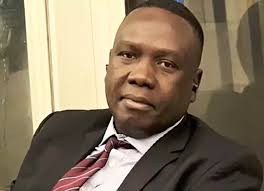
President Bola Tinubu’s Special Adviser on Media and Public Communication, Daniel Bwala, disclosed this information during an interview with TVC on Sunday, November 30, 2025.
Bwala mentioned that the government plans to increase oversight of financial players whose activities make money laundering possible and help terrorist organisations operate.
He stated that Nigeria will use global strategies against financial terrorism, prosecuting any involved organisations and imposing penalties or closure on institutions found culpable.
“We will look at banks that are collaborating with elements like that. We look at other financial institutions that are not banks, as it were. We look at accounting firms that are involved in this money laundering. And then we look at our collaboration with our foreign partners,” he said.
“Any bank that is involved in that, one is that the headship of the bank will be prosecuted and the bank will either be fined or closed,” he added.
Bwala further stressed that terrorist groups depend heavily on financial channels to move money, demand ransoms, and conceal illicit transactions.
“If a bandit demands ransom and they say that the money should be wired to them, it’s through where? Financial institutions. And we have laws that regulate that,” he explained.
He also stated that Nigeria would make use of intelligence support from the United States to identify those aiding terrorist activities, assuring that no individual involved will receive preferential treatment.
“In the coming days, we will know who the terrorists are and their financing. Once the government discovers that, either by way of investigation, by way of revelation, or by way of confession, because it can happen in either of those ways, then judge us whether we can be firm or not. Nobody will be spared,” he stated.
Bwala warned that societies weaken when certain individuals appear untouchable or are treated differently under the law. He also highlighted concerns about intermediaries who present themselves as negotiators but end up enabling terrorist operations.
“This is where the problem is. A thin line between war against banditry and terrorism, and individuals who presented themselves as negotiators and became accessories to it at the end of the day. So, all of these things, there is no hard and fast rule. The government is opening itself up to all possibilities,” he said.
He added that terrorists sometimes use communication networks outside government regulation but assured that authorities have the tools needed to track such activities.
“If they are using a satellite network system or internet service provision that has no link to the one that we regulate, then you will need extra work to be able to see how you can trace them. But I’m telling you, we have the equipment. This government has the equipment to begin to trace them. There is a thin line,” he said.
Bwala also called on citizens to take responsibility in combating the spread of terrorism, urging them to avoid sharing information that could fuel insecurity.
“What the people will do as Nigerian citizens, wherever you are listening, you can start by making up your mind. You will not be a part of people who promote, propagate, or encourage terrorism. Meaning that if you come across any information that looks like fake news, you will not participate in sharing or re-sharing or escalating it,” he said.
Additionally, he warned against the dangers of social media misinformation, noting that some individuals recycle old incidents to discredit the government or political rivals.
Bwala also pointed out that the mismanagement of state-level resources contributes significantly to Nigeria’s security problems. He observed that several states, despite receiving increased allocations, have recorded worsening conditions in health, infrastructure, and other essential services that weaken public trust and escalate insecurity.