
Democracy Day Celebration Marred by Protests Over Insecurity, Poor Governance
Freedom of expression is a key feature of democracy, and Nigeria’s 2026 Democracy Day celebrations across the country were marked by demonstrations and public protests as citizens voiced concern over...

Freedom of expression is a key feature of democracy, and Nigeria’s 2026 Democracy Day celebrations across the country were marked by demonstrations and public protests as citizens voiced concern over rising insecurity, economic hardship, and what many described as poor governance.
June 12 marks Nigeria’s Democracy Day, commemorating the 1993 election in which Nigerians voted for Chief Moshood Kashimawo Olawale Abiola in what is widely regarded as the country’s freest and fairest poll, though the military government of General Ibrahim Babangida later annulled the result.
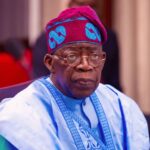
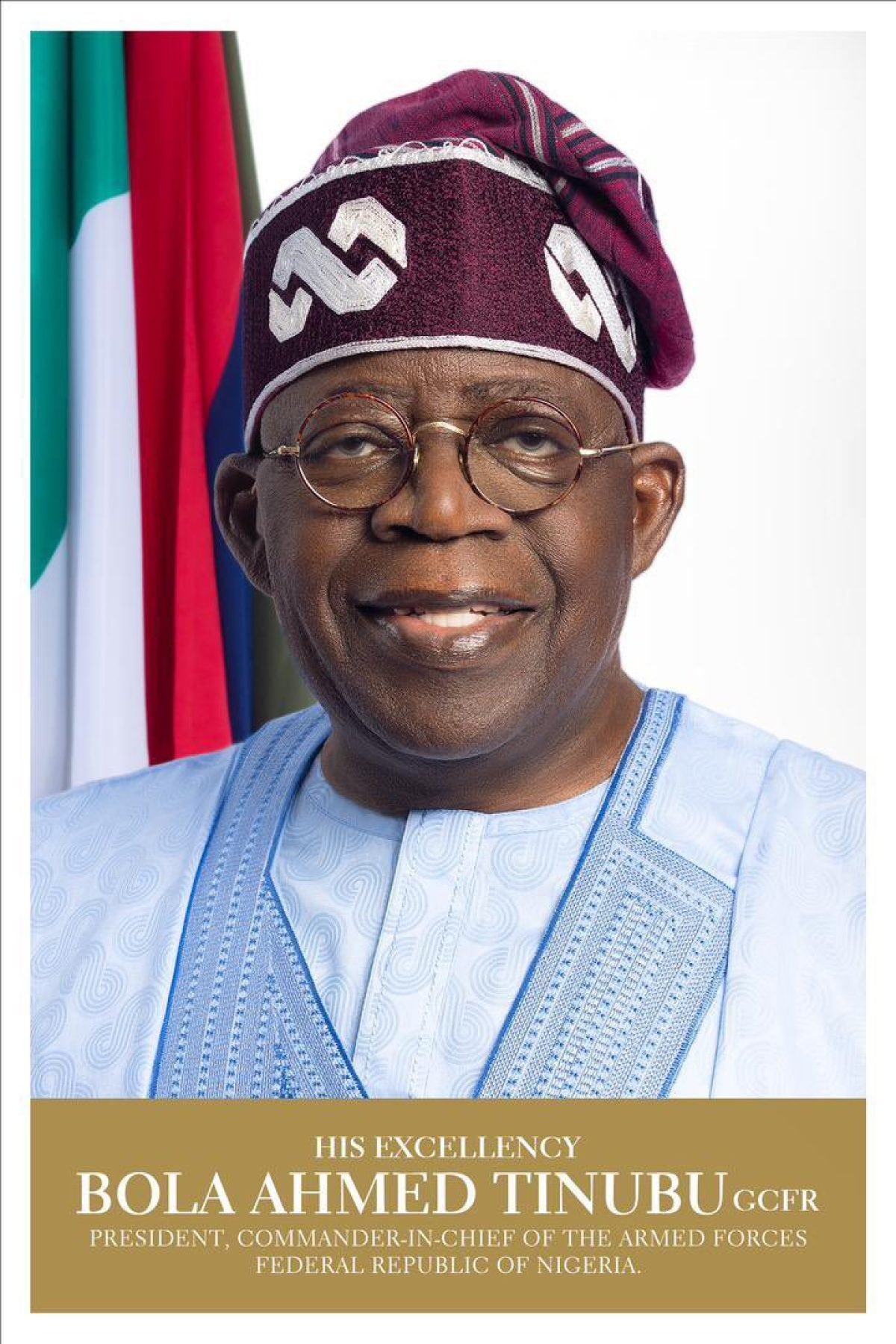
In an early-morning broadcast, President Bola Tinubu highlighted issues such as security and the economy while urging Nigerians to remain faithful and loyal to the country even when they disagree with or criticise his style of governance. He also praised his administration’s performance and assured citizens of economic growth and stability in the years ahead.
That, however, is only one side of the story. Many Nigerians do not share the President’s view. Across the country, protesters took to the streets to express anger over the hardship facing most citizens, which they blamed on President Tinubu’s poor governance.
Across states including Lagos, Ondo, Osun, Kaduna, Rivers, Edo, Bauchi, Delta, Niger, Yobe, Adamawa, Plateau, Kwara and Borno, civil society groups, labour unions and pro-democracy campaigners used the day to demand better governance for ordinary Nigerians. Protests took place in at least twenty states. They called for an end to insecurity, greater accountability and more effective action to address the country’s many challenges.
While some locations experienced low turnouts or weather-related delays (such as heavy rain stalling demonstrations in Rivers State), visible protests, heavy security deployments, and civil society marches were heavily recorded in several major zones, including Abuja (FCT), where activists gathered around major hubs like Eagle Square and the Moshood Abiola National Stadium.
Recall that the country has been facing the scourge of insecurity, in which there have been recent reports of mass abductions in parts of Oyo and Borno states and Kwara State alongside growing public concern over inflation, high transport fares and declining purchasing power.
The demonstrations were met with a heavy security clampdown. The Department of State Services (DSS) and the Nigeria Police Force deployed heavily across protest venues to prevent mass disruptions. In areas like Abuja and parts of Lagos, security operatives fired tear gas canisters to disperse crowds, resulting in clashes and arrests of peaceful demonstrators. Parallel rallies by pro-government supporters drumming up support for the current administration were also observed in select cities.
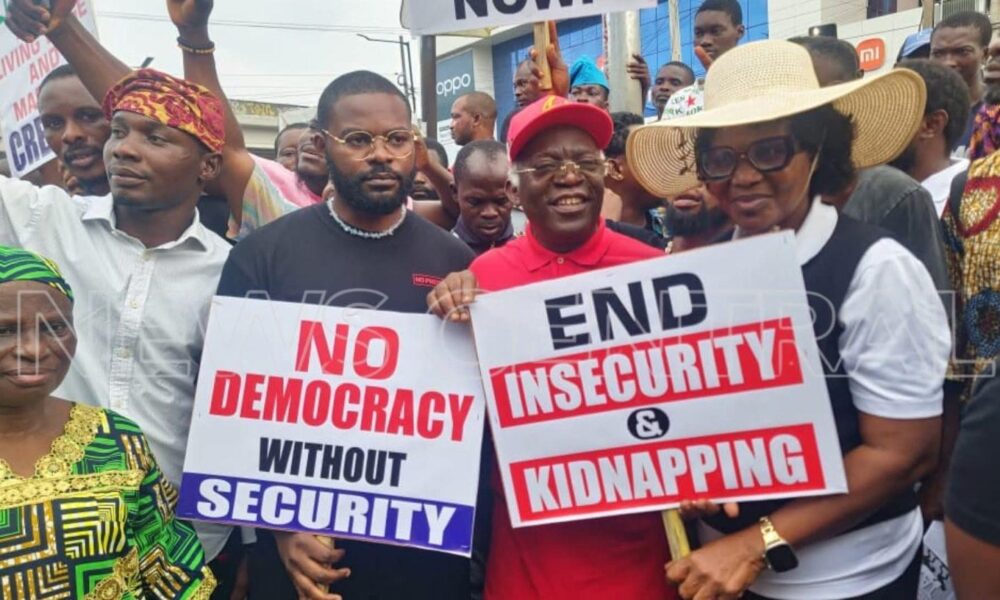
In Lagos, the protests began from the Ikeja underbridge and ended at Ojota, with demonstrators including the human rights lawyer Femi Falana; his son, Folarin Falana, also known as Falz; and his wife, Funmi Falana, drawing attention to worsening insecurity, kidnappings, inflation, and declining purchasing power. Demonstrators carried placards calling for urgent reforms, job creation, improved security, and relief measures to cushion the effects of economic hardship.
Before the commencement of the protest, the state governor, Mr Babajide Sanwo-Olu, in his Democracy Day message, had appealed to the citizens to let June 12 serve as a reminder that freedom, justice, and the right of citizens to have their voices heard were secured through courage, sacrifice, and an unwavering belief in a better Nigeria
He also alluded to the valiance of the winner of the June 12, 1993, election, Chief MKO Abiola, and his wife, Alhaja Kudirat Abiola, acknowledging their sacrifices that helped shape democratic governance and equity in the country.
However, the protesters disagreed with the governor, stating that the leadership of the country has ignored the consistent calls of the citizens for security, welfare, accountability, and other components of a democratic nation. Carrying different banners and placards with different inscriptions like “No democracy without security, end insecurity and kidnapping”, “Free all captives now”, “End anti-people policies now”, and “For a living wage and mass creation of employment” to drive home their messages, the demonstrators accused the government of failing to play its role in securing the country.
Speaking at the protest, Ayoyinka Oni, one of the protesters, condemned the government’s lack of action to keep the country safe from banditry, terrorism, and economic hardship. He further explained that all parts of the country are no longer safe for an average Nigerian, even though there are resources to do so.
“For me, the government is complicit in the insecurity we are facing in the country; if not, how can they be comfortable with all this? All they care about is the next election, with no value for human lives and properties. The country is blessed with resources to end this menace; unfortunately, the leaders of this country have chosen to make us suffer; we are saying enough is enough,” he said.
Hassan Soweto, one of the leaders of the protest, also shared his frustration about the country, stating that Nigerians must not give up, and they must keep on demanding their constitutional right. He lashed out at the administration of President Bola Tinubu for putting in place policies that are not favourable to the masses.
“The message is clear: President Tinubu must listen to Nigerians, or he should go. This country must work for us; otherwise, we shall not rest. There must be an end to insecurity, bad governance, banditry and lacklustre performances from the government. They have continued to take the Nigerian people for granted, and it is already unbearable; we must all continue to demand good governance for our country,” he said.
‘Stop Political Rallies, Fix Insecurity,’ Says Falana
Speaking at the protest ground, the human rights lawyer, Mr Femi Falana (SAN), called on the government to prioritise the lives of Nigerians and release the abducted citizens of the country who are in the captivity of the bandits. He decried the nonchalance of the politicians who are already staging political rallies and have ignored the growing insecurity and abductions in the country.
“We are demanding today that the government should prioritise the lives of the abducted people just like they prioritised that of Ibadan. We should not talk of releasing the family members of the rich; we must also release the family members of the poor. Fellow members of the society, and that’s why the government must double itself to ensure that those children and other Nigerians are rescued; otherwise, there will be more protests coming.
“That is telling government that we are not ready for any abductions. All political rallies must be suspended; as a matter of fact, it is against the law. You cannot campaign 150 days before the election, and because of everything that is going on, we are going to ensure the law is enforced,” he said.
Supporting him, Mrs Funmi Falana (SAN) also decried the government’s negligence, stating that even though the constitution mandates the government to provide security for the citizens, the Tinubu administration has failed the country. She also frowned at the ongoing political campaigns by the government officials when the country is faced with insecurity.
“Today we are not celebrating democracy because there is nothing to celebrate. Today we are mourning democracy; we are saying Nigeria is bleeding. The government has failed us; the primary duty of the government under the constitution is security. The Tinubu government cannot provide security, so we call on the government to resign because they no longer provide security.
“They have failed us. Mothers are waiting for the children to come back from school. Mothers are in captivity. We say no to continuous insecurity. We say bring back our people. We say bring back our children. These looters are busy sharing money; they are busy campaigning; they have forgotten their primary duties,” she lamented.
In Abuja, the FCT
Security forces used tear gas canisters and fired warning shots into the air to disperse peaceful demonstrators during a Democracy Day protest at the Unity Fountain and surrounding areas in Abuja. The crackdown resulted in prominent human rights activist and former presidential candidate Omoyele Sowore collapsing after being heavily exposed to chemical fumes. He was rushed by fellow demonstrators to a hospital for emergency medical attention.
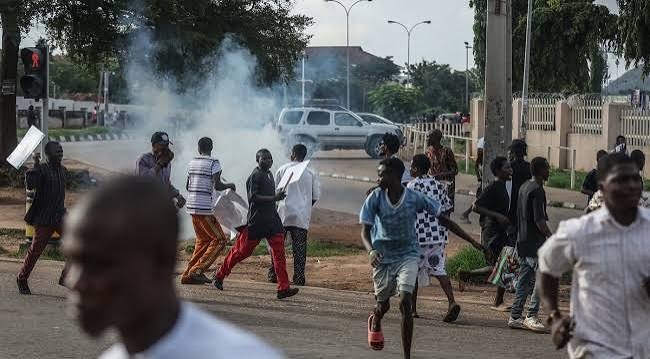 Organised by the Take-It-Back Movement and various civil society groups, the mass demonstration saw large crowds of youths and citizens take to the streets. Protesters chanted solidarity phrases such as “Tinubu must go” and “Rescue them or resign”. Their primary demands focused on severe economic hardship, where citizens rallied against skyrocketing inflation and severe economic conditions plaguing the country.
Demonstrators explicitly demanded the immediate rescue of schoolchildren and teachers recently abducted by bandits in Oyo State. The groups also used the platform to demand the release of detained IPOB leader Nnamdi Kanu
Protesters Took to the Streets in Oyo State
Similarly, some residents of Oyo State took to the streets on Democracy Day to protest insecurity and poor governance. The demonstration moved from Challenge to Agodi Gate in Ibadan, the state capital, as protesters sang and chanted to express their frustration over the country’s worsening security situation.
The demonstrators also carried placards and banners with messages such as “#BringBackOurChildren”, “#47Abducted, Scared and Alone”, “Government Must Act: End Kidnapping in Oyo State”, “Their Lives Matter, Bring Back Our Kids”, “Free Our Children”, and “Every Life Matters, Stop the Kidnappers”.
The protest was the continuation of the ongoing agitations of the Take-It-Back (TIB) Movement, various civil society coalitions, and the citizens over the abduction of over 40 school children and teachers in the Oriire Local Government in the state and the economic hardship, hunger and other related national matters.
One of the protesters, Omowunmi Abraham, said, “We are tired of counting bodies and burying dreams. Nigerians deserve to live, work and travel without fear. Democracy means nothing when citizens cannot sleep with both eyes closed. Nigeria is not yet democratic, and there is nothing to celebrate on Democracy Day,” she lamented.
Demonstrators Took to the Streets in Osun
In Osogbo, civil society groups and trade unionists staged a peaceful June 12 protest, urging urgent action against worsening insecurity and accusing governments at all levels of failing to curb kidnappings, banditry and violent crime.
The protesters said governments at all levels have failed to adequately tackle the rising wave of kidnappings, banditry and other violent crimes across the country.
After gathering in Ayetoro, the groups marched through Old Garage to Olaiya Junction, where their leaders addressed reporters.
They also called for the swift rescue of the abducted teachers and students in Oyo State, carrying banners such as “Government must end kidnapping in Nigeria”.
They also demanded the immediate rescue of the abducted schoolchildren in Oyo State and urged the federal government to act swiftly, warning that Nigeria’s democracy is in decline and calling on President Bola Tinubu not to remain passive.
Protesters Join Call for End to Insecurity in Ondo State.
The story was not different in Ondo State, where residents also joined the ongoing nationwide June 12 protest, taking to the streets to demand the immediate release of the school children and teachers abducted from three schools in Oyo State.
The protesters also demanded immediate action to end insecurity, economic hardship and bad governance under President Bola Tinubu in Nigeria.
In Akure, the capital of Ondo State, the demonstrators marched along major thoroughfares while holding signs denouncing the worsening living conditions that millions of Nigerians face, as well as rising food prices, unemployment, and insecurity.
The demonstrators noted that Nigerians were increasingly becoming victims of kidnappings, bandit attacks, and violent crimes throughout the nation and accused the government of failing in its primary duty of protecting citizens’ lives and property.
They also raised their concerns and condemned the rising cost of living and worsening economic conditions, stating that many citizens can no longer afford necessities due to inflation and declining purchasing power.