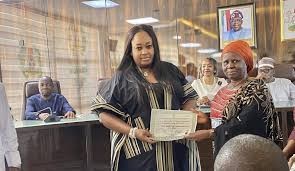
Nigeria’s August 16 bye-elections highlighted ongoing gender imbalance, with only two women winning out of 16 legislative seats (12.5 per cent). In Ogun state, Princess Adesola Elegbeji, and in Edo state, Barrister Omosede Igbinedion, won seats. The remaining 14 positions were won by men, resulting in women holding 12.5% of the seats and men holding
Nigeria’s August 16 bye-elections highlighted ongoing gender imbalance, with only two women winning out of 16 legislative seats (12.5 per cent). In Ogun state, Princess Adesola Elegbeji, and in Edo state, Barrister Omosede Igbinedion, won seats. The remaining 14 positions were won by men, resulting in women holding 12.5% of the seats and men holding 87.5%.
The elections resulted in the All Progressives Congress (APC) winning 12 seats across various states. Elegbeji was elected in the Remo Federal Constituency, where she received more votes than her closest competitor from the People’s Democratic Party (PDP). In Edo, Omosede Igbinedion won a return to the House of Representatives after winning the Ovia Federal Constituency, where she polled more than 77,000 votes, dwarfing her PDP opponent’s tally of just under 4,000.
These two victories gave women a presence in an election otherwise dominated by male names and male narratives.
More Men Fewer Women
Men won most seats nationwide, with male candidates dominating in places like Jigawa, Niger, and Kano, as reflected by victories from APC and NNPP contenders.
In Oyo, PDP’s Folajimi Oyekunle won the Ibadan North seat. In Anambra South, APGA’s Emmanuel Nwachukwu emerged victorious, and in Edo Central, APC’s John Ikpea defeated the PDP opponent.
The election highlights Nigeria’s challenge with gender representation: although women account for almost half of registered voters, few hold elected positions.
In Nigeria’s 10th National Assembly, women make up just 3.7% of senators (4 out of 109) and 4.7% of House members (17 out of 360), highlighting a significant gender imbalance in both chambers. Although women achieved a 12.5 per cent result in this round of bye-elections, it remains below the national average.
Mrs Blessed Betiku, a political analyst and gender advocate, asserts that women’s political representation in Nigeria remains minimal. She points out that with women holding just over 10 percent of seats, significant structural barriers like patriarchal attitudes, party dynamics, and high campaign costs still impede inclusivity in governance.
“The contrast is especially glaring against Nigeria’s commitments on paper. The country pledged to ensure at least 35 per cent affirmative action for women in political appointments and elective positions; still, the benchmark remains far from reality.” She added.