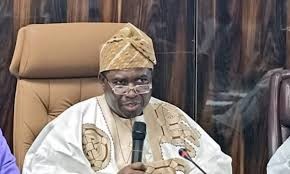
The professor of law, who recently became the head of Nigeria’s elections management body, began his role with an academic perspective. He has analysed INEC and its operations, identifying a lack of public confidence in the institution. His stated objective is to restore trust in the organisation, though this will require action beyond statements alone.
The professor of law, who recently became the head of Nigeria’s elections management body, began his role with an academic perspective. He has analysed INEC and its operations, identifying a lack of public confidence in the institution. His stated objective is to restore trust in the organisation, though this will require action beyond statements alone.
From his Senate screening to the commencement of his responsibilities at INEC and his subsequent public engagements, he has consistently emphasised the importance of restoring confidence in INEC and Nigeria’s electoral process. Phrases such as “votes will count”, “transparent process”, “reducing litigations”, and “losers congratulating the winners” have been employed to convey his intentions to restore confidence in INEC.
Gaining the goodwill of Nigerians generally requires modest effort, while it may only take a small number of negative actions to lose their trust. Many Nigerians are pessimistic that INEC can ever be trusted. Prof Joash Amupitan has requested an opportunity from Nigerians and has been using complex vocabulary to communicate his message.
Talk is cheap. Numerous Nigerians expect him to substantiate his sincerity through the demonstration of practical skills. He faces at least three off-cycle elections to demonstrate his capabilities. The Anambra governorship election, scheduled for November 8, 2025, will serve as his initial test. The next test would be the Ekiti State governorship in June 2026. However, both may prove less demanding than the Osun governorship election in August 2026, which will be the final contest before the 2027 general elections.
The Osun governorship race is expected to be highly competitive, with the incumbent PDP government and the APC both vying for control. This election will likely present the most significant challenge for Prof. Amupitan and could serve as a key indicator of future outcomes. Being the last election before the 2027 general elections comes with implications.
During the screening, Prof Amupitan outlined his vision for deepening electoral credibility in Nigeria, pledging to strengthen institutional reforms within INEC and expand the deployment of technology to ensure more transparent and efficient elections. He also responded to questions from senators on various issues affecting Nigeria’s electoral systems and how he would address them if confirmed as the new INEC chairperson.
During his screening by the Senate, Prof. Joash Amupitan pledged to improve Nigeria’s electoral process by leveraging technology. He committed to using drones to monitor elections, aiming to enhance transparency and security during voting. He stated his intention to work with the National Identity Management Commission (NIMC) to strengthen the electoral process.
He has also pledged to uphold integrity, transparency and discipline in the management of Nigeria’s electoral process. He pledged during his first meeting with the directors of the commission in Abuja that the integrity of the electoral system was not negotiable. “As we have marked the beginning of a new chapter, I want to assure you of my commitment to holding the highest standard of integrity, transparency and discipline in all our operations.
“I want to give you that assurance and also to let you know that our mandate is very clear as INEC. INEC has a constitutional responsibility and a statutory mandate to deliver free, fair and credible elections that reflect the will of the Nigerian people.
“The credibility of our elections is paramount, and we must ensure that every voter feels confident that their vote will count. Please, because that is a constitutional task.
“Let’s restore the confidence of every voter that whenever there is an election, their votes will count so that we can address this issue of voter apathy,” he said.
Again, on October 23, 2025, Nigeria’s new Independent National Electoral Commission (INEC) Chairman, Professor Joash Ojo Amupitan, stated that elections must be won at the polling units, not in court. This was part of his inaugural address to the staff of INEC.
The quote directly addresses the issue of post-election litigation, which has become a major challenge in Nigeria’s democracy. Amupitan’s stance suggests a move toward ensuring electoral integrity at the grassroots level, making court interventions less necessary.
The statement is part of a broader commitment by the new chairman to electoral reform, increasing transparency and fairness in the electoral process, and rebuilding public trust in INEC.
At the 56th NALT Conference, Professor Amupitan pledged to improve legal frameworks to ensure election results reflect polling unit outcomes and to address the rise in pre-election litigation affecting Nigeria’s democracy.
“The court cannot continue to determine elections,” he said firmly. “If the right legal frameworks are in place, elections will be decided at the polling units.”
He reaffirmed his commitment to transparency, fairness, and the rule of law, urging legal scholars to collaborate with INEC to reform the system.
“There is little INEC can do by way of policy if the law does not support us,” He pledged to work closely with the legislature to ensure enduring electoral laws that Nigerians can be proud of.” He appealed to legal academics to support INEC through research, advocacy, and constructive criticism.
Nigerians are hoping he will not turn tail from these promises when faced with the realities of different situations and confronted with political pressures from the authorities. Nigerians will be on the tail of Prof Amupitan as he writes his legacy at INEC in the next five years.