



Amid Rising Debt, Tinubu Seeks National Assembly’s Approval to Borrow Again
President Bola Tinubu has written to the National Assembly seeking approval for a supplementary external borrowing plan of $20.52 billion and €1.04 billion to finance infrastructural projects and...

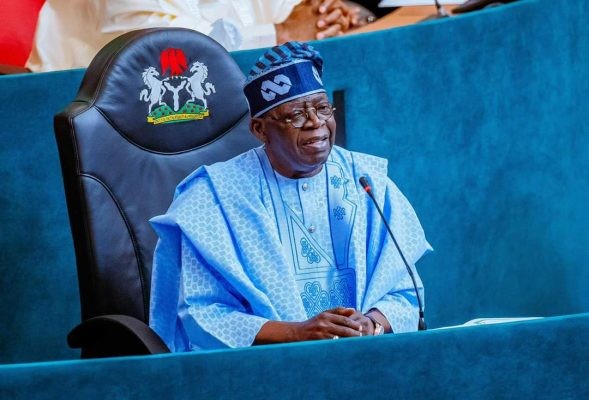
President Bola Tinubu has written to the National Assembly seeking approval for a supplementary external borrowing plan of $20.52 billion and €1.04 billion to finance infrastructural projects and programmes across several sectors in Nigeria.
In his letter, read by Senate President Godswill Akpabio during Tuesday’s plenary, the President said the proposed borrowing of $20,517,755,901 and €1,045,083,643 would support infrastructure, agriculture, healthcare, education, water supply, security, job creation and financial management reforms.
President Tinubu said the borrowing was needed to address Nigeria’s infrastructure deficit and close the funding gap delaying development projects. “I submit the attached Federal Government 2026–2027 Supplementary External Borrowing Plan for consideration and early approval of the National Assembly to ensure prompt implementation of our projects,” the letter reads in part.
He added that the loan-funded projects in critical sectors were selected based on technical and economic assessments and their expected contributions to Nigeria’s socio-economic development. He said most of the projects and programmes would be implemented across the 36 states and the Federal Capital Territory.
“In light of the need for significant infrastructure investment in the country and the vast financial resources needed to address this gap, it has become essential to pursue prudent external borrowings to close the financing shortfall,” he said.
“It has become essential to pursue prudent external borrowings to close the financing shortfall. These funds will primarily be directed towards critical infrastructure projects in various sectors including power, transportation and healthcare, amongst others.
“These initiatives aim to generate employment, promote skill acquisition, foster entrepreneurship, reduce poverty, and enhance food security, all of which improve the livelihood of the Nigerian child,” he said.
The President urged the Senate leadership and the wider National Assembly to approve the plan promptly, arguing that timely approval would facilitate disbursements and accelerate project implementation.
Reacting after the letter was read, Senator Godswill Akpabio said the borrowing plan had featured in previous government budgetary and borrowing arrangements, although he expressed uncertainty about the exact period covered by the earlier approval.
The Senate President said the new request would be referred to the Senate Committee on Local and Foreign Debts for consideration, with possible input from the Committees on Appropriations and Finance.
The committee is expected to examine the details of the proposed financing, including its relationship with previously approved borrowing arrangements, before the Senate determines the next legislative steps.
Meanwhile, the latest request adds to borrowing proposals submitted by President Bola Tinubu to the National Assembly since he assumed office in May 2023. These include requests for $7.8bn and €100m in 2023, about $2.21bn in 2024, and an external borrowing plan worth approximately $21.5bn submitted in May 2025.
In October 2025, the National Assembly approved an external financing request of about $2.35bn to partly finance the 2025 budget deficit and refinance maturing Eurobonds. The approval also covered a proposed $500m sovereign Sukuk issuance for infrastructure projects.
In March 2026, lawmakers approved a $6bn external borrowing plan for the Federal Government. Of the amount, up to $5bn was to be sourced from First Abu Dhabi Bank to support the budget and refinance existing high-cost debts, while a UK-backed export finance facility of approximately $1bn, arranged by Citibank, was earmarked for the rehabilitation of Tin Can Island Port and the Lagos Port Complex.
About a month later, the National Assembly approved a $516.3m loan from Deutsche Bank AG to finance part of the Sokoto–Badagry Superhighway, a flagship infrastructure project under the Tinubu administration’s Renewed Hope Agenda.
The loan has a tenure of nine years, including a grace period of up to three years, with an annual interest rate capped at the Chicago Mercantile Exchange’s Secured Overnight Financing Rate (SOFR) plus 5.3 percentage points. The facility is supported by a partial risk guarantee from the Islamic Corporation for the Insurance of Investment and Export Credit (ICIEC), an institution within the Islamic Development Bank Group.
The borrowing has always raised concerns among Nigerians as the country’s debt ratio continues to grow and the servicing cost continues to grow amid the economic challenges in the country.






No Comment! Be the first one.