




President Tinubu Nominates 6 New INEC Commissioners
President Bola Ahmed Tinubu has nominated four new national commissioners and two new resident electoral commissioners to fill vacancies created by recently expired tenures at the Independent...

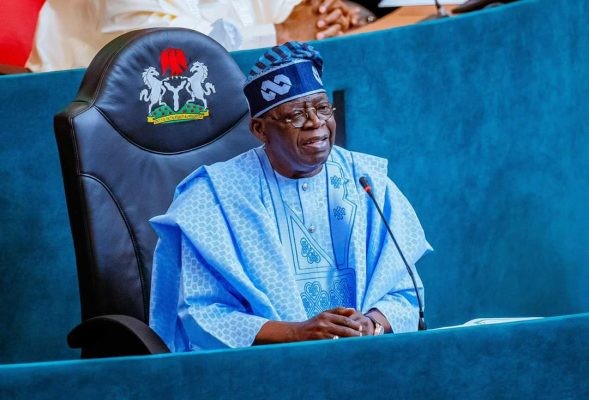
President Bola Ahmed Tinubu has nominated four new national commissioners and two new resident electoral commissioners to fill vacancies created by recently expired tenures at the Independent National Electoral Commission.
To maintain the Commission’s operational continuity, the nominations have been sent to the Senate for screening and confirmation.
However, the President reappointed Dr. Bala Bila, the North East’s national commissioner, for another term.
The new national commissioners are Professor Mustapha Aliu, who will replace Professor Abdullahi Zuru as the North West representative; and Bashir Muhammed Umar, who will replace Professor Muhammad Adamu as the North Central representative.
President Tinubu recommended Mrs Oluwatoyin Babalola, the resident electoral commissioner in Osun, as the new South West national commissioner. She will replace Professor Cornelius Ajayi, whose tenure expires on October 24.
The two new resident electoral commissioners are retired permanent secretary Dr Samuel Akinjide Akinleye, to represent Ekiti State, and Zahradden Basiru Sanusi, from Jigawa, who will replace Professor Saidu Ahmed Babura.
President Tinubu urged the Senate to expedite the nominees’ confirmation in view of the forthcoming General elections next January.
Vacancies on Nigeria’s Independent National Electoral Commission (INEC) have significant operational, legal, and political consequences. Commissioners serve five-year statutory terms.
Vacancies among national commissioners or resident electoral commissioners (RECs) place additional administrative and oversight demands on the remaining staff. Because commissioners oversee geopolitical zones and specialised committees such as logistics, legal affairs, and ICT, prolonged vacancies can strain capacity and delay strategic planning and policy implementation.
Under INEC’s governing provisions, vacancies do not prevent the commission from acting as long as it meets the legal quorum. INEC has historically made decisions and conducted off-cycle and general elections without a fully constituted board. However, an incomplete board limits regional representation in critical administrative votes.
The timing and management of these vacancies strongly shape public perception. When key posts become vacant near a major election, civil society groups and opposition parties demand greater transparency. Delays in filling vacancies—or the appointment of replacements viewed as partisan—often fuel concerns about the electoral commission’s independence.








No Comment! Be the first one.