


Journalists Pledge Issue-Based, Fact-Checked Coverage of the 2027 Election
Ahead of Nigeria’s 2027 general elections, journalists have pledged to strengthen issue-based reporting, fact-checking, and the responsible use of artificial intelligence (AI) following a...

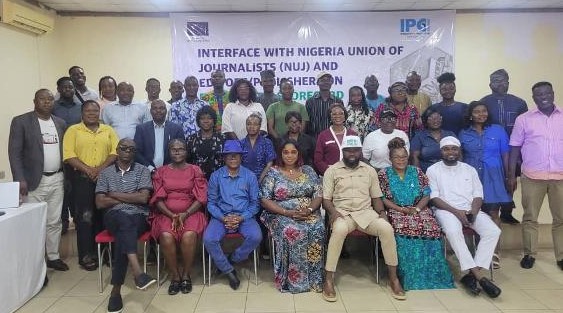
Ahead of Nigeria’s 2027 general elections, journalists have pledged to strengthen issue-based reporting, fact-checking, and the responsible use of artificial intelligence (AI) following a capacity-building session organised by the International Press Centre (IPC) in collaboration with the Nigeria Union of Journalists (NUJ).
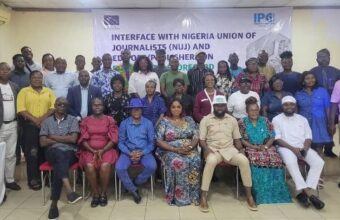
Journalists from print, broadcast, and online media committed to an engagement held on 15 and 16 October 2026 at the Royal Bird Hotel, Akure. The event was organised under Component 4 (Support to Media) of the European Union Support to Democratic Governance in Nigeria (EU-SDGN III) project, led by the IPC.
They noted that the knowledge and skills acquired would enhance their capacity to scrutinise candidates’ campaign promises, verify political claims, counter misinformation and disinformation, and promote democratic accountability through accurate, balanced and citizen-centred election reporting.
Prior to their commitment at the interface, they had been taken through the need for journalists to strengthen their verification skills, critically assess information circulating on digital platforms and remain alert to the potential misuse of AI tools in creating or amplifying misleading content.
Speaking at the interface on “2027 General Election in the Context of Democratic & Accountability Reporting: Scanning the Electoral Environment and Reporting Citizens’ Priority Concerns”, Adegbenro Adebanjo, Director of Corporate Communication, FUTA, urged journalists to investigate the challenges confronting local communities and ensure that such concerns are featured prominently in reports examining the manifestos and campaign promises of political parties and candidates.
He noted that election reporting would be more meaningful if it focused on how proposed policies and political commitments would address the everyday problems of citizens rather than concentrating on political rallies, party defections and campaign activities.
According to him, journalists have a responsibility to bring the concerns of ordinary Nigerians into the electoral conversation by examining the practical implications of candidates’ promises for communities and their residents.
In his presentation, Olusola Oludiran, the NDR reporter, speaking on the “Integrating fact-checking for Democratic and Accountability report”, urged the participants to check the dissemination of false claims by politicians and their cohorts for personal gains.
He also exposed the participants to the processes involved in verifying information and identifying different forms of information disorder, including misinformation, disinformation and malinformation. Participants were introduced to digital verification tools, including reverse image search, InVID, Hive Moderation and Google Lens, to help establish the authenticity of photographs, videos and other online materials before publication.
Reacting to the interface, participants expressed their satisfaction with the programme and how it will further enhance their capacity to reduce the hitherto high rate of electoral manipulations, corruption, and rigging, stating that journalists would be more equipped to monitor the election umpire, contestants, political party agents, security agents and the voters, who will be painstakingly monitored, covered and reported to realise the nation’s credible election dreams.
Mr Moses Ojo, a journalist and one of the participants, stated that the training was outstanding, as it gave him the knowledge to adequately scan his environment during election coverage. “I now know that part of my responsibilities is to profile the election mandate seekers to the owners of the mandate for them to make informed choices at the poll, as well as educate and encourage them to perform their civic responsibility to contribute to the nation’s development.
“I was really exposed to the usage of Artificial Intelligence (AI) in the areas of generating pictures, applications in election accountability and how to leverage these for credible election coverage and reporting. Regarding Fact-Checking, its basic tools and usage were unveiled. This, no doubt, will help all participants to monitor and verify political claims by politicians, most of whom violate rules and laws to outsmart one another.”
Another participant, Temitope Adedeji, also noted that the workshop was a good development, as it exposed them to how journalists could be more inclined to better democratic reporting, giving the country enough awareness to make enough decisions during the elections.
He also called for more training and workshops to be organised for Journalists in those two areas. “Most especially the aspect of fact-checking to expose fake news and the use of Artificial Intelligence that can be used to manipulate pictures and videos to cause confusion and crisis ahead of the 2027 elections,” he said.
In his reaction, Mr Richard Ilesanmi said the training was indeed a valuable learning moment for him, promising to ensure the application of the knowledge and skills gained to promote democratic and accountability reporting. “Having been trained on the fact-checking writing process, its structure and relevant tools to use, I will integrate it into my reporting to counter the spread of false information before, during and after the 2027 general election. I am going to put what I have learnt into practice by focusing on people-oriented stories and educating citizens about their civic responsibilities to help reduce voter apathy as recommended by one of the resource persons”, he said.
In her reaction, Adeola Adekunle Omosola also expressed her excitement and enthusiasm to utilise the outcome of the training for her professional engagement. “Well to me one of the major strengths of the training was its emphasis on the connection between accountability journalism, artificial intelligence, digital reporting and fact-checking. When we look at it critically,these areas are increasingly important in an election period when political propaganda, misinformation, manipulated images, deepfake videos and unverified claims can spread rapidly across traditional and digital media platforms.
“I will say, to be able to apply what I learnt in the coming general elections, scrutinise the manifestos, track records and public commitments of candidates and political parties, i should not merely report campaign promises; I should investigate whether candidates have the capacity, resources and credible plans to fulfil them and also verify information before publication”, she noted
Moreover, Oluwatosin Ighoteguono, a reporter from Radio Nigeria, stated that training has further enhanced her ability to report more on accountability and transparency ahead of the elections in the country. She also stated that the training would help her to fact-check more. “Before the training, fact-checking has been so hard, and it’s like it’s for some special set of people, but after the training, my narrative changed.”
Earlier in his opening remarks, the Executive Director of the International Press Centre, Lanre Arogundade, who was represented by the organization’s Programme Manager, Stella Nwofia, said the engagement was aimed at strengthening journalists’ capacity to provide reliable information and promote democratic accountability as the country prepares for another election cycle.
Ms Nwofia urged the journalists urged journalists to move beyond routine coverage of political campaigns, rallies and candidates to focus on issues affecting citizens, scrutinise campaign promises and hold elected officials accountable.
Beyond the regular reporting, the IPC programme manager urged the media practitioners to prioritise accuracy, fairness, verification and conflict-sensitive reporting, adding that fact-checking should be an integral part of responsible journalism, particularly during election periods.
She further advocated more issue-based and citizen-centred electoral reporting, urging journalists to pay greater attention to the economy, education, healthcare, security, employment and infrastructure.
She emphasised the need to ensure that women, young people, persons with disabilities and other under-represented groups receive adequate attention in electoral coverage.







No Comment! Be the first one.