Jonathan, British High Commission Commend Osun Poll, Flag Political Influence, Other Electoral Concerns
Former President Goodluck Jonathan and the British High Commission praised the peaceful conduct of last Saturday’s Osun State off-cycle governorship election, with concerns about political...


Former President Goodluck Jonathan and the British High Commission praised the peaceful conduct of last Saturday’s Osun State off-cycle governorship election, with concerns about political mobilisation, voter interference and other challenges that could weaken Nigeria’s electoral process ahead of the 2027 general elections.
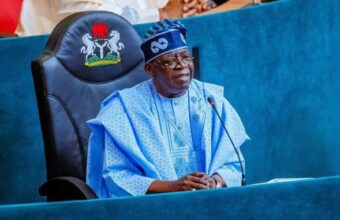
The former President Goodluck Jonathan, in a statement issued today, praised the Independent National Electoral Commission (INEC), security agencies, political parties and voters for the conduct of the off-cycle poll, but he raised concerns about the growing presence of serving governors, former governors, senior political office holders and other influential political actors in states where elections are being held.
In the same light, the British High Commission, in a separate statement issued on August 17, commended Osun voters for their patience and peaceful participation, as well as the performance of INEC and security personnel, but identified vote-buying, voter interference, accessibility challenges and overcrowding at some polling units as areas requiring attention.
Jonathan, in a statement issued on Tuesday following the election, said the outcome demonstrated that Nigeria still had the capacity to conduct elections capable of strengthening public confidence in democratic institutions despite the challenges facing the country.
“The outcome of the recent governorship election in Osun State demonstrates that, despite the challenges confronting our democracy, we possess the capacity to conduct elections in a manner that strengthens public confidence in our democratic institutions,” he said.
He commended INEC, the security agencies, political parties and, most importantly, the people of Osun State for the peaceful conduct of the election.
“While we commend the electoral process itself, there are developments surrounding the election and, more importantly, an emerging trend in political conduct during off-cycle elections that raises concerns,” Jonathan said.
The former president specifically criticised the increasing practice of serving governors, former governors, party leaders, senior government officials and other powerful political actors travelling to states conducting elections, often accompanied by large numbers of aides and heavy security details.
He said the level of political mobilisation witnessed during the recent off-cycle elections in Osun, Ekiti and Ondo states was unusual and should not become a permanent feature of Nigeria’s electoral process.
Jonathan recalled that similar situations arose during the 2013 Anambra and 2014 Ekiti governorship elections when, according to him, senior political leaders mobilised and converged on the states.
“Upon being briefed, I ordered party leaders and senior government officials to leave the states immediately,” he said.
While acknowledging the right of political parties to campaign, mobilise supporters and deploy their structures during elections, Jonathan warned that excessive political mobilisation could create fear, intimidation and undue pressure among voters and political opponents.
“There is a point at which political mobilisation, particularly when it involves the overwhelming presence of serving governors, senior public officials and powerful political actors from across the country on election day, can create an atmosphere of apprehension, intimidation, bullying and undue pressure,” he said.
He questioned whether the increasing deployment of political power and government influence during off-cycle elections was consistent with free, fair, and peaceful democratic competition.
According to him, elections should not become contests in which political actors regard victory as something that they must secure at all costs.
“This hardly happens in other democratic countries. We must not allow political competition to become a contest in which victory is perceived as something that must be achieved at all costs,” Jonathan said.
He stressed that the issue should not be viewed as a partisan dispute arising from the Osun election but as a broader national concern about the future of Nigeria’s electoral democracy.
“Those of us who have occupied public office must recognise that our conduct carries a greater responsibility. The power and influence attached to public office should be used to strengthen democratic institutions, not to create apprehension among political opponents or citizens,” he said.
Jonathan consequently called on the National Peace Committee to convene a stakeholders’ engagement to examine the emerging trend and develop acceptable standards for political conduct during elections.
He proposed that the meeting should bring together the leadership of registered political parties, INEC, relevant security agencies, the National Assembly, the Nigerian Bar Association, the Nigeria Governors’ Forum, civil society organisations, and the media.
He said the National Peace Committee was well placed to lead the discussion, given the confidence and moral authority it has earned through its interventions during periods of political tension.
“An early national conversation can help us establish appropriate boundaries and expectations for political conduct before practices that are unusual today become accepted as normal tomorrow,” he said.
Meanwhile, the British High Commission, in its position on the election, said it deployed accredited observers to monitor the Osun election after engaging with several stakeholders ahead of election day.
While congratulating Governor Ademola Adeleke on his re-election, the commission stated that its observations, combined with those of credible independent observer groups, revealed several promising signs in the electoral process.
According to the commission, it was observed that polling units opened as scheduled in many locations, security personnel remained committed to maintaining order, and INEC officials effectively implemented several electoral procedures.
The British mission, however, said challenges remained, including difficulties for persons with disabilities and elderly voters, and overcrowding caused by the speed and limited provision of BVAS devices for accreditation.
It also pointed to reports of isolated incidents that generated tension before and during the election and described voter interference, including vote-buying across party lines, as a significant continuing challenge.
“Most of all, we were encouraged by the patience, resilience and participation demonstrated by voters throughout the day,” the Commission said.
It urged relevant Nigerian institutions to review the challenges observed during the election and to draw lessons from the recommendations made by credible civil society organisations.
The British High Commission also cautioned that some of the resources available during off-cycle elections may be more difficult to replicate during a nationwide election.
“As Nigeria looks ahead to the 2027 general elections, we note that off-cycle elections benefit from the availability of additional personnel and resources that may be more difficult to replicate at a nationwide scale,” it said.
The Commission expressed hope that lessons from the Osun election would contribute to improvements that strengthen the integrity, inclusiveness and credibility of future elections.
Meanwhile, both former President Jonathan and the British Commission stated that the country must build on the positive aspects of the Osun election while addressing political interference, voter intimidation, vote-buying, accessibility, and logistics in preparation for the 2027 general elections.