IPC, CEMESO Gather Stakeholders to Support Peaceful, Credible Osun Election
As preparations intensify for the Osun State off-cycle governorship election scheduled for August 15, 2026, the International Press Centre (IPC) and the Centre for Media and Society (CEMESO) have...

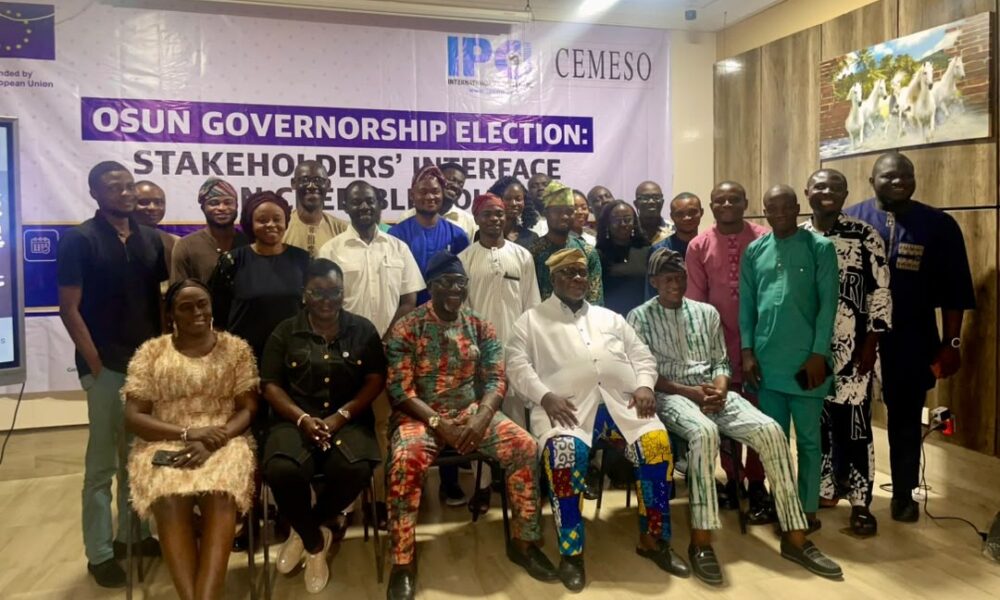
As preparations intensify for the Osun State off-cycle governorship election scheduled for August 15, 2026, the International Press Centre (IPC) and the Centre for Media and Society (CEMESO) have convened key stakeholders to discuss collaborative measures to ensure a credible, transparent, free and fair poll.
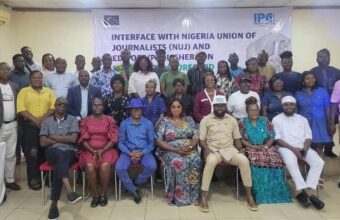
The stakeholder interface, held on Thursday as part of Component 4 (Support to Media) of the European Union Support to Democratic Governance in Nigeria Phase II (EUSDGN II) programme, aimed to strengthen collaboration among key electoral stakeholders in Osun State, promote a peaceful election, and address issues that could undermine the poll among citizens.
The event brought together representatives of the Independent National Electoral Commission (INEC), the Nigeria Police Force (NPF) Osun Command, the National Orientation Agency (NOA), the Nigeria Union of Journalists (NUJ), and the Nigeria Association of Women Journalists (NAWOJ), who shared their views on election preparedness and the next steps needed to ensure credible, inclusive, and people-centred polls.
In his opening address, Mr Lanre Arogundade, the Executive Director of the International Press Centre (IPC), expressed his enthusiasm about the stakeholders converging, noting that the acceptance of the stakeholders to agree to meet on the subject matter was an indication that there is a commitment towards having a popular election in the state.
Mr Arogundade further highlighted some of IPC’s efforts before the stakeholders’ meeting to ensure that all necessary preparations were completed before the off-cycle election. Listing them. Mr Arogundade stated that “In furtherance of this mandate, we have, before today, facilitated the emergence of a group of electoral dis-/misinformation journalist fact-checkers in the state. Conducted a public opinion poll on priority issues in the Osun State election, which found that citizens are especially concerned about education and youth empowerment and also called for greater attention to rural development and agriculture.
“Trained 15 state VEP officials and heads of departments in digital literacy and fact-checking and supported the establishment of a six-person INEC fact-checking unit to proactively address false information within the state.
Trained 40 INEC state officials, including heads of departments, election officers, and assistant election officers, in effective information management and crisis communication strategies. Held a capacity-building interface with 25 print and online journalists on issue-oriented and impactful reporting of the Osun poll,” he said
Acknowledging the significance of the coming election, Mr Arogundade also reminded the stakeholders of some peculiarities of the coming polls, explaining that the Osun election will be the second off-cycle governorship election to be conducted under the new Electoral Act 2026, making it another important test of the Act’s reforms, particularly the mandatory electronic transmission of results from polling units to IREV, and that the poll is going to be the last major election before the 2027 general elections; its management and credibility could significantly influence Nigerians’ confidence in the new INEC leadership.
He further noted that “the Osun State off-cycle governorship election is clearly contentious, amid concerns from observers, monitors, and citizens about growing attempts to settle political disputes through violence. If left unchecked, such behaviour could reduce voter turnout on election day, especially among vulnerable groups, including women and persons with disabilities. Threats of violence could also disrupt logistical preparations, as prospective ad hoc staff may reconsider their participation.”
As a result, the IPC Executive Director stated that the responsibility for achieving a standout election lay with the stakeholders, adding that, as the election managers, their conduct would be guided only by the public interest and the interests of citizens, and they must also state their level of readiness or preparation for the off-cycle governorship election.
More so in his welcome remark, the Executive Director of the Centre for Media and Society (CEMESO), Dr Akin Akingbulu, said the off-cycle poll has the full intensity of national attention across the country, and since the election is being keenly contested by the major political parties, the poll demands special vigilance and attention from the stakeholders.
He went on to say that evidence from interactions with journalists conducted across the state under this programme revealed that the political environment and misinformation were the two most serious threats to press freedom. He further stated that Journalists have been reporting economic pressures, editorial interference, and a working climate in which fear is rising even faster than documented attacks; hence, the need for engagement.
To address potential election-related issues and address voter apathy, which has been a common trend in recent elections, Dr. Akingbulu called for increased voter education. He also called for a fight against false information by doing fact-checking to correct the information space.
“Voter education cannot be an activity we remember only on the eve of the poll. The gaps are visible: voter apathy, confusion about procedures, vulnerability to vote-buying, and declining trust in the process. The media remains the most trusted teacher the voter has. I task every station, every newsroom and every platform represented here to make civic and voter education a daily editorial commitment between now and 15 August:
explain the process, interrogate the issues and manifestos, and give the citizen the knowledge with which to vote wisely and peacefully. The CVE Toolkit developed under this programme is in your hands for exactly this purpose,” he said.
“Second, the fight against misinformation and disinformation. Nearly half of your colleagues surveyed believe political propaganda and fake news are rising ahead of this election. Third, inclusion. Women, young people and individuals with disabilities constitute the majority of our voting population, yet they remain at the margins of political voice and visibility. The irony is sharper still in Osun, where the media workforce itself is predominantly female and youthful.”
INEC REC Charges Stakeholders
Speaking at the interface, the Resident Electoral Commissioner (REC) of the electoral commission in Osun State, Mrs Oluwatoyin Babalola, said false information could undermine public confidence in the electoral process and discourage voter participation.
In her words, she urged journalists and media practitioners to ensure that their information is factual and verified and that they maintain a continuous relationship and synergy with the electoral commission. She also encouraged them to accept INEC’s information as the official truth.
She said preparations for the governorship election were in accordance with the Electoral Act, INEC Regulations and Guidelines, and that the commission was conducting all activities contained in its timetable and schedule for the poll.
She said INEC had deepened its engagement with political parties, security agencies, civil society organisations, traditional and religious leaders and the media and also deepened voter education, training of election personnel, testing of election technologies and reviewing logistics arrangements. \
One of the greatest threats to credible elections today is the deliberate spread of false information. Disinformation and misinformation can create unnecessary panic, suppress voter turnout, damage public confidence, and trigger avoidable tensions.
“Accuracy, fairness, balance and professionalism should remain the guiding principles of election reporting,” she said, adding that the responsibility for delivering a peaceful, credible and acceptable election rests on INEC, the media, security agencies, political parties, civil society organisations and voters.
Journalists Affirm Readiness
Dr Adeyemi Aboderin, the chairman of the Nigerian Union of Journalists (NUJ) in Osun State, expressed gratitude to the IPC, CEMESO, other partners, and EU-SDGN for the significant programme for professional journalists in the state. He then challenged the stakeholders to commence activities that will lead to its overall achievement: a crisis-free, free, fair and credible election on August 15, 2026.
Similarly, Comrade Abisola Ariwodola, State Chairperson of the Nigeria Association of Women Journalists (NAWOJ), stated that the 2026 Osun Governorship Election offers the media another chance to strengthen public confidence, advance electoral reforms, and advance voter education that benefits everyone, especially women, young people, and people with disabilities.