Ahead of the Anambra State off-cycle election scheduled for November 8, 2025, the Nigerian Police Force has announced its intention to deploy 45,000 officers to the state to ensure a peaceful and orderly electoral process. The Inspector General of Police, Mr Kayode Egbetokun (represented by Commissioner Abayomi Sogunle), made this disclosure at an Inter-agency Consultative
Ahead of the Anambra State off-cycle election scheduled for November 8, 2025, the Nigerian Police Force has announced its intention to deploy 45,000 officers to the state to ensure a peaceful and orderly electoral process. The Inspector General of Police, Mr Kayode Egbetokun (represented by Commissioner Abayomi Sogunle), made this disclosure at an Inter-agency Consultative Committee on Election Security meeting with INEC in Abuja.
During the meeting, Mr. Shogunle assured security stakeholders that the police would play a central role in enforcing pre-election security measures. These include tactical deployments, movement restrictions, and addressing any attempts to disrupt public order during the election period.
“From the 1st of November, when the Nigeria Police Force will start the first pre-election deployment, which will include tactical units to go on additional clearance operations, and also to ensure that all the people that some of the stakeholders are trying to use to foment trouble because of the election will be adequately disarmed, arrested, and prosecuted”.
He also explained that the essence of deploying several police officers for the election is to ensure that all elements that have been showing some disruptive tendencies are dealt with by the on-the-ground surveillance for the smooth conduct of the poll.
“The Nigerian Police Force is deploying 45,000 police officers from across the states of the federation to go to Anambra State to ensure that there is a peaceful election. The Police will ensure that only officers and officials from the ICCES will be permitted to play a role in the Anambra state governorship election. So, all the vigilante groups and all the other agencies of the states would not be allowed to have any role to play during this election,” he added.
“From the 1st of November, when the Nigeria Police Force will start the first pre-election deployment, which will include tactical units to go on additional clearance operations, and also to ensure that all the people that some of the stakeholders are trying to use to foment trouble because of the election will be adequately disarmed, arrested, and prosecuted.
“On the day of the election, there is going to be a restriction on movements. All exits and entry points into Anambra State will be adequately planned and policed to ensure that no ugly incident happens during this election,” the IGP assured.
Security Measures Leading to Voter Apathy?
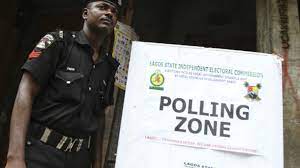
Security measures play an important role in conducting elections in Nigeria, as previous elections have at times included incidents of law-and-order breakdown. This provides the rationale for deploying significant security for the upcoming polls.
Beyond recurring insecurity during Nigerian elections, the upcoming Anambra poll, a major southeast event, has been flagged by observers as highly prone to violence. Given the state’s troubled election history, increased police presence is, therefore, justified as a precaution.
The 2021 Anambra governorship election, for example, had a very low turnout due to a variety of insecurity and violence, the majority of which emanated from the activities of the Indigenous People of Biafra (IPOB), several attacks on INEC infrastructure, extensive logistical problems, and other forms of localised intimidation. These events left a legacy of mistrust that authorities use as an excuse for more robust security measures.
Similarly, a recent report from Cleen Foundation, a civil society organisation, in October 2025, also identified several emerging risks that could affect the credibility and safety of the Anambra election, and the risks include widespread violence, politically sponsored groups and institutional weaknesses. The organisation further addressed the ongoing violence in the state, of which it reported that over two hundred lives have been lost to politically or ideologically motivated violence in Anambra since 2022. The Ihiala Local Government Area has recorded the highest number of casualties.
Deploying this number of personnel in Anambra State may effectively address rising insecurity while maintaining neutrality and coordinated control.
While the substantial deployment of security agencies during elections is intended to prevent violence and mitigate anticipated threats, it raises concerns about potential voter apathy. An overly visible security presence may be misconstrued by voters as an indication of heightened risk rather than assurance of safety.
Election stakeholders have found that a strong security presence can lower voter turnout by creating fear and intimidation, discouraging legitimate voters and enabling electoral fraud.
For instance, despite over 34,000 police officers and thousands of other security personnel being deployed to stop any violent acts by IPOB and other armed groups during the 2021 Anambra election in the state, the poll witnessed the lowest turnouts of voters in the state’s history.
While not the sole reason for low voter turnout, a significant police presence contributed to election-related apathy in the states. Some political parties have adopted the position that the vast security forces of the central government can be used as repressive agents against the opposition to keep the opposition silent as long as this perception endures.
Accountability in Police Documentation: More Than Just Numbers
Although the Nigerian police routinely deploy a large number of officers for elections, inconsistent documentation at ward and polling unit levels makes it hard to track which officers are present during electoral incidents and their roles when offences occur.
The lack of proper documentation for police officers on duty has made it hard to present them as witnesses at the electoral tribunal against offenders.
As a result, many electoral offenders were not held accountable, since tracing or identifying individual officers for post-election reviews or investigations was challenging. Limited post-election accountability and the infrequency of prosecutions for electoral offences are linked to insufficient evidence, such as the absence of material witnesses, a chain of custody, and records.
Furthermore, the absence of proper documentation regarding police officers during elections has made it increasingly challenging to ensure accountability for misconduct or to acknowledge exemplary performance.
Conclusion
Security is essential to the election process and democratic development, as its absence can result in violence, vote buying, or rigging, undermining a free and fair election.
Excessive security at elections may discourage voters and reduce turnout. It’s important to balance visible agency presence and ensure accountability for effective electoral processes.
The police must build credibility by ensuring transparency and accountability, especially during elections. Proper documentation of officers deployed to different units and wards allows for tracking and accountability if electoral laws are broken. Security forces should be governed by democratic processes, not above them. Without these measures, even peaceful elections risk injustice and continued impunity in Nigeria’s electoral system.