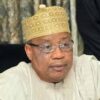
The appointment of Professor Nentawe Yilwatda, Minister of Humanitarian Affairs and Poverty Reduction, as the new national chairman of the All Progressives Congress has prompted discussions regarding whether this decision was intended to strengthen the party’s prospects in the 2027 general election. What advantages would his appointment bring to the party? The ruling party named
The appointment of Professor Nentawe Yilwatda, Minister of Humanitarian Affairs and Poverty Reduction, as the new national chairman of the All Progressives Congress has prompted discussions regarding whether this decision was intended to strengthen the party’s prospects in the 2027 general election. What advantages would his appointment bring to the party?
The ruling party named Professor Yilwatda as its new leader after his nomination and election by the National Executive Committee, replacing Abdullahi Umar Ganduje, who resigned due to health reasons.
According to the Special Adviser on Information and Strategy to President Tinubu, Professor Yilwatda was unanimously elected chairman of the ruling party. Nentawe, who turns 57 next month, previously served as a Professor of Engineering at the Federal University of Agriculture, Makurdi.
He served as a Resident Electoral Commissioner for INEC from 2017 to 2021, overseeing elections in several states before running unsuccessfully for governor of Plateau State in 2023. Despite his loss, President Tinubu later appointed him Minister of Humanitarian Affairs.
The selection of Yilwatda, a Christian from the North Central region who is a technocrat and younger than recent party leaders, appears connected to internal discussions about zoning within the party, as well as attention to the religious backgrounds of President Tinubu and Vice President Kashim Shettima, both of whom ran on a Muslim/Muslim ticket.
Furthermore, internal protests against the choice of the party’s immediate chairman, Abdullahi Umar Ganduje, who had been in charge since 2023 before stepping down in June due to legal issues, were already causing some divisions within the party.
With opposition groups uniting under the African Democratic Congress (ADC) and former presidential candidates Atiku Abubakar and Peter Obi remaining in the race against the APC, the ruling party acknowledges it cannot risk internal divisions as the opposition gains strength.
Nentawe’s unexpected selection was likely a strategic move to broaden party representation ahead of the 2027 presidential election. Key factors in his emergence include his region and religion, which may significantly influence the party’s prospects at the polls.
Zoning Balance
Political pundits noted that replacing Ganduje with Nentawe addressed demands from North Central party members for the chairmanship to return to their region, as was expected before Senator Abdullahi Adamu’s resignation.
Stakeholders from the northcentral sought the position to improve their zone’s representation, as the president is from the southwest and the vice president from the northeast, leaving the northcentral region underrepresented in the party.
Following pressure on the party executive committee and Ganduje’s resignation as chair, attention turned to Senator Umaru Tanko Al-Makura, Senator George Akume, and Senator Mohammed Sani Musa. Ultimately, Nentawe was selected, as he is regarded as a neutral figure with centrally aligned loyalty and no significant controversies associated with his background.
Christian Factor
The selection of Nentawe offers a nuanced balance of religious representation within Nigeria’s political landscape for the APC, addressing a previously noted area of concern for the party. It is worth noting that the Tinubu-Shettiman Muslim-Muslim ticket in the 2023 general election attracted significant scrutiny and criticism.
As the new coalition appears to be matching the ruling party, the APC is taking steps to address its engagement with Christian voters, particularly in the Middle Belt and Southern Nigeria. Nentawe’s selection is viewed as a response to concerns regarding religious representation in the north central region.
Nentawe, the son of a prominent reverend, represents the cultural and moral qualities the APC seeks to address, which could significantly impact their chances in the upcoming election.
Younger Demography
Nentawe’s appointment as chairman marks a shift in the party’s leadership demographics. As a 56-year-old professor, his age and academic background position him to better engage with both youth and adults, promoting inclusivity within the party.
The ruling party’s decision has raised questions among political analysts about Nentawe’s viability as the APC candidate for the 2027 election, particularly as the Peoples Democratic Party and the ADC coalition are also strengthening their positions ahead of the polls.
As Nigeria’s political landscape evolves, politicians and parties are already focusing on strategies for the 2027 elections.