President Bola Ahmed Tinubu’s two years in charge of Nigeria resemble a tale of two worlds. Depending on whom you talk to, it is a picture of two sides of a coin. To those in support, the glass is half full, whereas to those against, the glass is below half of its content. The president
President Bola Ahmed Tinubu’s two years in charge of Nigeria resemble a tale of two worlds. Depending on whom you talk to, it is a picture of two sides of a coin. To those in support, the glass is half full, whereas to those against, the glass is below half of its content. The president had promised Nigerians a renewed hope agenda, but in two years, the hardship and pain have deepened. The much-touted effects of his combination of policies are forlorn and have impoverished the people. Many Nigerians are worse off two years later.
Recent political developments and the actions of politicians endorsing President Tinubu for a second term do not seem to reflect the reality faced by ordinary Nigerians. Invariably, there is a disconnect somewhere. Other countries penalise politicians for poor and bad governance, while Nigeria rewards them with re-election. Without consequences, bad doings will continue to thrive. The solution lies in counting the votes of the people.
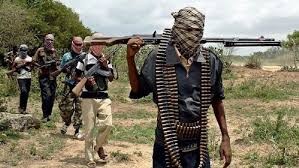
Even diehard supporters of Tinubu’s regime are not audacious enough to say the condition of the people has improved. Rather, they claim, the economy is on the path of recovery and growth. This statement reflects a common cliche associated with successive governments in Nigeria. Security remains a major concern for many Nigerians from every region, more pronounced in the Northern region. Despite increased defence budgets and some documented pockets of success, large parts of the Northeast remain under threat. The situation could be worse than the prevalence in 2015 when the All Progressive Congress used insecurity to boot President Jonathan out of power.
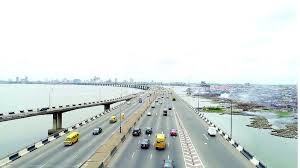
There is a pocket of commendations for the government, including a significant increase in government revenue, as evidence that its economic realignment is working. The government reported channelling funds into large-scale infrastructure projects like the Lagos-Calabar Coastal Highway and the Sokoto-Badagry Superhighway. Oil production has reportedly risen to 1.61 million barrels per day, with over $500 million in foreign direct investments secured. The government announced a Compressed Natural Gas (CNG) initiative that is expected to save over ₦2 trillion monthly by reducing petrol imports.
The government has also rolled out social intervention programmes. These include N95.6 billion approved for the Student Loan Scheme, over N200 billion allocated to the newly established Consumer Credit Corporation, and N570 billion disbursed to states for livelihood support. Other highlights are a new national minimum wage of ₦70,000, increased NYSC allowances from ₦33,000 to ₦77,000, and tariff waivers on food and pharmaceutical imports.
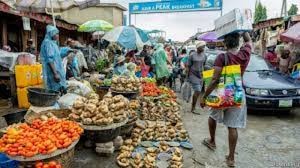
It is either that the government’s policies are ineffective or they are not permeating, as there exists a big gap between policy intent and the experiences of Nigerians. Food inflation is the most worrisome. Cases of heightened insecurity across several agrarian states have worsened the situation of food supply. While the government cites operational successes against terrorists, bandits, and kidnappers, with thousands killed or arrested, data reveal a troubling rise in abductions and violent attacks nationwide.
The current economic and political situation in Nigeria has provoked opposition political parties to moot the idea of a coalition to remove the Tinubu government from power in 2027. The former Vice President Atiku Abubakar, in a statement on two years of Tinubu’s administration, stated, “In just two years, President Bola Ahmed Tinubu has proven to be one of the most incompetent, disconnected, and anti-people governments in Nigeria’s democratic history.
“No previous administration has inflicted this level of hardship on the masses while showing such disregard for transparency, accountability, and responsible leadership. This government has not only deepened poverty across the country, but it has also set new records in wasteful public spending.
“At a time when millions of Nigerians are struggling to survive, government officials are living in excess and approving budgets that benefit the elite at the expense of the common man. It is sad that apart from being the poverty capital of the world, Nigeria has, under this administration, emerged in the unenviable position as the capital of malnourished children in Africa, having beaten Sudan, a nation that is at war. According to the Global Hunger Index 2024, our country is one of the most affected by hunger and malnutrition, occupying the 18th position.
“Policy after policy under this administration has targeted the poor while providing relief and advantage to the rich. From healthcare to education to identity management and basic public services, Nigerians are now faced with class-based systems where the wealthy enjoy VIP treatment, and the rest are left behind.
“Just two weeks ago, the National Identity Management Commission hiked its fees by 75 per cent, introducing VIP protocols for services that should be a basic right of citizenship. Public university fees have escalated significantly, surpassing the financial means of impoverished families, despite the absence of sufficient support mechanisms.
“Even more troubling is the scale of borrowing under this government. When President Tinubu assumed office in 2023, Nigeria’s total public debt stood at approximately ₦49 trillion. In just two years, that figure has skyrocketed to N144 trillion — a 150 percent increase—and more foreign loans are now being requested, which could push the debt to N183 trillion.
“While the federal government racks up debt, state governments have shown more discipline, reducing their debt levels from N5.86 trillion to N3.97 trillion. The implication is clear: the federal government, under Tinubu, is the primary driver of Nigeria’s current debt crisis.
On its part, “The Peoples Democratic Party (PDP) appraised President Bola Ahmed Tinubu’s two years in office and asserts that his administration is a massive disappointment,” the Peoples Democratic Party, National Publicity Secretary Hon Debo Ologunagba said in a statement.
“Nigerians have gone through hell under the insensitive Tinubu-led All Progressives Congress (APC) government, which holds no good for the citizens.”
The PDP wants Tinubu’s government to reverse its “economically suffocating policies and check the wholesale corruption, greed, unbridled profligacy, reckless misdirection of resources, arrogance in failure and totalitarian tendencies in his administration, which has shown itself as anti-people and impervious to the suffering of Nigerians.”
Ologunagba stated, “As a party, we restate our position that any government that cares for the wellbeing of the people and has an idea of macroeconomic policy management would have reckoned that an abrupt increase in petrol price and devaluation of the Naira as executed by the Tinubu administration would cripple the productive sector and inflame high costs, crash millions of businesses, trigger mass job loss, and escalate poverty, hunger, hardship, insecurity and hopelessness across the country.”
Ologunagba said, “With the Naira which exchanged for N167 to a US dollar under the PDP administration, now exchanging for over N1,600; petrol, which sold for N87 per litre under the PDP, now selling for over N1,000 per litre; with nearly a 40% inflation rate, over a 42% youth unemployment rate, an acute food shortage, and a frightening rise in criminality and social vices, the situation in Nigeria has become so unbearable that many talented citizens are now fleeing the country, with others resorting to suicide to escape the agonies inflicted by the APC government.
“More troubling is that from May 2023, when President Tinubu took office, more than 600,000 Nigerians have been killed by terrorists and bandits who are emboldened by the APC administration’s apparent negligence and failure to ensure the safety and security of the nation and her citizens,” the statement read.
“In the last two years of worsened insecurity, comatose infrastructure and economic uncertainties, multinationals are leaving Nigeria in droves for neighbouring countries where governments are alive to their responsibilities.”
He stated, “Unfortunately, instead of listening to our party and other well-meaning Nigerians, the Tinubu administration resorted to multiple taxes, exploitative charges and reckless foreign borrowing, accumulating to ₦182.91 trillion (with the latest request of a fresh $24.14 billion (₦38.24 tn) with no corresponding development project or programme that benefits the people.
“More distressing is that while Nigerians suffer, the APC is obsessed with turning our country into a one-party state while frittering the nation’s scarce resources for the acquisition of jets, private yachts, luxury mansions, expensive foreign trips and a lavish lifestyle, much to the chagrin of other citizens.”
“The PDP once again counsels President Tinubu to recognise that Nigerians are seriously hurting. Mr President, in his second anniversary address, should therefore avoid the APC’s usual resort to rhetoric and false performance claims that are at variance with the realities of life in Nigeria,” the party said.
“The president should take advantage of the remaining two years of his administration to redeem his image by addressing the issue of insecurity, reviewing all suffocating policies to bring down the price of petroleum products, and shoring up the value of the naira while engaging more skilled hands to manage the nation’s economy,” the party urged.
The PDP called on Nigerians “not to give up hope at this trying time but continue to rally on the platform of the PDP in preparation to vote out the APC and its woes in 2027.”