In every free society, the press serves as both a mirror and a magnifying glass—reflecting reality while scrutinising power. At the heart of this mission are women journalists, whose voices, stories, and courage help shape an informed and inclusive democracy. Yet in an era marked by rising authoritarianism, digital hostility, and shrinking civic space, these
In every free society, the press serves as both a mirror and a magnifying glass—reflecting reality while scrutinising power. At the heart of this mission are women journalists, whose voices, stories, and courage help shape an informed and inclusive democracy. Yet in an era marked by rising authoritarianism, digital hostility, and shrinking civic space, these women are increasingly becoming targets rather than trusted storytellers.
Women are indispensable to the health of any thriving democracy. Yet in 2024, the global environment for women journalists sharply declined. According to Women Press Freedom (WPF), a staggering 951 violations were recorded, marking a 56% surge from the previous year. This disturbing rise in assaults, detentions, and targeted harassment underscores a mounting global crackdown on independent journalism, with women facing disproportionate threats both in digital spaces and on the frontlines of reporting.
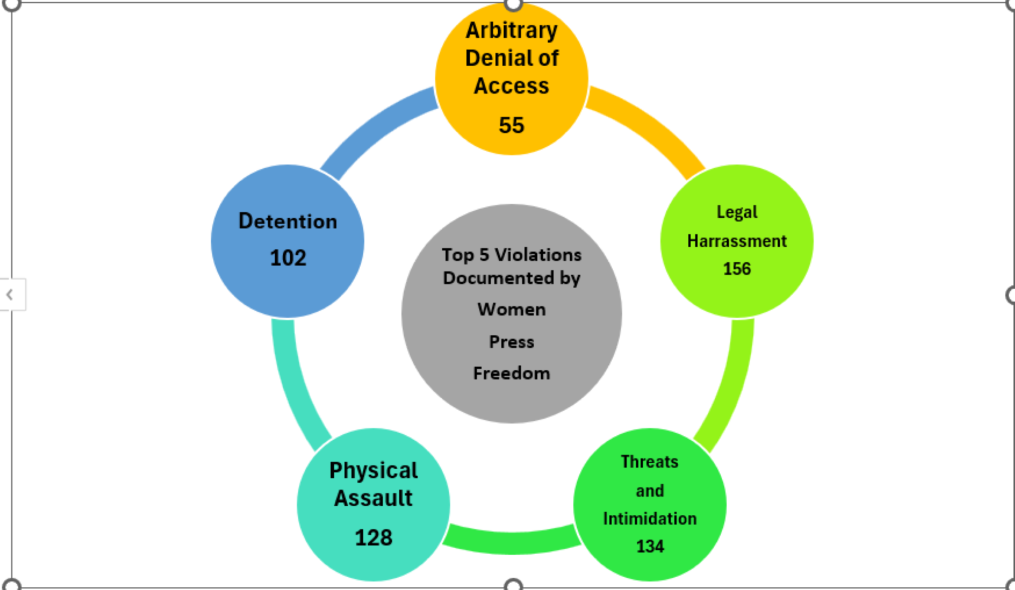
Among the gravest statistics: 21 women journalists were killed—the highest toll recorded since WPF began tracking in 2019. These killings are accompanied by 128 documented physical assaults, 156 cases of legal harassment, and 134 incidents of threats and intimidation. Notably, nearly 40% of physical attacks occurred at protests, underscoring the heightened risks faced by women reporting from conflict zones, political demonstrations, and environments rife with corruption.
WPF’s 2024 findings reveal a sobering truth: women journalists are enduring unprecedented levels of hostility. Whether targeted by authoritarian governments, extremist groups, or private entities, these attacks represent more than individual threats—they are an assault on press freedom and the public’s right to stay informed.
Immediate intervention is now essential. Both international and local communities are called upon to respond appropriately. Global leaders should ensure government accountability by demanding transparency and justice. Meanwhile, media organisations have a responsibility to safeguard their reporters, protecting them from threats and violence. Without prompt and coordinated action, independent journalism and those dedicated to maintaining its integrity will remain at significant risk.
Nigeria: A Case Study in Escalating Hostility
Press freedom is eroding in Nigeria, making female journalists especially vulnerable in a male-dominated media landscape. Their gender increases the risks they face, making journalism an even more dangerous profession for women in the country.
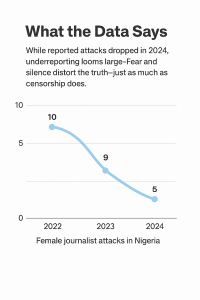
Female Journalists Attack in Nigeria
From harassment by security operatives and political thugs to online abuse, sexual violence, cyberstalking, and threats to their families, the assaults are varied and deeply personal. Many female reporters brave hostile conditions not just in the field but also within newsrooms, where power dynamics can stifle accountability.
Insights from the Lagos-based International Press Centre (IPC) paint a grim picture: in 2022, the organisation documented 10 attacks on female journalists; in 2023, that number stood at 9. While the 2024 figure—five attacks suggests a decline, experts warn that underreporting, fear of retaliation, and normalised abuse may conceal the full extent of the threat.
The IPC’s annual press freedom reports are drawn from detailed fieldwork across Nigeria’s six geopolitical zones. Through media monitoring, interviews, and rigorous documentation, the organisation sheds light on the nature of each violation, the identities and genders of victims, the perpetrators involved, and the broader implications for Nigeria’s democratic space.
Although the International Press Centre documented a significant decline in attacks on female journalists, countless women in the field still carry powerful stories—stories of hope, courage, and unwavering determination—that have kept them moving forward despite the obstacles they’ve faced. The female journalists shared their experiences under the International Press Centre (IPC) organised programmes as the lead partner of Component 4: Support to Media of the European Union Support to Democratic Governance Project Phase Two (EU-SDGNII).
The Story of Edoamaowo Udeme, Journalist, Gender Rights Advocate, Founder, NADVF
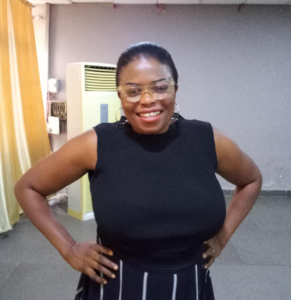
Edoamaowo Udeme
Edoamaowo Udeme is a Nigerian journalist and prominent gender rights advocate who participated in the International Press Centre’s (IPC) capacity-building workshop for online bloggers and journalists, which emphasised conflict-sensitive reporting in preparation for the 2019 general elections. She utilises storytelling as an effective means to address violence against women and girls.
During the COVID-19 lockdown, a spike in distress calls about domestic abuse led Udeme to start the Network Against Domestic Violence (NADVF). This grassroots group has since aided survivors and raised awareness of gender-based violence nationwide.
As a participant in the Spotlight Initiative—a global partnership between the European Union and the United Nations aimed at eliminating gender-based violence—Udeme utilises editorials, investigative reports, and human-interest stories to highlight cases of abuse, call for accountability, and advocate for policy changes. Her journalistic work includes engagement in dialogues such as those led by UNICEF on gender-sensitive media, where she employs an approach that seeks to represent the perspectives of vulnerable communities and encourage action from decision-makers. She describes her role as connecting the concerns of vulnerable groups with policymakers.
Frontline advocacy has serious risks. In 2021, NADVF revealed a military corporal’s rape of his 16-year-old stepdaughter, drawing national scrutiny. Udeme and her family faced threats and had to relocate. She spent hours presenting evidence to the Nigerian Army as the accused denied the charges, but medical records confirmed the assault. After nearly three years AWOL, the perpetrator returned and threatened her again. Authorities quickly placed her under Special Investigation Bureau protection.
Udeme’s experience highlights current trends: although the IPC has reported a decrease in attacks on female journalists, many continue to face targeted threats related to their reporting. Edoamaowo Udeme continues her work in journalism, using her position to address issues of truth, safety, and change.
The Ordeal of Charity Uwakwe
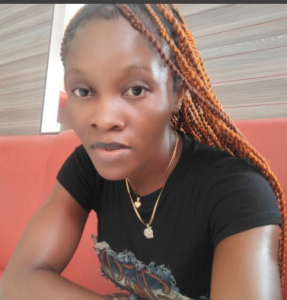
Charity Uwakwe
On June 30, 2023, journalist Charity Uwakwe, who was also a part of a two-day skill-enhancing and capacity-building/mentoring session for female journalists/strong> popularly known as Distinguished Chacha, was allegedly assaulted and detained for nearly two hours at the Abia State Ministry of Women Affairs in Umuahia. She had visited the ministry to enquire about the Central Bank of Nigeria’s South-East Entrepreneurial Development Centre (SEEDC) program, aiming to confirm its status and the number of local beneficiaries.
Her inquiry led to a tense exchange with the ministry’s Public Relations Officer, Mrs. Oluchi Franklin, who became hostile and accused her of secretly recording a conversation. Charity denied the allegation, but the situation escalated—she was reportedly dragged, insulted with degrading names such as “foolish journalist” and “roadside journalist,” and physically assaulted, sustaining bruises on her shin and neck. Other staff members allegedly joined in the intimidation, threatening to destroy her phone and detain her until her editor arrived.
As the ordeal continued, Charity began suffering severe physical distress, including heart palpitations, dizziness, and near-collapse. She also claimed that the PRO staged false accusations against her—pretending to be pregnant and alleging that Charity had assaulted her—although colleagues reportedly dismissed the act as unfounded.
It was only after word reached individuals linked to the state government that she was allowed to leave. By then, she was physically and emotionally drained, pushed at the gate by staff, and in need of immediate medical attention.
Susan Serekara-Nwikhana: Locked Out, Threatened, and Nearly Attacked on Duty
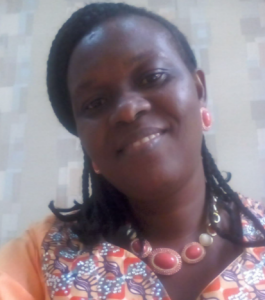 “As a journalist for the Times newspaper in Rivers State and the current Chairperson of the National Association of Women Journalists (NAWOJ) in the state, I’ve undergone several IPC training programmes to strengthen my reporting skills and ethics.
“While covering the 2023 elections, I faced a disturbing ordeal. At the INEC office in Rivers State, police operatives—allegedly affiliated with the opposition—barred my access simply because I represented a government-owned media outlet. I explained that I was the sole reporter assigned to the location, but my plea fell on deaf ears. Minutes later, unidentified officers raided the premises, evacuated everyone, and seized sensitive materials.
“When I attempted to re-enter, a security operative aimed a rifle at me and threatened to shoot.
“Later that same day, on my way home, I was ambushed by five young men. Isolated and without help, I relied on the pepper spray gifted to me by an INEC staffer who understood the harsh realities female journalists face. I used it, fled into a passing vehicle, and narrowly escaped what could have been a tragic end.
“This is the reality of political journalism in Nigeria. We put our lives on the line to inform the public, only to be treated as enemies instead of allies in the pursuit of truth.
“The International Press Centre (IPC) believes that safeguarding women journalists is not optional—it is essential. Essential to justice, to equity, and to the future of journalism itself. Every government, media organisation, and civil society actor must take decisive, sustained action—not merely in statements but in tangible protections, legal reforms, and resource allocations.”
These women serve not only as journalists but also as observers and monitors of truth. Threats to their safety represent more than individual attacks; they undermine the fundamental principles of a free society. When a woman journalist faces intimidation, barriers, or threats, it results in the loss of important perspectives and critical analysis within the media landscape.
We should not allow silence to become the norm. It is important to take timely and decisive action to support individuals who are committed to uncovering and sharing the truth, even when it entails significant challenges.