Controversies surrounding the distribution of palliatives introduced after the removal of fuel subsidy are set to be unraveled in the court of justice as the Social-Economic Accountability Project (SERAP) has taken a decisive step to sue the 36 state governors of the federation over their failure to account for the money spent on palliative sharing
Controversies surrounding the distribution of palliatives introduced after the removal of fuel subsidy are set to be unraveled in the court of justice as the Social-Economic Accountability Project (SERAP) has taken a decisive step to sue the 36 state governors of the federation over their failure to account for the money spent on palliative sharing across in Nigeria.
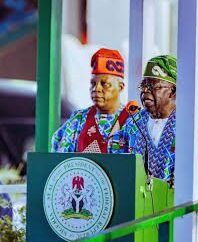
The Federal Government, upon the removal of the fuel subsidy by President Bola Ahmed Tinubu in his inaugural speech on May 29th, had promised to provide relief mechanisms to the effect of the policy on Nigerians. Initially, the government proposed N8,000.00 per household grant from the World Bank but was immediately rejected by Nigerians who described the offer as ridiculous and inadequate.
Recently, the federal government deployed another means by promising a grant of N5 billion to every state of the federation out of which it has paid N2 billion only. Many states have made several releases and photo ops on how they distributed food items to some residents in their states.
On the other hand, there was a viral video in which a ward chairman in Ondo State was seen allegedly beating a commissioner over the distribution of subsidy palliatives in the state.
Amid the drama surrounding the palliative in the country, SERAP is not convinced with the states method of implementing the distribution and has questioned the transparency and accountability of the states in the sharing of the money they received from the federal government especially as many Nigerians are also wondering what they have done with the money as households have not been touched in any way.
SERAP, in the suit number FHC/L/CS/1943/2023 filed last Friday at the Federal High Court in Lagos, sought: “an order of mandamus to direct and compel each of the 36 state governors to account for the spending of the N2 billion palliative collected by the governors from the Federal Government.”
“an order of mandamus to direct and compel each of the 36 state governors to disclose details of the beneficiaries and the reliefs provided to the poorest and most vulnerable Nigerians with the money.”
SERAP also sought: “an order of mandamus to direct and compel each of the 36 state governors to instruct the Independent Corrupt Practices and Other Related Offences Commission (ICPC) and the Economic and Financial Crimes Commission (EFCC) to monitor the spending of fuel subsidy palliative collected by them.”
The suit filed on behalf of SERAP by its lawyers, Kolawole Oluwadare and Mrs Blessing Ogwuche argued that: “Government secrecy is fundamentally anti-democratic. Secrecy in the spending of the N72 billion collected by the 36 state governors would create distrust or suspicion of the government. The failure by the governors to account for the public funds is both legally and morally wrong.”
SERAP further maintained that the citizens have the right to know how public funds are spent, adding secrecy in government is not democratic. The civil society organization also accused the state governors of hiding under the excuse of their immunity from the Freedom of Information Act.
Their grounds further reads in part: “The 36 state governors are constitutionally required to act in the public interest. Secrecy in government is a form of coercion. Government secrecy promotes arbitrariness and covers illegal acts. The right of access to official information such as the spending of the N72 billion by the governors exists to facilitate the exercise of free expression right, discover the truth, and encourage citizens’ participation in a democracy”.
“The right to access information held by public officials and bodies is also essential for collective decision-making in a democratic society. The right to know strengthens the enjoyment of other constitutionally guaranteed human rights and expands the whole system of freedom of expression.”
“It is in the public interest to direct and compel the 36 state governors to account for the spending of the N72 billion palliative and any subsequent disbursement of public funds to the states.”
“There is no democratic freedom without accountability and the basic postulate of accountability is that the people should have information about the functioning of the government.”
“Compelling and directing the governors to account for the spending of the N72 billion would increase government transparency and enhance an open and democratic society.”
“A functioning democracy rests upon participation and accountability. Citizens cannot fully participate in a democracy unless they are allowed to effectively enjoy the right to know what their government is doing in their name.
“The right of access to information also lets in light and allows the public to scrutinise the workings of the government and find truth in them. Nigerians have the right to know how their states are spending the fuel subsidy relief funds. It is part of their legally enforceable human rights.
“Transparency and accountability in the spending of the N72 billion and any subsequent disbursement to the governors would help to reduce the risk of corruption, mismanagement, diversion, or opportunism.”
“The oversight afforded by public access to the details of the spending of the N72 billion palliative and any subsequent disbursement to the governors would serve as an important check on the activities of the states, and help to prevent abuses of the public trust.”
“The constitutional principle of democracy provides a foundation for Nigerians’ right to know details about the spending of the N72 billion fuel subsidy palliative. Citizens’ right to know is crucial for the country’s democratic order.”
“The effective operation of representative democracy depends on the people being able to scrutinise, discuss and contribute to government decision making, including on the fuel subsidy relief funds.”
“The removal of subsidy on petrol continues to negatively and disproportionately affect the poor and socially and economically vulnerable Nigerians in several states, undermining their right to an adequate standard of living.”
“The Freedom of Information Act, Section 39 of the Nigerian Constitution 1999 [as amended], article 9 of the African Charter on Human and Peoples’ Rights and article 19 of the International Covenant on Civil and Political Rights guarantee to everyone the right to information, including about how the N72 billion fuel subsidy relief funds are spent.”
“By the combined reading of the provisions of the Nigerian Constitution, the Freedom of Information Act, and the African Charter on Human and Peoples’ Rights, applicable throughout Nigeria, there are transparency obligations imposed on the 36 states to account for the spending of the N72 billion fuel subsidy palliative.”
“The Nigerian Constitution, Freedom of Information Act, and the country’s anti-corruption and human rights obligations rest on the principle that citizens should have access to information regarding their government’s activities.”
“States cannot hide under the excuse that the Freedom of Information Act is not applicable to them to refuse to provide the details being sought, as all the 36 states also have clear legal obligations to provide the information as prescribed by the provisions of the Nigerian Constitution, and the African Charter on Human and Peoples’ Rights (Ratification and. Enforcement) Act”.