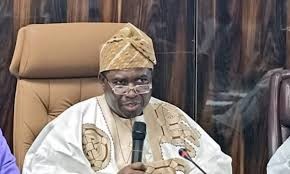
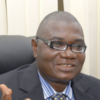
Muhammad Lawal Uwais will forever be remembered as a towering figure in Nigeria’s legal and democratic history. His contributions spanned decades of impactful service, where his commitment to justice and reform left an indelible mark on the nation. Rising through the ranks with unwavering dedication, Uwais’s journey was one of excellence, innovation, and deep patriotism.
Muhammad Lawal Uwais will forever be remembered as a towering figure in Nigeria’s legal and democratic history. His contributions spanned decades of impactful service, where his commitment to justice and reform left an indelible mark on the nation.
Rising through the ranks with unwavering dedication, Uwais’s journey was one of excellence, innovation, and deep patriotism. As a jurist, he displayed remarkable insight and an ability to navigate complex judicial and constitutional terrain, earning him widespread respect both within and beyond the legal community.
Muhammad Lawal Uwais graduated from the University of London and was called to the Bar by the Middle Temple, London, in 1963. He served as State Counsel and Senior State Counsel (1966-1970), then became a Judge and Chief Judge of Kaduna State (1973-1976). Uwais was appointed to the Court of Appeal in 1977 and the Supreme Court of Nigeria in 1979. In 1995, he became the Chief Justice of Nigeria and Chairman of the National Judicial Council.
President Tinubu, in his tribute, wrote, “Many remarkable highpoints hallmarked Justice Uwais’ illustrious career on the bench. He superintended the Judiciary at a challenging time in our history with tact, patience, and a sense of duty. This stabilising role helped usher in the current democratic dispensation, which he had the distinct honour of ushering in as the Chief Justice of Nigeria, who swore in the elected president on May 29, 1999.
“In retirement, the Federal Government called upon Justice Uwais to head a panel to investigate the conduct of our elections. Given his pedigree and personal integrity, he was the right person for that onerous assignment. Not surprisingly, Justice Uwais led the panel to produce a critical report that contained a detailed prognosis of our electoral system”.
In 2007, President Umaru Musa Yar’Adua’s government formed an electoral reform committee led by former Chief Justice Muhammadu Uwais. The administration accepted over 90% of its recommendations and began implementing some immediately. The Committee aimed to improve the electoral process, strengthen legal frameworks, and enhance the independence of the electoral body.
Constitutional amendments are proposed to shield the Independent National Electoral Commission (INEC) from the political influences of the executive branch regarding its composition and funding. The authority to appoint the INEC board should be transferred from the President to the National Judicial Council (NJC), while its funding would become a first-line charge on the Consolidated Revenue of the Federation.
The Police Act should include the election duty functions outlined in the PSC guidelines on officer conduct.
An election petition was to have a time limit, even as a Special Electoral Offences Commission was to be set up to try electoral offenders. An elected person should not assume office until the case against them in the Tribunal or Court is resolved.
An amendment to the Constitution to establish a single date for Presidential and Gubernatorial elections, to be held at least six months before the current officeholders’ terms expire. Similarly, an amendment could set a single date for National and State Assembly elections, scheduled two years after the Presidential and Gubernatorial elections.
Reduce tribunal judges from five to three to establish more tribunals per state. Apart from the refusal to cede the power of appointment of the INEC board, the Yar’Adua administration accepted most of the fundamental recommendations and was to begin implementation when the president took ill, and eventually did not return to the office. His successor, former President Goodluck Jonathan, implemented the policy aspects and forwarded the entire report unedited to the National Assembly for consideration of areas requiring legal reforms and constitutional amendments.
Political considerations may have prevented the executive arm of government from approving the amendment to the Electoral Acts that promised watershed reforms. Despite pledges for stronger electoral laws ensuring free, fair, and credible elections in 2019, President Muhammadu Buhari declined to assent to the bill amending the 2010 Electoral Act on three occasions, despite its passage by both chambers of the National Assembly.
The Buhari regime procrastinated on the Justice Uwais reform agenda for the electoral process. Perhaps some of the proposals could affect its political fortunes. It established another 25-member Electoral Reforms Panel led by a former President of the Senate, Ken Nnamani. The Committee, according to its mandate, reviewed the electoral environment, laws, and experiences from recent elections conducted in Nigeria, making recommendations to strengthen and ensure the conduct of free and fair elections in the country.
The Ken Nnamani committee was expected to examine potential amendments to the Constitution and Electoral Act and propose a more robust and widely acceptable electoral system. It was also anticipated to take a comprehensive view of the revolutionary recommendations made by the Justice Uwais Electoral Reform Committee and implement them.
Justice Uwais will be remembered for leading a committee that made electoral reform recommendations aimed at improving and stabilising Nigeria’s democracy. Some of these recommendations, which sought to free the INEC from direct political control by the executive arm of government, would have built the people’s trust and confidence in the electoral management body as an impartial arbiter.
In a tribute to the eminent jurist, the Chief Justice of Nigeria, Justice Kudirat Kekere-Ekun states: “Hon. Justice Uwais was a towering figure in Nigeria’s legal and judicial history—an erudite jurist, visionary reformer, and statesman whose contributions to the development of constitutional law, judicial independence, and democratic governance will forever remain etched in the annals of our national life”