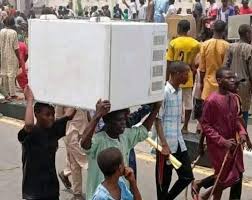
Sequel to the ongoing protests against hunger and bad governance across the country with demonstrations in some parts of the country, a coalition of Civil Society Organisations in Nigeria has condemned the government’s moves to frustrate the activities of the protesters, pointing accusing fingers at the authority for looting and violence reported in the country.
Sequel to the ongoing protests against hunger and bad governance across the country with demonstrations in some parts of the country, a coalition of Civil Society Organisations in Nigeria has condemned the government’s moves to frustrate the activities of the protesters, pointing accusing fingers at the authority for looting and violence reported in the country.
The coalition made this known in a press statement released today, condemning the government’s reactions to the End hunger protests which began on Thursday 1st of August 2024 in which Nigerians took to the streets to call for reversal of economic hardship and high cost of living in the country.
The protest has however recorded violent conduct and looting in some parts of the country. This development has received mixed reactions from the country’s security agencies and civil society organisations. President Bola Tinubu addressed the country earlier today, asking for the suspension of the agitations but failed to address any of the protesters ‘ demands.
In their reaction, the coalition of civil society organisations said the government’s move to suppress and delegitimize the protests using propaganda, politics, threats, intimidation, arrests, bribery, and blackmail instead of responding to the demands of the protesters has echoed pushbacks and lack of responsibility.
As a result, the coalition of civil society organisations asked the government to provide security for the protesters as the demonstration continued, adding that the government must also take steps to respond to the citizens’ cries and respect the Nigerians’ fundamental human rights to express their grievances.
The statement fully reads:
“Governance peaceful protests and different individuals and groups are asking for the protests to be called off.
When Nigerians-frustrated with the high cost of living, insecurity, and a wasteful government that has refused to listen to their complaints announced via various media that they would embark on a 10-day nationwide protest in the hope that the government would pay attention, they were expecting a rapid response to their demands in ways that addressed their concerns.
Over the last few weeks, Nigerians have planned, mobilised, and curated different types of demands and given the government adequate notice. Instead of responding to the substantive demands of the protesters, the government’s response has been to suppress and delegitimize the protests using propaganda, politics, threats, intimidation, arrests, bribery, and blackmail.
It is important to recap the government’s response to the protests so far:
1. The President has acknowledged the agitations of Nigerians and communicated some of the government’s plans. However, the statement was woefully underwhelming in content and lacked conviction in delivery. He did not respond to the demand of Nigerians to cut down significantly on the high cost of governance, address insecurity and the unbearable cost of living.
2. The Vice President labelled protest organisers “bandits and idiots.
3. The Secretary to the Government of the Federation, with disdain at a press conference, described the protests as “useless.”
4. The Senate President (second in line to the presidency) said protests can continue as long as they (he, other government officials, and their associates) continue “eating”. “Eating” is both a reference to the fact that the protests are about hunger, but also a euphemism for benefitting from the government’s resources in Nigerian parlance. Mocking the people to proceed with the protests while they continue to “eat” reeks of insensitivity and is highly reprehensible, demonstrating a callous disregard for the predicament of Nigerians.
5. The Speaker of the Federal House of Representatives held a town hall meeting with youth on the eve of the first day and ended with releasing a video appealing for the protests to be called off as the government had listened.
6. The Minister of State for Police Affairs joined anti-protest protesters.
7. Several ministers have held press briefings with posters calling for pro-government protests and the rise of fake civil society in Nigeria.
as their backdrop, thereby validating the 8. The Nigeria Police fired tear gas and used live ammunition against unarmed protesters, murdering citizens. This is criminal, unlawful and a grave violation of their fundamental human rights.
9. The Nigeria Police have beaten and physically assaulted peaceful protesters, including journalists and a person with disability.
10. The government is threatening to deploy soldiers to the streets. The implications of these threats are obvious, as we recall the outcome of the last time soldiers were deployed to respond to citizens’ protests (#EndSARS).
We hereby reiterate that peaceful protest is a legitimate form of expression enshrined in international human rights instruments, including the Universal Declaration of Human Rights (UDHR), the International Covenant on Civil and Political Rights, the African Charter on Human and Peoples’ Rights, and Nigeria’s 1999 Constitution (as amended), among others. It allows citizens to publicly voice their concerns, express displeasure with government policies, challenge injustices, and participate actively in the democratic process. As established in Nigeria’s Constitution, “the Federal Republic of Nigeria is a State based on the principles of democracy and social justice”. It is undemocratic to unduly restrict the right of citizens to protest.
The Constitution of the Federal Republic of Nigeria is very clear – “The security and welfare of the people shall be the primary purpose of government.” Section 14(2)(b) of the 1999 Constitution (as amended).
We are holding the government accountable for ignoring the protesters’ grievances and the negative outcomes of these protests. The violence and looting occurring in the #EndBad Governance protests speak volumes about the failure of the government to validate and address the concerns of its citizens. The blame solely lies with the federal, state, and local governments, which have failed to provide security and welfare to the people. The continued lack of response to the demands of protesters carries a huge risk of further deterioration.
Protesters are clear that they will remain on the streets for 10 days. Rather than trying to break up the protest, we urge the government to focus on three core things in the immediate:
1. Security: provide adequate security for the protesters, prevent hired thugs and hoodlums from attacking protesters or disrupting the protest as we have seen in the first two days, and order the police to desist from the use of tear gas and live ammunition in response to the protest.
2. Act: take steps to respond to the cries of the citizens on behalf of whom you hold power in trust. Take short-term actions to respond to the demands, outlining and communicating medium-term and long-term plans to reduce the economic hardship faced by citizens.
3. Respect Human Rights: The government should also ensure the immediate and unconditional release of all journalists, activists and protesters unjustly detained by security officials during the ongoing protest.
The Nigerian government must not forget that “Sovereignty belongs to the people of Nigeria, from whom government, through this Constitution, derives all its powers and authority.” Section 14(2)(a) of the 1999 Constitution (as amended).
)
21. Enough is Enough (EIE) Nigeria
22. Fannel Women Foundation
23. Gee Foundation for Social Justice and Development
24. Gender Relevance Initiative Promotion (GRIP) 25. Gender Strategy Advancement International
26. Global Rights
27 . Health Education and Human Rights Advocacy Initiative (HEHRAI)
28 . HIFWAC Relief 29. Hope Behind Bars Africa
30. Initiative for Social Development in Africa (ISODAF)
31. Institutional and Sustainable Development Foundation (ISDF)
32. International Peace and Civic Responsibility Centre (IPCRC)
33. International Press Centre (IPC)
34. Invictus Africa
35. Kilimanjaro Youth Foundation
36. Media Rights Agenda (MRA)
37. Mothers United and Mobilised
38. Nigeria Network of NGOs
39. Paradigm Initiative (PIN) 40. Policy Alert
41. PROMAD Foundation
42. Public and Private Development Centre (PPDC) 43. Publish What You Pay (PWYP) Nigeria
44 . Purple Women Foundation (PWF)
45. Research Centre for Development Action 46.
Rule of Law and Accountability Advocacy Centre (RULAAC) 47. Sensor Empowerment Foundation
48. TechHer NG
49. The Melibe Empowerment Foundation 50. The Soyinka Verity Foundation
51. We the People
52. Wikki Times
53. Women Advocate Research and Documentation Centre (WARDC)
54 . Yiaga Africa