The National Assembly has commenced steps towards another amendment of the nation’s Constitution as President of the Senate, on Wednesday announced a 37 – member constitution review committee on to work on the 1999 constitution. It will be chaired by the Deputy Senate President, Barau Jibrin. It is expected that the House of Representatives will
The National Assembly has commenced steps towards another amendment of the nation’s Constitution as President of the Senate, on Wednesday announced a 37 – member constitution review committee on to work on the 1999 constitution. It will be chaired by the Deputy Senate President, Barau Jibrin. It is expected that the House of Representatives will follow suit with the composition of its counterpart committee.
But some House of Representatives members are already thinking of the cost of running the presidential system democracy and 60 of them on Wednesday, proposed a bill to amend the 1999 Constitution of the Federal Republic of Nigeria and return the country to a parliamentary system of government. The country ran a parliamentary system of government in the first Republic.
According to the Senate President, the committee constituted comprises one lawmaker from each geo -political zone and the Federal Capital Territory (FCT), Abuja. The committee will review the laws in the area of artificial intelligence, state police, among others. and it is expected to be inaugurated next week Tuesday.
There have been clamour for state police as Nigeria grapples with worsening security challenges such as kidnapping and banditry. Governors elected on the platform of the Peoples Democratic Party (PDP), had on Monday, restated their position on state policing, as the solution to the country’s worsening security situation, lamenting that Nigeria is “almost on the road to Venezuela”.
In addition, pan-socio-political groups such as Afenifere, Ohanaeze Ndigbo, Middle Belt Forum, and the Northern Elders’ Forum, have repeatedly called for state police as solution the myriad of increasing security challenges confronting the nation.
Aside the clamour for state police by states, regional blocs in the South-West geopolitical zone formed the Amotekun while their counterparts in the South-East also created state-owned security outfit Ebube Agu.
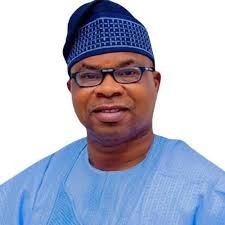
On the return to parliamentary rule, Hon.Wale Raji, a federal legislator from Lagos State and member of the All Progressives Congress (APC) was a prominent sponsor of the bill, which was read for the first time in the House of Representatives on Tuesday.
The lawmakers cited the need to reduce government costs as well as robust policy debates as reasons for demanding a return to the parliamentary system.
It is a bill that has its implementation date slated for a future date. If passed, the legislators expect that it would become effective in the 2031, giving allowance for a two-term allowance for President Tinubu to operate the presidential system.
One of the most significant differences between these two systems, according to him, is that in a presidential system, the president is directly elected by the people, whereas in a parliamentary system, the legislature is supreme and elects a prime minister from among its members as the head of government.
There is also no clear separation of powers between the legislature and the executive because ministers are also appointed by parliament.