Over time, the tenets of democracy and good governance have been emphasised as incomplete without the media’s existence and participation in playing a strategic role in highlighting significant issues necessary to elevate a country to the standards of democratic strongholds. Despite the responsibility the media bears regarding the press and the high expectations placed upon
Over time, the tenets of democracy and good governance have been emphasised as incomplete without the media’s existence and participation in playing a strategic role in highlighting significant issues necessary to elevate a country to the standards of democratic strongholds.
Despite the responsibility the media bears regarding the press and the high expectations placed upon it as a key stakeholder in advocating for democratic development in Nigeria by bridging the significant gaps between the government and citizens through impactful reporting on the electoral process, recent developments indicate that the media has not taken a proactive role in educating the public about the importance of collective participation.
A report from the monitoring and research conducted by the International Press Centre, following capacity building and training for journalists over the past two years, noted significant gaps in how the media has underperformed in its role of setting the agenda and driving conversation on critical issues that will catalyse democracy and good governance.
The report also found that the media lacked inclusivity in reporting and using sources related to gender, youth, and disability groups. It further noted that out of the 2,715 sources cited across 32,635 relevant reports monitored for political coverage by print and online media, most issues/sources were focused on male politicians (34.2%) and male candidates (24%), while female politicians and candidates were significantly under-represented in reports (2.5%).
In a similar trend, a report by the Centre for Media and Society (CEMESO) also indicated that the media coverage of youths, women, and people with disabilities (PWDs) in print and online media, especially in the broadcast sector, has not met the necessary expectations. The report noted that several critical gaps at the editorial and management levels continue to undermine the media’s ability to set a robust democratic agenda during elections.
“Journalists have also not been playing a visible role in election coverage; it is the editorial decisions and managerial priorities that ultimately shape what becomes news, how it is framed, and what the public perceives,” the report noted.
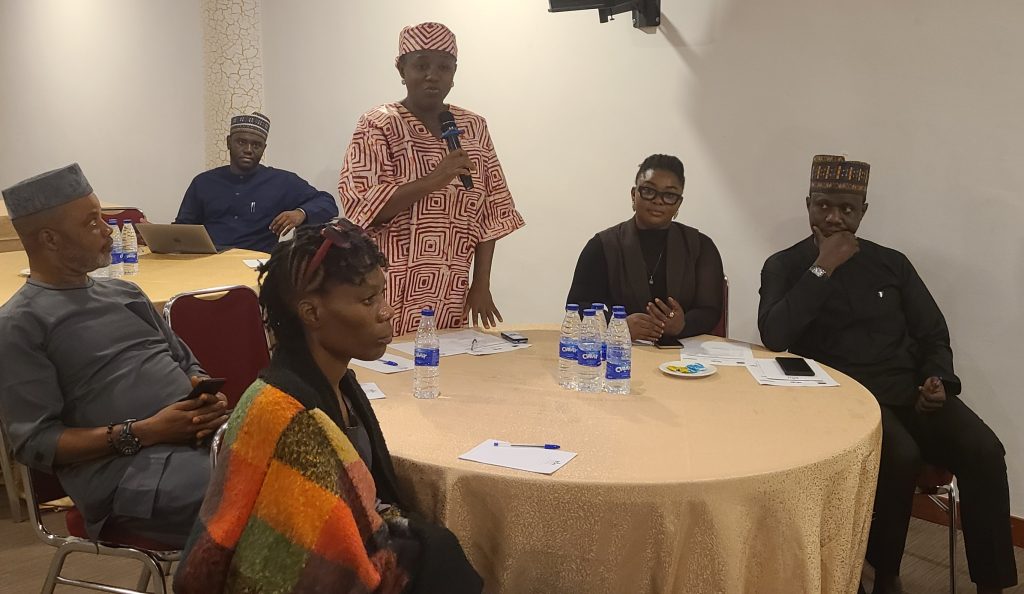
To address the observed underperformance in the media and rectify anomalies in newsrooms, editors, heads of media houses, and newsroom coordinators from the print, online, and broadcast sectors—collectively known as key media operational leaders—participated in an interface organised by IPC and CEMESO. The objective was to retrace and reevaluate the factors contributing to the diminishing capacity of media to drive progressive changes in the narratives surrounding Nigerian democracy and the electioneering process.
A special event, organised by the two mentioned organisations with EU support under the EU-SDGN II Programme, allowed media leaders to openly address pressing issues.
Their introspective evaluation served as an opportunity for a critical assessment without prejudices as they identified problems attributed to the media’s shortcomings and the actionable plans to resolve the compounding challenges, which by extension, have an impact on the country’s leadership, governance, and the cases of deliberate undermining of the country’s electoral system and its credibility.
Assessing the Media Challenges
Key journalism leaders noted several challenges impacting their work. They highlighted ethical issues among field reporters and the media’s political economy, including funding constraints that make many newsrooms dependent on political figures, and hinder coverage of vulnerable groups’ issues.
“I think the first issue to examine is the sustainability of the media in the country. The newsrooms are dying. Politicians, who own most media houses, dictate the news that editors must present to the public. As a result, there is no way the media can hold the authority accountable and bridge the gap, especially as the women, youths, and persons with disability are concerned”, Okechuchuku Muogbo, an editor at the Authority Newspaper, lamented.
Dahiru Ali, a Nigerian anchor, highlighted ethical issues in the media as obstacles to professionalism. “We as media professionals cannot pretend as if we don’t know that ethics is one of the problems. First, most reporters in the field are unpaid, so they rely on bribes from politicians. Could you explain how they might send issue-based stories to editors without compromise? The editor faces the same issues; most lack the ability and ethics to refuse bribes, as they also need their share from on-field reporters, and those who don’t comply won’t get their stories published.
Media experts noted that some key media figures lack competence and professional capacity. They suggested media leaders need training to improve their skills in investigative reporting.
“The problem of capacity building, both for the reporters and editors on political reporting, should not be underestimated. Surprisingly, most media practitioners today are not well-rooted in their jobs. For example, most of our field reporters are incompetent due to insufficient training. We need to train these reporters more and build them up. We also need to provide more incentives for them.” Raliat Ahmed, the Managing Editor of Leadership Newspapers, Abuja, noted.
Supporting the need to train the journalists, Yusuff Usman, the Publisher of the Green Reporters, Abuja, said, “If reporters are not well trained and incentivised, there is little or nothing most editors of newsrooms can do. Some of these reporters lack proper training, which presents a significant challenge.
Beyond Pointing Fingers
Media leaders were advised to avoid blaming others and start functioning as the government’s fourth estate. “For me, I think it is easy to blame others and ignore ourselves in the picture,” Idris Akinbajo, the Managing Editor of Premium Times, quickly warned. “I do not buy the idea that the newsrooms are dead. We need to start looking inwards on how to train our journalists. We must be deliberate about correcting the loopholes in our reporters’ ddrafts every time through what we call peer-to-peer evaluation, instead of blaming others. We cannot ignore that,” he said.
“We must also understand the issues. Maybe IPC can create grants for newsrooms and reporters at the same time to incentivise the newsroom instead of engaging with the reporters alone.
Victoria Bamas, the Editor of the International Centre for Investigative Reporting, suggested engaging with newsrooms as frequently as with reporters. “We need to reinvest in the smaller media platforms to build their capacity and to learn how to contextualise issues instead of the current underperformance in play in the practice. Let us collectively ensure that media reporters are engaged step by step, instead of blaming,” she suggested.
If the media aspires to be a catalyst for change, it must revert to fundamental principles and give priority to critical reports. “If we are going to effect positive change in the narrative, the media leaders must take responsibility as much as the reporters. We cannot hold ourselves accountable without taking proper actions. For instance, if investigative stories are done, there is no way politicians will not respect us; as a result, we will regain our power to hold the government accountable, as good journalism matters to make the country a better place by encouraging journalistic legwork.” Mr Martins Oloja, the immediate past Managing Director and Editor-in-Chief of the Guardian newspaper, insisted.
Recommended Course of Action
The media leaders agreed to focus more on inclusivity in democracy and to ensure good representation of minority people for balanced participation, while discussing actionable plans and setting the agenda ahead of the political and election cycle.
To achieve this, Chichi Umeseaka, the General Manager of Universal Television Africa, said, “With the assessment and evaluation of our cases, we need to pay more attention to women, youths, and people with disabilities. I know that we usually get carried away during the election period, but we must be more intentional about it so that we will not neglect of electorate during the election. The PWDs must not be considered a charity group, nor should the women be considered posters for politicians; they must be encouraged to contest for key political positions.”
During his speech, Adams Mohmoh, the Head of Programmes at Aso Rock Radio station, suggested collaborating with other media leaders to bring about changes in Nigeria’s election process. “One of the key things we cannot do away with is collaboration. The broadcast, the print, and the online must be on the page to get the information that will enhance trust in our political landscape. Another thing that is crucial is fact-checking. We must be on the lookout for fake news and verify the news.”
In conclusion, the media executives pledged to reinvent themselves into being advocates for voter education in the country and to resolve the leadership challenges in the country.