The implications of the Supreme Court judgment on the autonomy of the Local Governments as the third tier of government are reverberating across the country. While a lot of Nigerians have hailed the ruling as progressive and rescuing that tier of government from the stranglehold of the State Governors others see it as contradicting certain
The implications of the Supreme Court judgment on the autonomy of the Local Governments as the third tier of government are reverberating across the country. While a lot of Nigerians have hailed the ruling as progressive and rescuing that tier of government from the stranglehold of the State Governors others see it as contradicting certain sections of the constitution; solving one problem to add some others.
Political imputations are also being injected into the matter that for the Tinubu administration, taking the matter to the Supreme Court was a kind of red herring, diversion, or shadow chasing from the more economic biting issues that have ravaged the land. It is being perceived as a populist act to shore up its sagging rating among the citizens.
There are, however, some challenges that make the immediate implementation of the Supreme Court Judgement difficult. It is therefore not surprising that when the Federation Account Allocation Committee (FAAC) distributed a sum of N1,354.371 trillion to the three tiers of government for June 2024 as part of the Federation Allocation from the total amount of N2,483.890 trillion, it did so along the lines of existing protocols, not as directed by the Supreme Court.
Yes, the Supreme Court ordered immediate implementation but the money shared was due before the judgment which was delivered in July. That notwithstanding, there are hurdles yet uncrossed in the Supreme Court judgment that could make compliance with its decision tarry a while. The biggest hurdle has its roots in the 1999 Constitution, which states that the Supreme Court has dealt a severe setback on the principle of federalism as defined by section 162 (3) of the 1999 Constitution (as amended). The Supreme Court’s ruling appears to contradict the explicit provisions of Section 162 of the 1999 Constitution which states:
“Any amount standing to the credit of the Federation Account shall be distributed among the Federal and State Governments and the Local Government Councils in each State on such terms and in such manner as may be prescribed by the National Assembly”. Sections 6 provide further clarity on the subject matter. The Constitution may have to be amended to enable the implementation of the Supreme Court judgment.
“Section 162 (6) also states that each State shall maintain a special account to be called “State Joint Local Government Account” into which shall be paid all allocations to the Local Government Councils of the State from the Federation Account and the Government of the State.
It is, therefore, believed in certain quarters the Supreme Court erred in its decision that the Constitution states that any money leaving the Federation Account must be distributed to the three tiers of government because, in federalism, there are only two units of government – the centre and the federating units. They argue that the question of financial autonomy for LGs has no place in a federal constitution.
Already, the Adamawa State Government has approached the Supreme Court seeking interpretation of Section 162 (1), (2), and (3) of the Constitution regarding the distribution of revenue from the Federation Account. They argue that: the entire sum in the Federation Account must be distributed among all levels of government without deductions, except as permitted by law; that the President must comply strictly with the Constitution in managing and distributing revenue; all revenue collected, except those exempted by the Constitution, must be paid into the Federation Account for distribution to all tiers of government.
It also argues that the Federal Government has no discretion to withhold or deduct revenue for any purpose not expressly permitted by the Constitution. Technically, the state is submitting that the federal government does not have exclusive authority and control over how FAAC should be distributed.
Perhaps, in the realisation of this and other resistance especially from the states, the federal government may have agreed to a three-month grace period with the state governments to arrive at a workable solution to readjust the existing system with minimal disruptions to the administrative structures in the local governments. If true, this makes a mockery of the Supreme Court judgment that states that the judgment be carried out “immediately”.
There are other issues triggered by the judgment that the states and the local governments will have to contend with as time goes on. These may include that of debt borrowed jointly under the previous arrangement and that of payment of salaries of primary school teachers.
PDP Governors Reaction
According to a communique issued at the end of the PDP Governors Forum meeting by its Chairman, Governor Bala Mohammed, the Forum said it “Will continue to support the autonomy of the Local Governments as enshrined in the Constitution of the Federal Republic of Nigeria. But urges that implementation of the court decision be done in a manner that does not create a trust deficit between the federal and sub-national governments while ensuring that the system does not suffer.”
Governor Makinde’s Reasoned Reactions
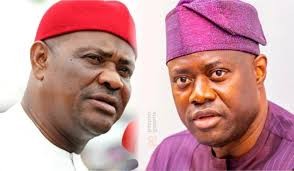
Governor Makinde at an emergency consultative stakeholders meeting held on Monday, set up technical and legal committees to review the Supreme Court judgment. He lamented that Nigeria’s problem was not with the autonomy of the local government but with productivity and improving revenue.
At a consultative stakeholders meeting comprising members of the Oyo State chapter, Association of Local Government Administration (ALGON), Attorney General of the state and Commissioner for Justice, Barrister Abiodun Aikomo, Commissioner for Local Government and Chieftaincy Matters, Otunba Ademola Ojo, and Chairman House of Assembly Committee on Local Government and Chieftaincy Matters.
Others in attendance are representatives of the Nigeria Labor Congress (NLC), Trade Union Congress (TUC), Nigeria Union of Local Government Employees (NULGE), and Nigeria Union of Pensioners (NUP). Makinde said, “I believe a lacuna has been created between the decision and the constitution of the Federal Republic of Nigeria. We all swore to uphold the constitution but the law is the law. If the law is in conflict, it behooves us to look for a home-grown solution that can ensure that we have transparency and operate with our people. This is because when two elephants are fighting, the grass will suffer.
Makinde at the meeting held at the Executive Chamber of the Governor’s Office insisted that the problem confronting Nigeria was not how to share money but how to become more productive and create economic prosperity. “So, we will outline the major challenges we have in the local government areas to develop our solution.