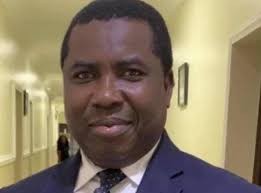
Judgement of the Presidential Election Petition Court has continued to elicit divergent reactions and suggestions from legal practitioners and analysts on how to improve the Nigerian electoral process. A senior legal practitioner, Mr Adeyinka Olumide-Fusika (SAN), has added his voice and called for a reform of appropriate legislation to enable electronic transmission of election results
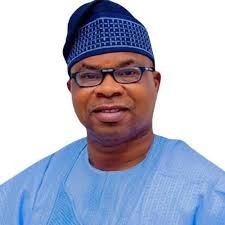
Judgement of the Presidential Election Petition Court has continued to elicit divergent reactions and suggestions from legal practitioners and analysts on how to improve the Nigerian electoral process. A senior legal practitioner, Mr Adeyinka Olumide-Fusika (SAN), has added his voice and called for a reform of appropriate legislation to enable electronic transmission of election results in future elections as a way to boost transparency and confidence in the electoral process..
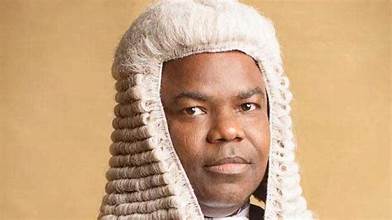
The senior attorney made this call while discussing the presidential election petition tribunal’s judgement on Saturday on “City Talks With Reuben Abati,” a programme on City FM 105.1. Mr Olumide-Fusika blamed the Independent National Electoral Commission (INEC) for breaking its promise to upload the election results through the IReV Results Viewing portal on election day.
Mr Olumide-Fusika identified INEC’s failure to keep its promise during general election preparations to use IReV to publish election results adding that this led to agitations in the public space about the poll’s outcome even after the tribunal had done what was expected of it.
“It’s like you are the managing director, you make rules and you say this rule is what we are going to operate with, but if anyone fails to adhere to this rule, there will be sanction but you the rule giver, you are not following the rule, you are above the law, people will begin to question you and doubt your integrity, this is what has happened to INEC in this case .
“I think there was a failure because of the rhetoric that went on before the elections by raising expectations before the election that this is what we will do, and of course, they actually uploaded the results at the other levels of the elections but the presidential election. That is where the suspicions were raised that some of these things might have been done deliberately to assist one candidate over the other. I think going forward, to build confidence in the system, if you say these are the rules to follow and you are enforcing the rules against the political parties, you have to see yourself bound by those rules.
Speaking further on the decision of the tribunal, the senior advocate indicated that the tribunal only passed the judgement according to the evidence presented before it, adding that the documented legislation of the country also played a key role in the decision of the court.
Mr Olumide-Fusika, called for the addition of the electronic transmission of results into the constitution and the Electoral Act, noting that with that, there will be fewer agitations after elections in the country, as it will give room for more transparency in the election process.
“But the tribunal now says that in the electoral act and the constitution, it is not compulsory. It says that it is discretionary, the regulation also says it is discretionary and that is what has happened. People should understand that the courts are there to interprete the law, not to play to the gallery, not to make decisions based on sentiments. They do not make the laws but they are there to interpret the laws and that is what they have done in this instance, whether they are right or wrong , it is still going to be at the Supreme Court to decide.
“What I think is that the first thing to do is to legislate it, put it in the law, don’t make it discretionary again. Once you have that in the document, before you leave that place upload it and it is that uploaded one that should be used for the collation of results in the paper, so if you have a disagreement on what is uploaded, you can now bring your paper to compare what is on the ground.
The senior attorney also spoke about the tribunal’s stance regarding the controversy surrounding the 25% of the Federal Capital Territory’s votes that sparked reactions and comments from legal experts and public affairs analysts. He justified the stance of the electoral tribunal, saying that the law does not afford the FCT a special position ahead of other states in the country.
“I think it is clear enough, Lagos state used to be the federal capital territory of Nigeria, There was no time that they said if you win the two thirds of the votes in the other states of the country except Lagos state you will not be declared winner.
“What that section says in my view is that you should also reckon with Abuja; we have 36 units, making the whole honorarily based on the principle of federalism, but there is a small portion also that is not a state, it is just a territory where there is the seat of government and there are citizens living there.
“For the purposes of the section of the law, treat it as if it is a unit so it becomes 37 and having 24% which is the two third of 36, you will have 25 which is across the units, Abuja being the 37th unit for the purpose of this election, it does not now matter whether you score zero in the other 14 units. The purpose is to have the spread across. Maybe when the Supreme Court makes the decision, maybe people will now be satisfied that this is law of Nigeria”, he said.
Meanwhile, both candidates for the Peoples Democratic Party and the Labour Party, Alhaji Atiku Abubakar and Mr Peter Obi, have expressed their dissatisfaction with the Presidential Election Petition Tribunal’s decision and have announced their intention to appeal to the Supreme Court.
Given that no court has ever in the history of the country overturned the results of the presidential elections, fingers are still crossed as to the apex court’s position in light of this development.