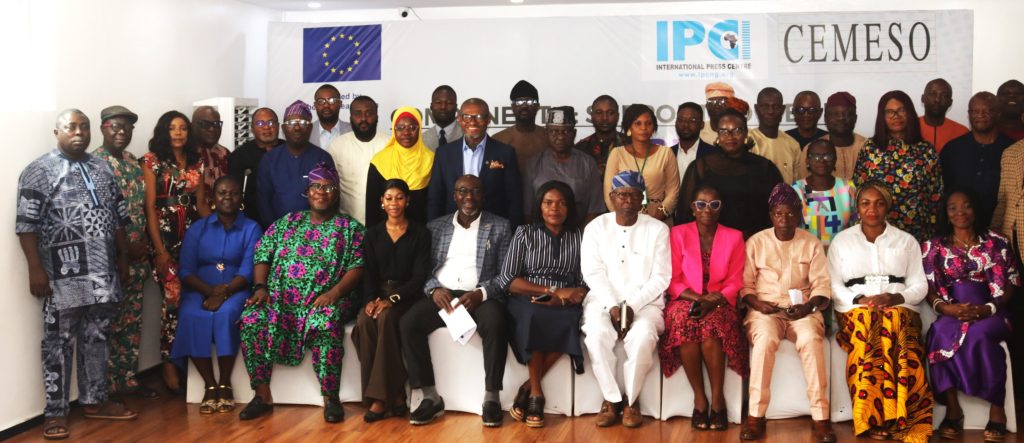
As Nigeria’s electoral process undergoes critical reforms, the International Press Centre and the Centre for Media and Society have organised a key engagement with key media executives to discuss their roles in formulating innovative approaches to enhance the media’s role in elections and democratic processes. The event, held on Tuesday, June 3rd, 2025, at BON
As Nigeria’s electoral process undergoes critical reforms, the International Press Centre and the Centre for Media and Society have organised a key engagement with key media executives to discuss their roles in formulating innovative approaches to enhance the media’s role in elections and democratic processes.
The event, held on Tuesday, June 3rd, 2025, at BON Hotel, GRA, Ikeja, Lagos, was organised with support from the European Union Support to Democratic Governance in Nigeria (EU-SDGNII) to explore the critical role of the media in elections and how to consolidate its activities to enhance appropriate information, ensuring citizens make informed choices during elections.
In his welcome address, the Executive Director of the International Press Centre, Mr Lanre Arogundade, acknowledged the significance of the media executives and the pivotal role the media plays during the electioneering process, especially during the 2023 general election. This includes delivering civic and voter education, serving as a public forum and campaign platform for exchanges by citizens, political parties, and candidates, and generally helping to manage conflicts.
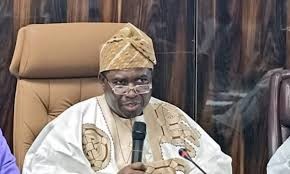
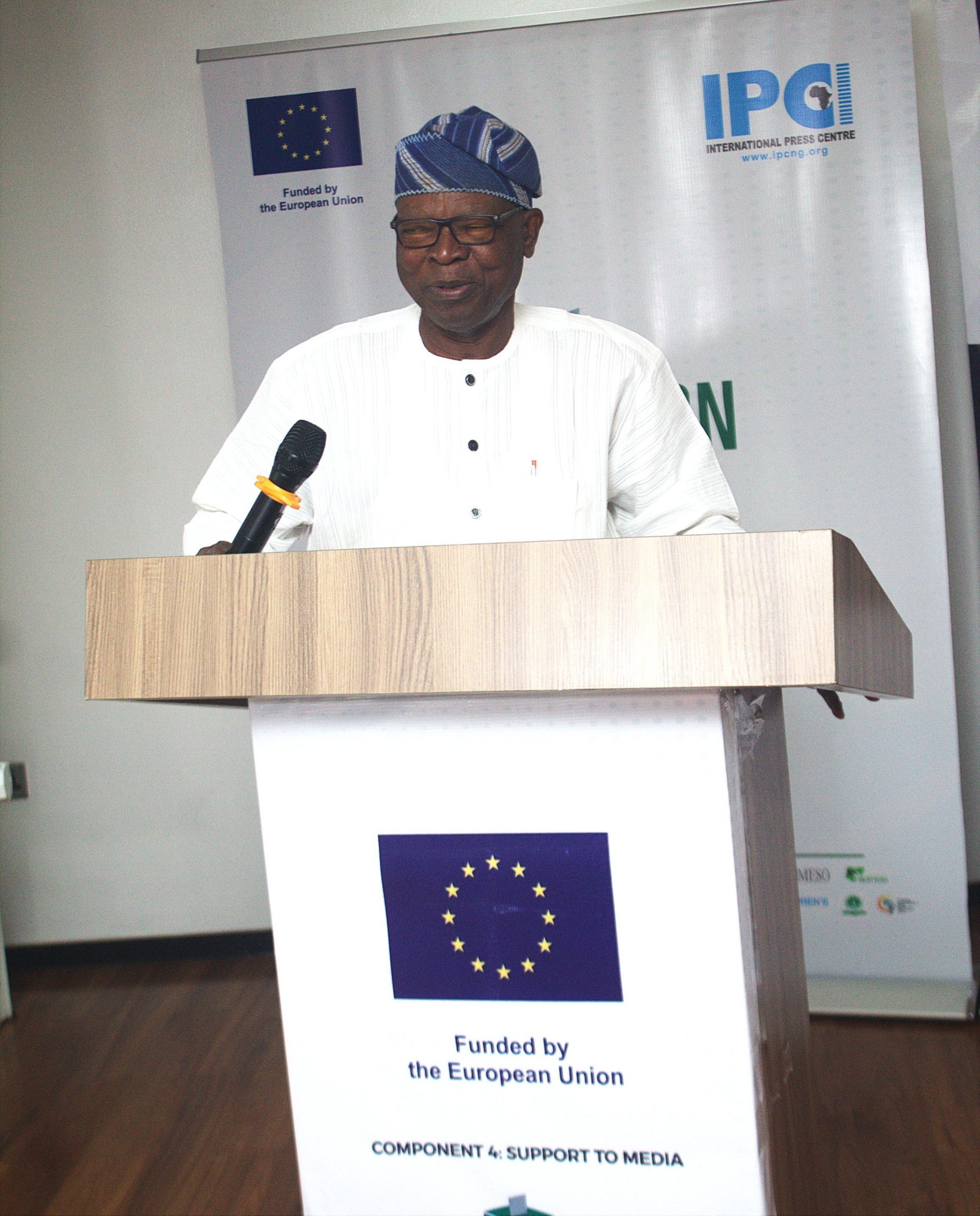
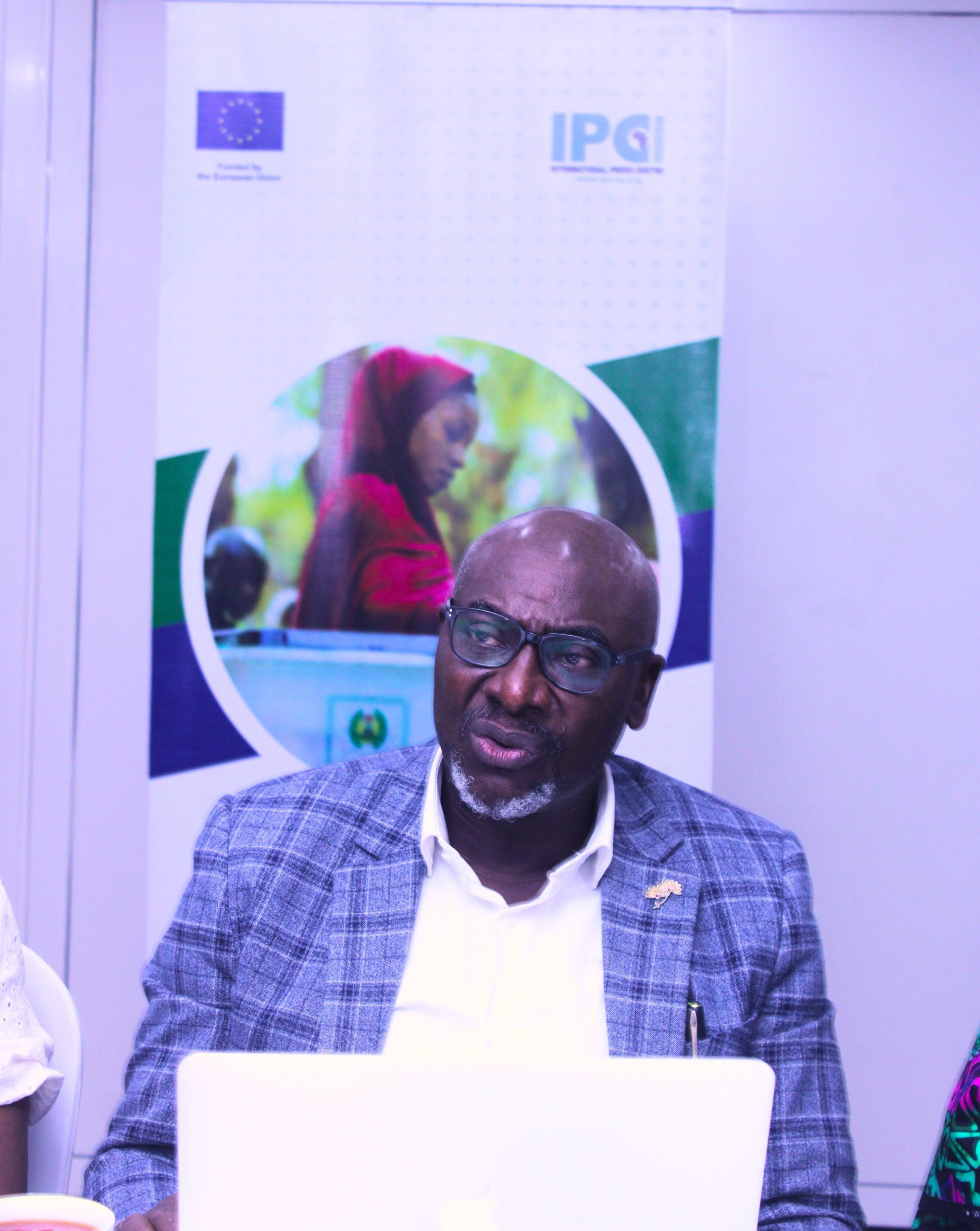 Mr Lanre Arogundade at the Parley.
Against the backdrop of the key role the media plays in the electoral processes, Mr Arogundade noted that the engagement of the EU aims at achieving “effective media contribution to the conduct of credible elections as part of its wider engagement towards fostering a pluralistic, participatory, and representative democracy in Nigeria through five components that incorporate support for INEC, the National Assembly and Judiciary, the political parties, the civil society, the media, women, youths and persons with disability.”
Speaking further on the desire of the organisation and the two implementing partners, Mr Arogundade said their focus is to ensure that “professionalism of media practitioners, especially women, is enhanced. The media professional’s ability to address electoral misinformation and disinformation has been enhanced. Media platform’s ability to diversify, deepen the coverage of the electoral process and deliver civic and voter education is enhanced.”
He further explained that they want to ensure that “Media awareness and use of FOI Act for increased accountability ” is improved. The National Broadcasting Commission (NBC) is strengthened to perform its mandate. Media engagement in promoting women, youth and marginalised groups in politics is improved”
Speaking about the evaluation and interrogation of the activities of the organisations with the media executives in the past two years, he stressed that the desired impacts were not felt because of the challenge of the enabling environment, despite the previous interventions, including training, advocacy, development and dissemination of knowledge products, various roundtables.
As a result, Mr Arogundade posited that there is a need to adopt an academic approach to train journalists, stating that this process would influence the knowledge of the larger society to make informed decisions.
“If journalists are well trained and adequately empowered and if they have the right opportunity to deploy the knowledge acquired through their reporting, then the media would make the desired impact on the electoral processes and elections. This high-level event is also designed to foster collaboration among media executives and secure commitments towards consolidating the media’s role in promoting inclusive, fair, and acceptable electoral outcomes.
“Overall, our expectation therefore is that media gatekeepers as media operational leaders and gatekeepers all would play a decisive role in shaping narratives and setting standards that contribute to the impactful reporting of the electoral processes and elections in a way that we can identify positive changes that can be attributed to our collective efforts,” he concluded.
Addressing the participants, the Executive Director of the Centre for Media and Society, Dr Akin Akingbulu, said the media executives were gathered because of their roles as the addressed “custodians of public trust, individuals who carry the heavy but noble burden of shaping what a nation hears, what a nation sees, and what a nation believes.”
 Dr Akin Akingbulu at the Parley
Due to this, he emphasised the importance of the media in achieving a strong democracy and how the two organisations have outlined strategies not only to improve media reporting but also to ensure key actionable steps are taken to collaborate with them and strengthen “the very fabric of our democracy”.
Dr Akingbulu further encouraged the media leaders and executives to pay attention to the enabling environment, emphasising that “the environment is critical to the extent that it must be addressed if media stakeholders are to seriously address bigger issues or the delivery of the role of the media in our democracy.”
After deliberating on the purpose of the convening, the participants agreed on several key action points to advance the country’s democratic process. Some of the actionable points are.
“Self-censorship: The session noted that self-censorship, particularly proprietorial interests, is a reality in the media. However, in political coverage — indeed, in all areas — media practitioners are encouraged to be guided, as much as possible, by journalism ethics and the core principles of accuracy, fairness and independence, among other professional requirements.
Deepening media support.
“Institutional bodies should be mobilised to support the programmes and activities of the International Press Centre (IPC) and its partners to resound the messages of democratic governance.”
“The bodies include the Nigerian Guild of Editors (NGE), the Nigeria Union of Journalists (NUJ), the Newspaper Proprietors’ Association of Nigeria (NPAN), the Broadcasting Organisation of Nigeria (BON), and the Guild of Corporate Online Publishers (GOCOP)—e year.
“Women, youths, PWDs & page ownership:
Issues of great concern to these segments of society often receive little to no prominent coverage in the media. To promote inclusiveness, the media are encouraged to be intentional in their coverage of these groups. IPC aims to provide the media with regular updates on female politicians and facilitate their interaction with interested practitioners.
Participants recommended that project owners should leverage relationships with the media to secure columns or pages as a form of corporate social responsibility (CSR). The section can have the sign-off of the sponsoring organisation.
“Continuous training: In the coverage of elections, media practitioners in beats outside politics or news, as well as freelance reporters, are mobilised to provide support. To avoid limiting knowledge to only the core team, a partnership should be established with media organisations for the training of their editorial staff, who are likely to be involved in covering democratic governance issues.
“Knowledge sharing: Media organisers should be encouraged to make it a habit to have their participants, who attended training programmes, share the outcomes with colleagues in their organisations formally.
Accredited election reporters: By practice, the Independent National Electoral Commission (INEC) concludes the accreditation of media practitioners close to E-Day. It is, however, essential that the accredited journalists be provided with the requisite training for their tasks. IPC is therefore urged to discuss with INEC the prospect of completing the accreditation process on time, allowing for the targeted training.
“Campaign promises:/strong> It is agreed that matching election promises with performances is germane to democratic governance, including boosting voters’ turnout. IPC is therefore encouraged to establish a mechanism to document electoral promises and make its performance records regularly available to the media.
“Voter education: Efforts should be intensified by the media to educate the voters on their civic duties in the democratic governance process.
“Access to the media:/strong> As provided in the relevant laws and regulations guiding the electoral process, the media should treat all political parties and actors fairly in their reportage and analyses.
“Media Code: Participants agreed that the Nigerian Media Code for Election Coverage should become a scripture for all media practitioners, and not just those on the political desks alone.