There is a growing call for the inclusion of Persons with Disabilities in the governance process and to be empowered to perform actively in the political and economic affairs of the country as a way of further deepening the democratic environment. Persons with Disabilities (PWDs) face a range of challenges and barriers that limit their
There is a growing call for the inclusion of Persons with Disabilities in the governance process and to be empowered to perform actively in the political and economic affairs of the country as a way of further deepening the democratic environment.
Persons with Disabilities (PWDs) face a range of challenges and barriers that limit their ability to fully participate in society.
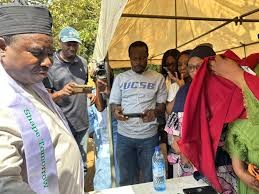
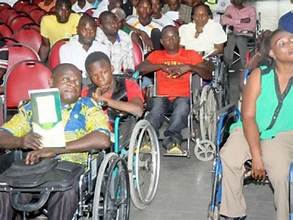
Activists participating in an “Able to Serve Town Hall Meeting” organised by TAF Africa on Monday, canvassed that the country should advance governance through the political participation of persons with disabilities.
TAF Africa (TAF) is an independent non-governmental/not-for-profit organisation incorporated with the Corporate Affairs Commission of Nigeria. Founded in 2006, TAF was originally established to promote the health, socio-economic rights, well-being, and empowerment of persons with albinism.
The Able2Serve advocacy is to create a more inclusive and representative government that truly serves all members of society. Persons with disabilities bring unique experiences and perspectives to government, which can lead to more effective and representative policymaking. However, many people with disabilities face barriers to political participation, such as discrimination and lack of accessibility.
In their separate submissions, the activists, who are reputed for their advocacies for good governance and inclusivity of minority groups in society posited that the government must make deliberate efforts to adhere to Nigeria’s Discrimination Against Persons with Disabilities (Prohibition) Act of 2018, which criminalises discrimination against people with disabilities.
Speaking on the panel, Samson Itodo, the Executive Director of YIAGAAfrica addressed the need for society to come to the reality of accepting the PWDs as part of the social structure who should be given economic and political accessibility into the relevant sectors in the country.
He frowned at the charity approach the government is giving to the PWDs, making them give some donations as empowerment instead of feasible empowerment such as inclusion in the budgetary allocations and recruitment into the government employment scheme.
“Do Nigerian voters believe in the Capacity of persons with disabilities to lead? The Able2Serve campaign is not just for the political class but for the public as well
“The government must create grounds and accessibility for the recruitment of PWDs into its institutions. They must check the appropriation bill to see how much is budgeted for the Persons With Disabilities. There must also be an evaluation with a level of accountability. Distributing wheelchairs to persons with disabilities is not an empowerment programme; they need economic empowerment.”
Speaking on the need to provide more grounds for the PWDs, Ene Obi, an inclusion expert and former country director of Action Aid Nigeria, stated that disability issues are not strange to some groups of people, but what the populace must pay more attention to is getting the government to pay more attention to the needs of PWDs.
She submitted that though different organisations are advocating for inclusion in the country, and there are results to show for their efforts, however, there are still many gaps to be filled by the government.
She insisted that collective effort must be put into effect to achieve tenable results in governance. She further urged the concerned stakeholders to continue to advocate for the inclusion of persons with disabilities in governance.
In her contribution, Vanezaa Gregory, the programme director of the Nigerian Women Trust Fund, urged the stakeholders to set realistic milestones when discussing accessibility for persons with disabilities and give progress reports.
She also called for accountability from policymakers and people who are placed in positions of leadership in their engagement with PWDs and other minority groups.
Dwelling on strategies for inclusive governance, Louis Auta, the founder and executive director of Cedar Seed Foundation, pointed out infrastructural and medical barriers to the inclusion of PWDs in sensitive positions in governance.
She said that despite the provision of Nigerian and international laws that mandate inclusivity in the social structure of society, Nigeria is operating with a charity approach in dealing with PWDs, which is causing a drought in investment in minority groups.
She therefore urged the government to move from a charity style to a human rights style, which will extend to their participation in government. She also charged the PWDs to continue to amplify their voices until they are heard in the country.
In his intervention, Dr Chike Okogwu of the Centre for Ability Rehabilitation and Empowerment in Nigeria (CARE) urged President Bola Tinubu to appoint the required 5% of PWDs to various portfolios to eradicate stereotypical tendencies in society. He also urged the state governors and the local government chairpersons to take a similar route.
He also encouraged the PWD community across the country to venture into politics, stating that they have the right and capacity to serve in the public and private sectors of the government.
“If President Tinubu appointed 5% of the PWDs to his government, and the state governors and local governments did the same, many PWDs would be more empowered, and the discrimination we face would be reduced.” For instance, the transportation system in the country is not PWD friendly, and both land transport and aviation do not support PWDs in the country: Imagine if the minister of transportation or aviation were a person with disability, that would have been corrected.”
Barrister Rex Erameh, the Chairman of the FCT Albinism Association of Nigeria urged the government to comply with the Discrimination against Persons with Disabilities (Prohibition) Act.
He also encouraged the PWDs to remain resilient and disregard the impediments of participation in governance.