The ECOWAS Network of Electoral Commissions (ECONEC) has met with the Independent National Electoral Commission (INEC) on the post-election follow-up and needs assessment of the 2023 general election and to assess the extent of the implementation of the recommendations made by the international observers two years after the 2023 polls. The interface, which was held
The ECOWAS Network of Electoral Commissions (ECONEC) has met with the Independent National Electoral Commission (INEC) on the post-election follow-up and needs assessment of the 2023 general election and to assess the extent of the implementation of the recommendations made by the international observers two years after the 2023 polls.
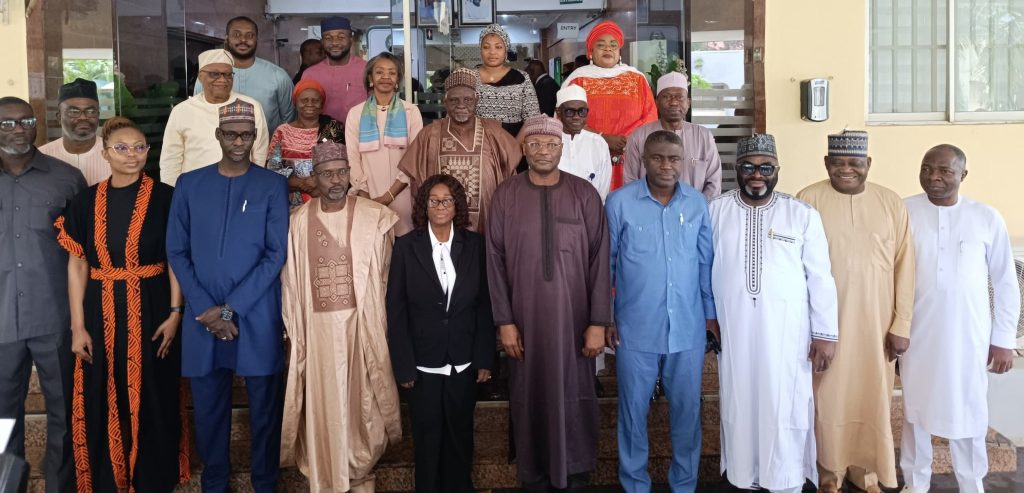
The interface, which was held today at the INEC Headquarters in Abuja, was attended by a high-level delegation from the ECONEC led by Mrs Davidetta Browne-Lansanah, Chairperson of Liberia’s National Elections Commission (NEC), and including Dr Bossman Asare, Deputy Chairman of Ghana’s Electoral Commission, who were formally received by INEC Chairman Prof. Mahmood Yakubu.
Speaking at the interface, the INEC chairman thanked the delegates, describing their mission as a routine practice that is critical to electoral democracy in West Africa.
Professor Yakubu revealed that after the 2023 presidential and governorship elections, the ECOWAS EOM made 37 recommendations, stating that only 13 were directed at INEC itself, while the remaining 24 were directed to the other critical stakeholders in the country’s electioneering process, namely “the National Assembly (requiring legislative action), the Nigeria Police Force (NPF), the National Broadcasting Commission (NBC), the National Information Technology Development Agency (NITDA) Civil society organisations The Nigeria Union of Journalists (NUJ), and political parties (via the Inter-Party Advisory Council – IPAC)”
While informing the regional delegates of the commission’s review of the recommendations, Professor Yakubu pointed out certain limitations on their advancement, stating that certain recommendations have not advanced because of administrative requirements for their implementation, which require legislative actions.
“Of the 13 observations specifically addressed to INEC, the Commission has considered all the recommendations that require administrative action to implement while waiting for the conclusion of the ongoing legal review by the National Assembly on aspects of the recommendations that require legislative intervention,” he explained.
INEC also provided the delegation with clear answers to the 13 observations, stating that most of them match the commission’s own 142 recommendations for improving elections, and hard copies of the election report, reform recommendations, and INEC’s response to ECOWAS were given to the mission members.
The commission further explained that the reform proposals, developed through consultations and available publicly on INEC’s website, address perceived shortcomings from the 2023 polls.
Professor Yakubu acknowledged the role of international partners facilitating the mission, including experts from the Electoral Institute for Sustainable Democracy in Africa (EISA), the International Institute for Democracy and Electoral Assistance (IDEA), and the German development agency GIZ.
“We welcome to Nigeria Lenny Taabu and Mathias Hounkpe are supported by EISA, Emmanuel Kissi supported by IDEA and Michael Agada from the German international cooperation agency, GIZ.
We look forward to a robust interaction at this meeting in the best interest of our elections and electoral process,” he said.
Mrs. Davidetta Browne-Lansanah, Head of Mission and Chairperson of the National Elections Commission of Liberia, responded to the INEC chairman by describing the visit as a learning experience not only for Nigeria but also for other electoral bodies in the region.
Mrs. Browne-Lansanah went on to say that the team’s objectives were to evaluate INEC’s implementation of the recommendations and comprehend how the difficulties arising from the 2023 elections were resolved.
“This joint post-2023 election follow-up and needs assessment mission to Nigeria is a peer-to-peer review of our presence here during the 2023 elections, but more importantly, the recommendations that we offered, which were outlined in a report of our visit here,” she stated.
“We see this mission as a lesson learned, not just for INEC Nigeria, but also for our own institutions, our own election management bodies, because as we know, problems or challenges that are faced by any election management body are often faced by election management bodies throughout our region,” she added.