The length and tenure of executive officeholders in Nigeria remain hotly debated among stakeholders. Many individuals and groups have proposed changing the executive office term to a single six-year term instead of the current two four-year terms. Although previous efforts have been unsuccessful, the Nigerian constitution supports the current system. Key figures in Nigeria continue
The length and tenure of executive officeholders in Nigeria remain hotly debated among stakeholders. Many individuals and groups have proposed changing the executive office term to a single six-year term instead of the current two four-year terms.
Although previous efforts have been unsuccessful, the Nigerian constitution supports the current system. Key figures in Nigeria continue to advocate for changing the term limits of elected officials to improve governance.
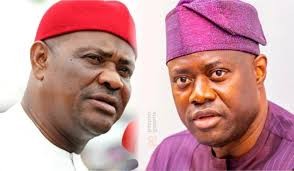
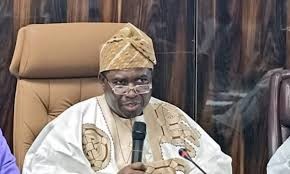
Engineer Seyi Makinde, Governor of Oyo State, has joined the league and advocated for a constitutional amendment to introduce a single five- or six-year term for elected officials in Nigeria during Eid-el-Kabir celebrations on Friday.
The Oyo State Governor proposed a single term for elected officials to help them focus on governance without the distraction of re-election campaigns and related activities. He explained that his first term as governor was disrupted by COVID-19, which took up one year of governance. Soon after, he had to consider the next election. He noted that in a double four-year term, officials effectively have only six years to focus on their work out of the full eight-year period.
“I was just looking at the trajectory for me in government. I have spent six years already, and due to no fault of anybody, we lost the year 2020 because of the COVID-19 pandemic. We lost almost one year campaigning all over the place for the second tenure. Now, people have started distracting us on what I want to do next and all of that. So, I feel that, effectively, the time we can say we are serious with governance is just about five out of the eight years.
“That is why I feel if you remove all these distractions, a single tenure of five or six years is enough to focus and do the work that we are trying to do in eight years. Well, we shouldn’t be afraid to say the fact based on data that is available to us. It has nothing to do with me. If they say I should end it, so be it.
The governor requested the National Assembly to reconsider the issue, suggesting that it serve as an example for the nation. “So, I am just calling the attention of our people to this because it is a constitutional issue. We should start looking at it. It has been brought to the attention of the National Assembly, and it is a model that could work for this country.
The proposal for elected officials to serve a single six-year term rather than two four-year terms raises concerns about its impact on effective governance in the country. Last year, Alhaji Atiku Abubakar, the former Vice President of Nigeria and the candidate of the Peoples Democratic Party in the 2023 general election, wrote to Deputy Senate President Jibrin Barau, who is also the chairman of the Senate Committee on Constitution Review. He proposed a six-year single-term rotational presidency between the southern and northern regions of Nigeria.
In his letter, Alhaji Atiku urged the Senate to amend some sections of the 1999 constitution to suit the purpose of making a single term possible in the country. He proposed that paragraph ‘a’ be added to Section 130 (1) of the 1999 Constitution, which would read, “The office of the President shall rotate among the six geopolitical zones of the Federation on a single term of six years, flowing between the North and South on a single term of six years respectively.”
Additionally, he requested an amendment to Section 135(2) that would read, “Subject to the provisions of subsection 1, the President shall vacate his office at the expiration of a period of six years commencing from the date when he has been elected to such office before.”
Before Atiku’s intervention, a group of 35 members of the House of Representatives introduced reform bills in June aimed at amending the Nigerian Constitution of 1999 (as amended). These bills propose limiting the tenure of the President of the Federal Republic of Nigeria and State Governors to a single term of six years, as well as making these positions rotational.
Led by Ikenga Ugochinyere, the bill proposes holding all elections on the same day, resolving pre-election matters before the election, and settling post-election issues before officials are sworn in.
In November 2024, the House of Representatives rejected a bill to amend the Constitution for a single six-year term for the president and state governors.
The House previously rejected a bill proposing a six-year single term for president and governors. The Benue State bill, sponsored by John Dyegh, did not proceed to the second reading in 2019.
With the constant calls for the constitutional amendment on the tenure of elected officials in the country from different quarters, the question of its relevance in Nigeria’s governing system is in contention, while its worthiness will reshape the democratic development in the country.