



IPC Trains Adamawa Journalists on Citizen-Focused Reporting, Fact-Checking Ahead of 2027 Elections
Ahead of the 2027 general elections, the International Press Centre (IPC) has met with journalists in Adamawa State, urging them to deliver credible, issue-based, accountability-driven reporting that...

Ahead of the 2027 general elections, the International Press Centre (IPC) has met with journalists in Adamawa State, urging them to deliver credible, issue-based, accountability-driven reporting that strengthens democratic governance and encourages informed citizen participation in the electoral process.
The interface, which was held at the Stallion Hotel, Yola, Adamawa State, on 18 and 19 November 2026, focused on strengthening the capacity of journalists to scrutinise political promises, amplify citizens’ priority concerns, verify political claims, and hold public office holders accountable for their actions and performance ahead of the 2027 general elections.
The event was held under Component 4 (Support to Media) of the European Union Support to Democratic Governance in Nigeria (EU-SDGN III) project, with IPC as lead partner.
The two-day engagement brought together journalists and media practitioners to deepen their understanding of democratic accountability, electoral reporting, fact-checking, conflict-sensitive journalism and strategies for countering electoral misinformation and disinformation.
Dr Lanre Arogundade, Executive Director of the International Press Centre, stressed the media’s vital role in strengthening Nigeria’s democracy as the country heads into another election cycle. His opening remarks were read by Ms Stella Nwofia.
Dr Arogundade noted that elections are about more than campaigns, rallies, candidates and results. In his words, they are fundamentally about citizens: their aspirations, concerns and expectations of leaders, and their right to make informed decisions about the nation’s future.
He urged journalists to look beyond routine coverage of political activities and embrace more substantive reporting that interrogates campaign promises, documents citizens’ priority concerns and monitors the performance of elected officials.
He further stressed that the credibility of the electoral process depends, to a significant extent, on the quality of information available to citizens.
Dr Arogundade warned that sensationalism, unverified claims, inflammatory rhetoric, and the unchecked spread of misinformation and disinformation could undermine public confidence, deepen social divisions, and threaten democratic institutions.
He therefore called on journalists to strengthen their verification skills, exercise caution when reporting politically sensitive issues, and resist the pressure to prioritise speed over accuracy.
He also emphasised the need for journalists to uphold professional independence and safety while carrying out their legitimate responsibilities, noting that fact-checking and verification must remain integral to responsible electoral reporting.
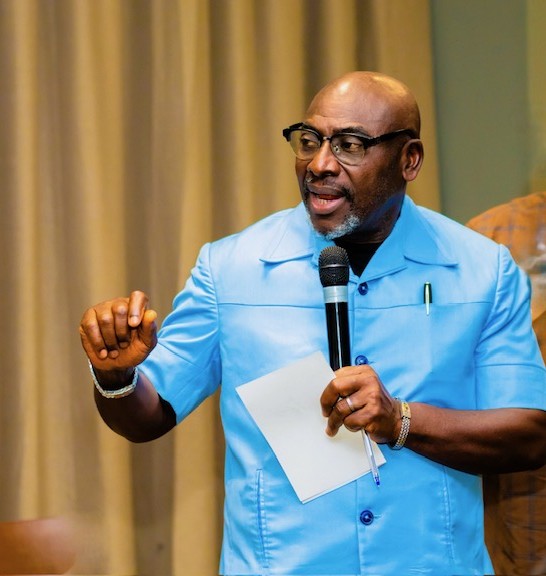
In his presentation, facilitator Dr Shadrach Idi, Head of the Media Relations Department at Taraba State University, examined how the media can promote democratic accountability and strengthen citizens’ participation in governance.
He stressed that journalists, as members of the Fourth Estate, must hold government officials, institutions and other public office holders to account through independent, factual, public-interest journalism.
Dr Idi explained that professional accountability begins with adherence to journalistic ethics, accuracy, fairness and the responsibility to scrutinise those entrusted with public power.
He noted that journalists should do more than report political activities or repeat politicians’ statements. They should probe the issues behind campaign promises and assess whether elected officials keep their commitments.
He urged journalists to pay closer attention to issues that directly affect citizens, including security, education, healthcare, agriculture, infrastructure, unemployment, and economic development.
According to him, the media must provide citizens with the information they need to evaluate government performance and demand accountability from their elected representatives.
He further highlighted the importance of identifying citizens’ priority concerns and ensuring that such issues receive adequate attention in public discourse and electoral coverage.
Dr Idi encouraged journalists to strengthen their watchdog role by consistently questioning public authorities, investigating governance issues, and ensuring that political actors are held accountable without fear or favour.
The facilitator also gave participants a simulation task: identify the priority concerns of citizens in the state and plan how to bring those concerns to politicians, rather than routinely reporting on their campaigns and conventional issues.
The fact-checking segment of the training was facilitated by Olusola Oludiran, who took participants through practical approaches to identifying, investigating and verifying false and misleading information, particularly in the context of elections.
Oludiran explained that the media’s role in promoting democratic accountability rests on independence, fairness, accuracy and responsible dissemination of information.
He noted that the increasing circulation of misleading images, manipulated videos, false claims and fabricated information across digital platforms makes fact-checking an essential component of contemporary journalism.
He emphasised that journalists must go beyond routine news reporting by adopting systematic verification processes, especially when dealing with politically sensitive claims and user-generated digital content.
During the session, participants were introduced to practical digital verification techniques and tools for investigating online claims, images and videos.
These included Google Fact Check Explorer for checking previously investigated claims, as well as InVID and TinEye for reverse image and video verification, noting that the era of artificial intelligence has the potential to affect the outcome of information the public are consuming. He explained that the use of generative AI can intensify election deception by making fake text, images, audio, and video faster, cheaper, and more convincing.
He further explained that the deliberate use of AI tools to create or spread false content that misleads citizens and voters, damages candidates, or undermines trust in the electoral process urges newsrooms to integrate fact-checking into their editorial processes and develop stronger internal verification mechanisms ahead of the 2027 general elections and to start using some tools to combat this simulated information as the polls approach.
He also stressed the importance of responsible use of digital platforms, warning journalists against amplifying unverified information that could mislead the public, heighten political tensions or undermine confidence in the electoral process.
At the conclusion of the interface, the participants expressed their satisfaction with the initiative, saying that it would encourage media professionals and journalists in Adamawa State to take a more proactive approach to electoral reporting by giving citizens’ concerns top priority, closely examining political pledges, and offering factual, impartial, and verified information.
Additionally, they pledged to move beyond event-driven political coverage and adopt citizen-centred journalism that fosters accountability, transparency, and democratic development. They also pledged to identify misinformation and disinformation, encourage peaceful democratic engagement, and contribute to an informed electorate.







No Comment! Be the first one.